The Trans-Kalahari Corridor: Botswana's Route to Walvis Bay
October 30, 2026
Read the story
Please submit your details below and one of our logistics experts will reach out within one business day. Thank you.

A container bound for Gaborone and a truckload of copper concentrate from Ghanzi can move through either Durban or Walvis Bay, but the faster route differs for each shipment. Durban has long handled most of Botswana’s seaborne trade. Walvis Bay, reached through the Trans-Kalahari Corridor and the Mamuno border post, now takes a growing share: the Walvis Bay Corridor Group reported that Botswana cargo through the port rose by about 40% in 2024/25, driven by copper exports to the Far East.
This article covers how the corridor compares with Durban on transit time and which shipments gain the most from it.
The governments of Namibia, Botswana and South Africa jointly established the corridor, which officially opened in 1998. The highway route covers more than 1,900 km. It runs from Walvis Bay through Windhoek and Gobabis to the Mamuno border, then crosses Botswana on the Trans-Kalahari Highway to Gaborone before continuing to Johannesburg and Pretoria.
Rail covers the Namibian section as far as Gobabis, which has transshipment facilities. Rail then resumes at Lobatse in Botswana. Everything between Gobabis and the Botswana network moves by road.
The Trans-Kalahari Corridor Secretariat in Windhoek manages the route. It works with the three member states to simplify customs and cross-border procedures. At its eastern end, the corridor connects with the Maputo Corridor, so the two routes together link the Atlantic and Indian Ocean coasts.
For Botswana, the corridor carries trade in both directions:
● Exports: mainly copper concentrate from the Kalahari Copperbelt in the west of the country, plus coal
● Imports: vehicles, consumer goods and mining equipment, largely from Europe and the Americas
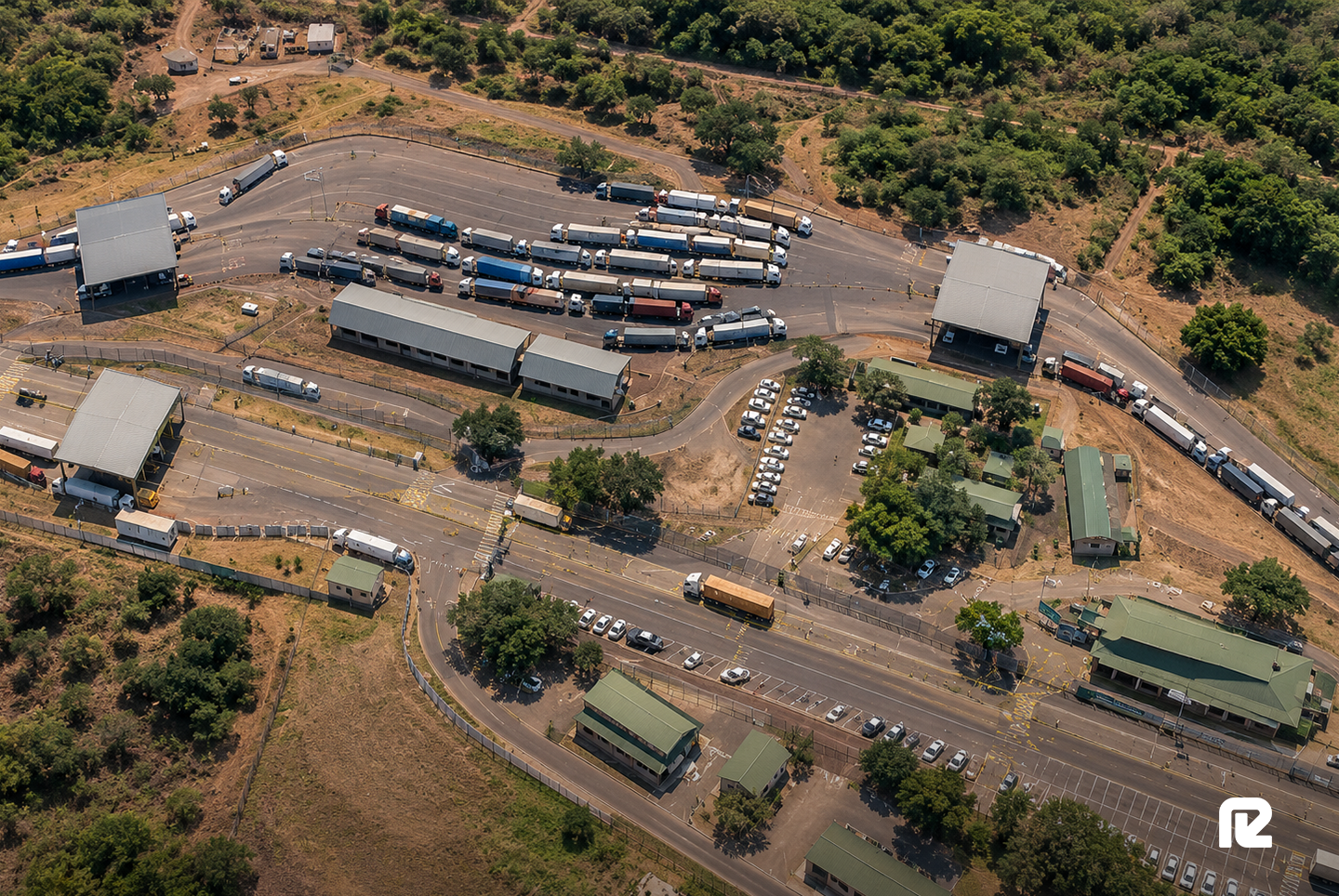
Trucks cross one international border between Walvis Bay and Botswana. The Namibian post is Trans-Kalahari, near the settlement of Buitepos. The Botswana post is Mamuno. Both posts operate 24 hours a day, and on average about 8,800 commercial trucks cross each month.
Namibia and Botswana have turned the crossing into a one-stop border post, with a pilot launched in September 2024. Officials from both countries now work from a single facility. Drivers can therefore complete exit and entry formalities in one place rather than queue at two separate posts.
Joint inspections and harmonised procedures reduce duplicate checks, which account for much of the dwell time at Southern African border posts.
The time savings depend on the paperwork. A one-stop post clears a complete, accurate file quickly. A truck with a mismatched invoice or an incomplete transit declaration still waits while the discrepancy is resolved.
For cargo bound for Gaborone and southeastern Botswana, Durban has the shorter road leg. For western Botswana, and for cargo on Atlantic trade lanes, the comparison shifts toward Walvis Bay.
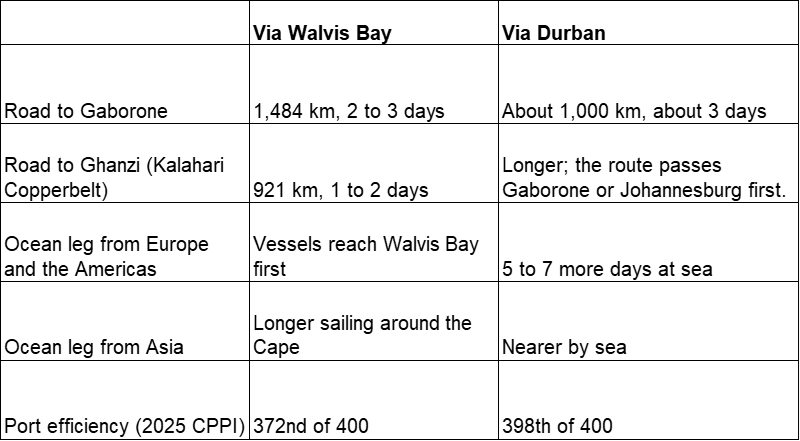
Road transit is similar on both routes despite the roughly 500 km difference in distance. The ocean leg and time in port therefore decide the comparison.
For a container sailing from Europe or the US East Coast, discharging at Walvis Bay avoids the additional coastal voyage to Durban. The Walvis Bay Corridor Group puts that sailing time at 5 to 7 days. For cargo from China or India, Durban is the nearer port, and it usually remains the practical choice for Gaborone.
Ghanzi and the mines around it sit 921 km from Walvis Bay. Cargo routed through Durban must first cross South Africa and then most of Botswana, so Walvis Bay is the shorter road option for this region on every trade lane.
The World Bank's Container Port Performance Index ranks ports by how long vessels spend there, measured from arrival at anchorage to departure from the berth. Both ports sit near the bottom of the 2025 rankings.
Walvis Bay placed 372nd and Durban 398th out of 400. Durban posted the largest single-year improvement of any port in the index, after finishing last in 2024. Shippers using Durban should track whether that recovery holds through 2026.
These figures come from different sources and years. Actual door-to-door time depends on vessel schedules, berth availability, border queues and how quickly clearance documents are ready.
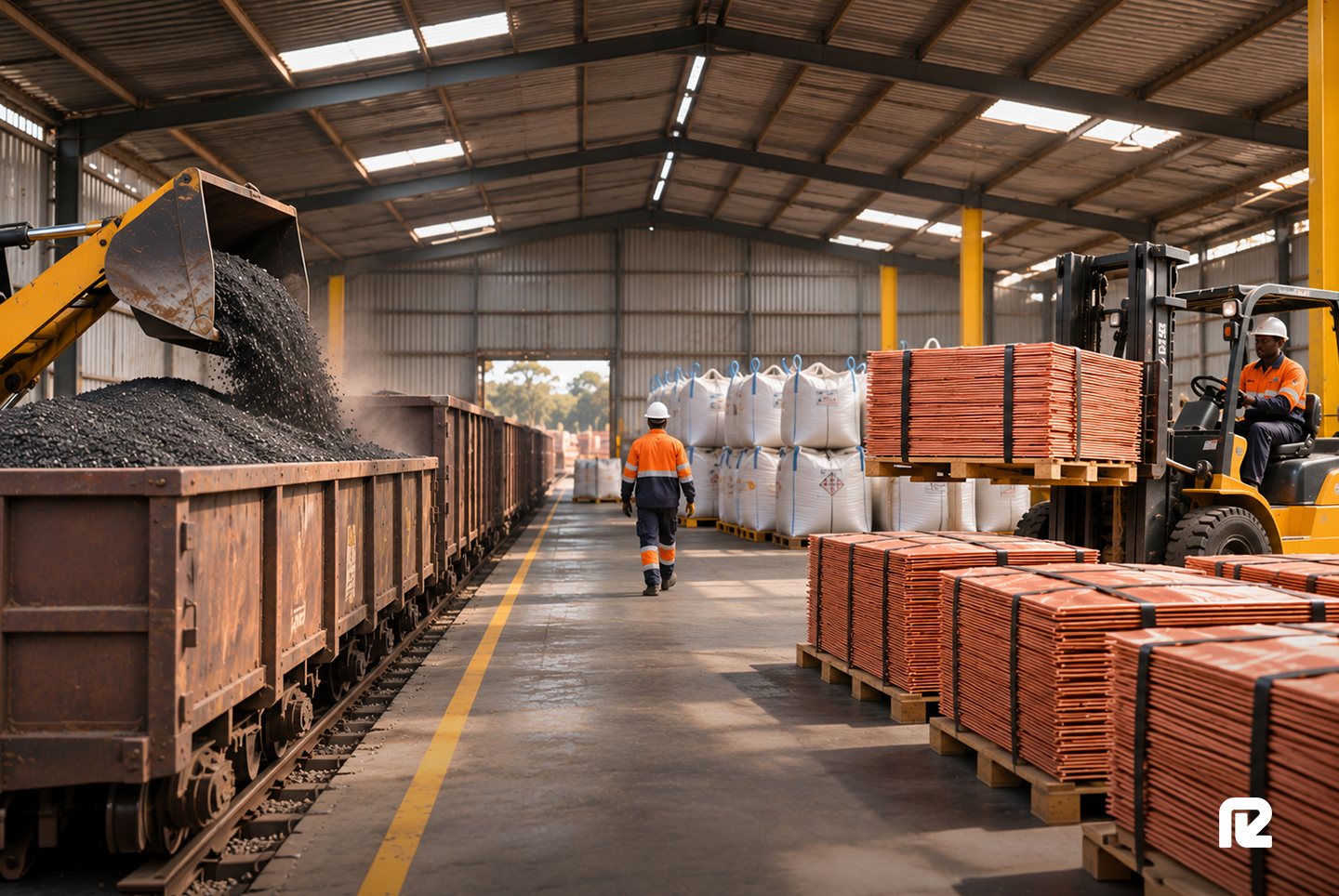
Copper concentrate from the Kalahari Copperbelt. Sandfire's Motheo mine, about 70 km from Ghanzi, trucks its concentrate to Walvis Bay for shipment to smelters overseas. The nearby Khoemacau mine has used both Walvis Bay and Durban. Its haulage trucks load diesel for the return trip after offloading copper at the port. Return loads like this keep round-trip rates competitive on a long road leg.
Imports from Europe and the Americas. Vehicles, consumer goods and bulk food imports reach Walvis Bay earlier on these lanes. Botswana has also brought in bulk sugar from Brazil through the port.
Project cargo for western mines. Equipment for operations in the Ghanzi and North-West districts has a shorter haul from the west coast.
Coal. Botswana coal already moves to Walvis Bay by road. Large-scale coal exports depend on the planned railway described below.
● Customs regime. Botswana-bound cargo crosses Namibia in transit under bond, and final import clearance takes place in Botswana. Both countries belong to the Southern African Customs Union, and transit rules still apply to the Namibian leg. Choosing between transit clearance and import clearance affects when duty is paid and where the cargo can be stored.
● Bonded space at the port. The Botswana Dry Port sits inside the Walvis Bay port precinct. It is operated by SeaRail, a subsidiary of Botswana Railways, and handles containers, breakbulk, vehicles and refrigerated cargo. Freight can move in bond between this facility and the border. Bonded storage inside the port, such as Reload's in-port terminal at Walvis Bay, lets cargo wait for a vessel or a truck while it stays under customs control.
● Handling costs. Khoemacau raised the issue of handling fees at Walvis Bay with Botswana's transport minister in 2022. Comparing landed costs per tonne across both ports gives a clearer picture than comparing distance alone.
● Road leg planning. Reaching Gaborone from Walvis Bay takes more than one driving day. Rest stops, fuel points and cargo security on the Trans-Kalahari Highway all belong in the transport plan, especially for high-value metals.
● Return loads. Truck rates depend on whether carriers can find cargo for the return trip. Two-way flows such as copper westbound and fuel eastbound lower the cost per leg.
The largest planned change is the Trans-Kalahari Railway. CPCS Transcom delivered the completed feasibility study in July 2026. It covers a 1,500 km heavy-haul line from Botswana's Mmamabula coalfields to Walvis Bay, at an estimated cost of US$16 billion.
The line would follow the Trans-Kalahari Highway through Mamuno to the existing railhead at Gobabis. Construction is targeted for 2027, and financing remains unresolved. Earlier start dates of 2025 and 2026 have already passed, so shippers should treat the railway as a long-term prospect.
Mining development in Botswana is also widening the range of cargo on the route. The Walvis Bay Corridor Group is targeting an iron ore project near the Namibian border and a manganese project in the Kanye Basin alongside copper. Both would add bulk export volumes to the corridor.
The Trans-Kalahari Corridor links Walvis Bay to Gaborone and Gauteng, with a single border crossing at Mamuno. The crossing runs 24 hours a day as a one-stop border post. The better port for Botswana cargo depends on its origin or destination and its ocean trade lane:
● Western Botswana, including the Kalahari Copperbelt: Walvis Bay is the shortest road route on every trade lane.
● Gaborone and the southeast, cargo from Europe or the Americas: Durban has the shorter road leg. Discharging at Walvis Bay saves 5 to 7 days at sea.
● Gaborone and the southeast, cargo from Asia: Durban generally remains the practical choice.
Both ports rank near the bottom of the World Bank’s port efficiency index, with Walvis Bay placed higher. Durban recorded the largest improvement of any port in 2025. When comparing landed cost on the Walvis Bay route, factor in:
● transit under bond across Namibia
● bonded storage at the port
● port handling charges
● return-load availability for trucks