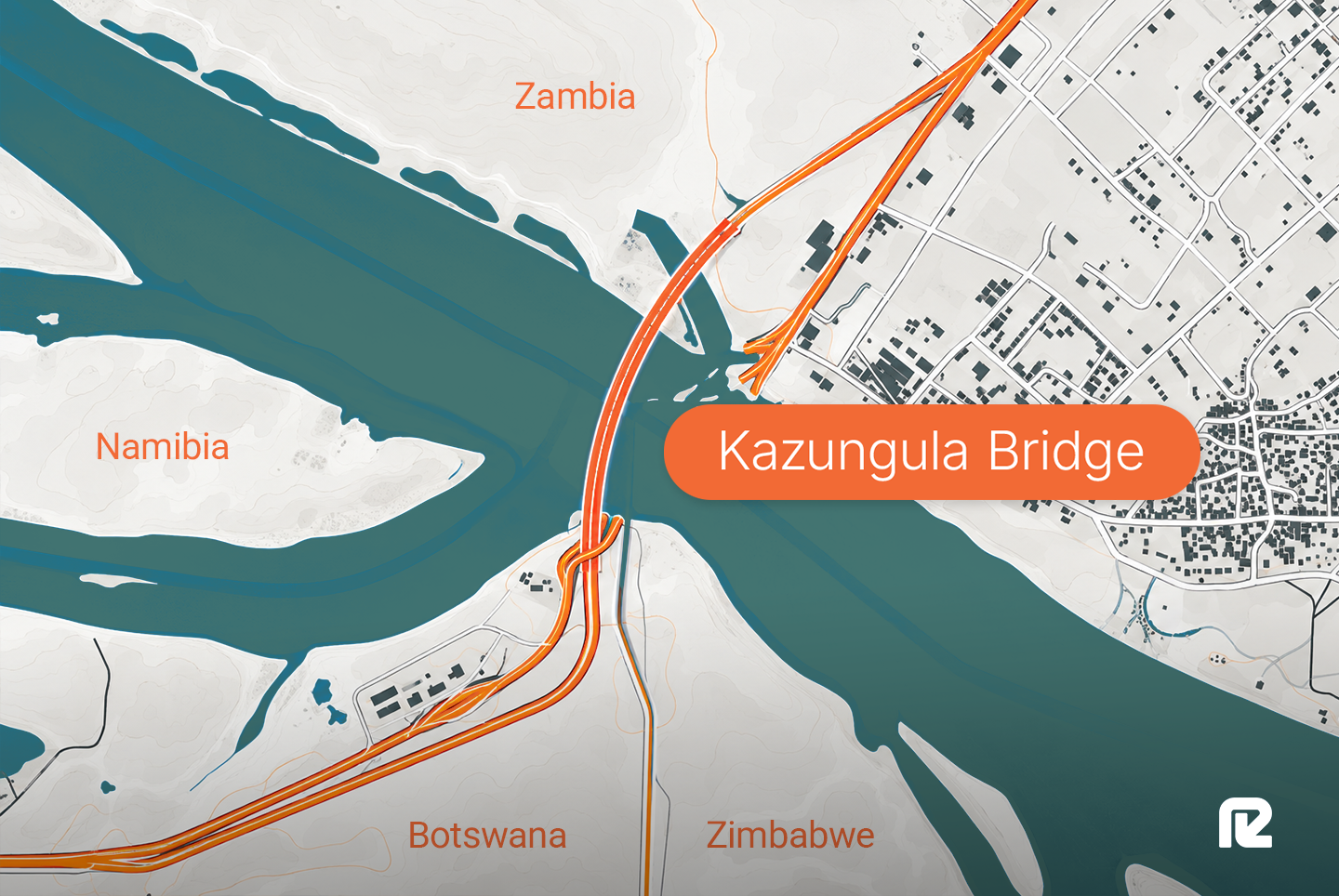
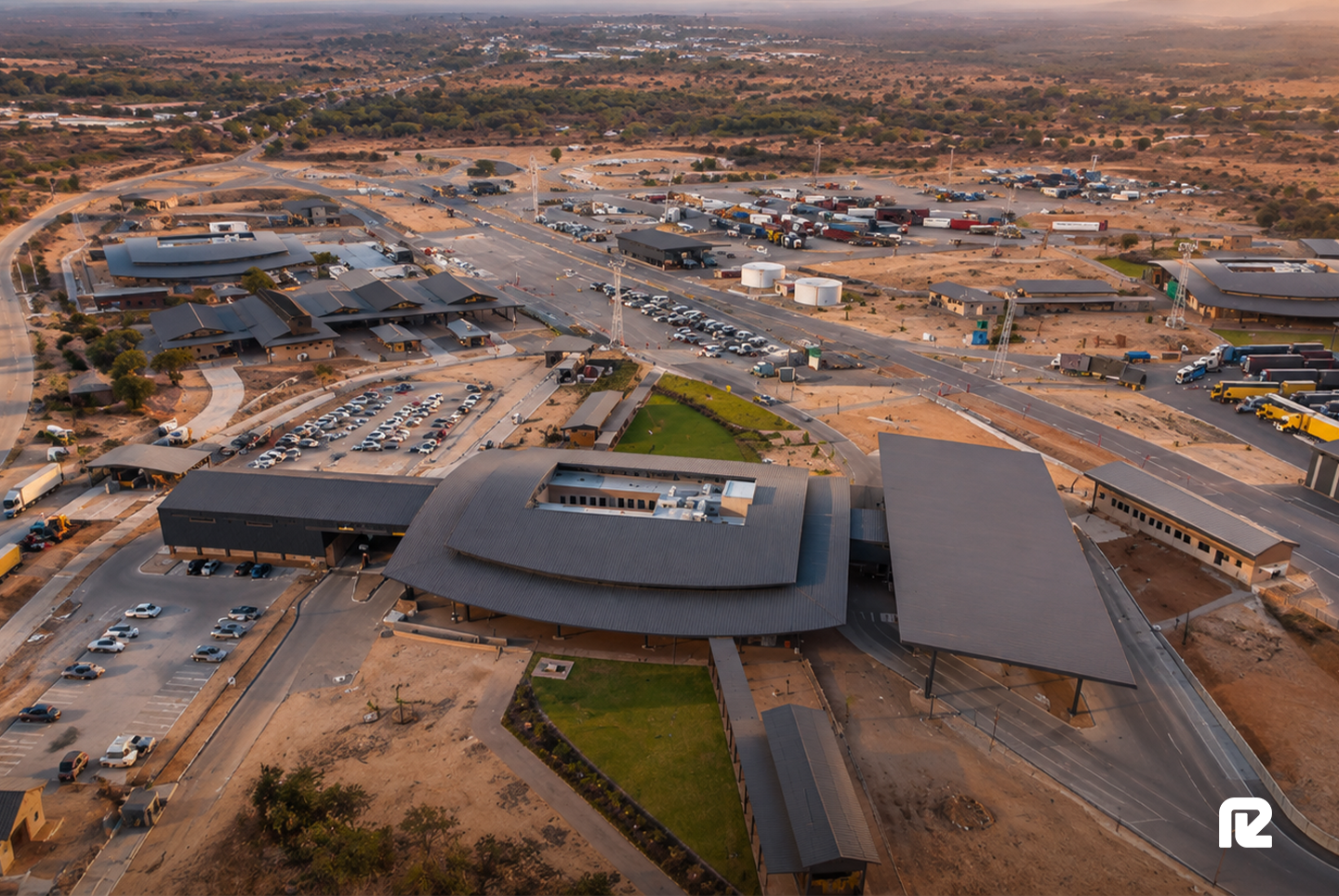
Kazungula Bridge: What It Means for Zambia-Bound Freight
September 15, 2026
Read the story
Please submit your details below and one of our logistics experts will reach out within one business day. Thank you.
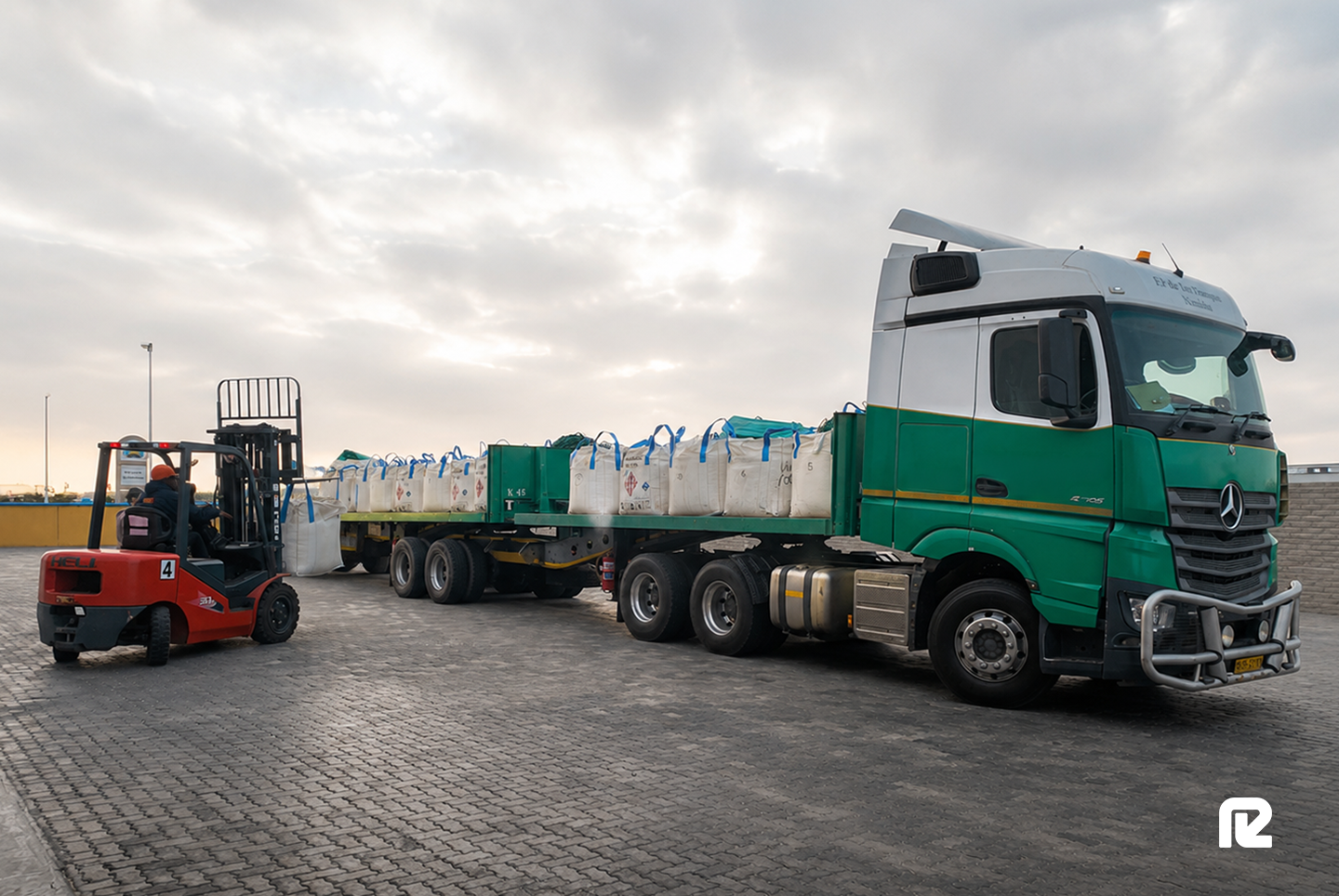

A truck moving copper concentrate from Zambia into the DRC, or consumer goods from Zimbabwe into Zambia, is only as fast as the border post it has to clear.
Chirundu and Kasumbalesa carry a large share of that road freight, and both crossings have a well-documented history of turning a short delay into a multi-day one. For a transport operator, the question is not whether delays happen. It is what causes them, and what can be done before a truck ever reaches the queue.
This guide covers what a truck needs before it arrives, what actually holds vehicles up on the day, current conditions at Chirundu and Kasumbalesa, and how a transport operation plans around delays it cannot fully control.
Chirundu sits on the Zambia-Zimbabwe border and is the main crossing on the North-South Corridor between Lusaka and Harare. Kasumbalesa sits on the Zambia-DRC border and carries the bulk of road freight moving copper and cobalt out of the Copperbelt and Katanga province.
Both crossings sit at the intersection of high commercial volume and limited capacity. Chirundu was Sub-Saharan Africa's first One-Stop Border Post, designed to let cargo clear both countries' formalities in a single stop rather than two.
Kasumbalesa has no equivalent structural advantage and processes traffic from multiple regional corridors converging at a single point. For any transporter running regional freight, both crossings are unavoidable, and both are prone to congestion when infrastructure, staffing, or systems come under pressure.
The cost of a delay at either crossing rarely stays contained to the truck sitting in the queue. A driver stuck for days consumes fuel, wages, and vehicle time that were budgeted for a shorter crossing. Downstream, a late arrival can mean a missed vessel booking, a demurrage charge at the next port, or a client waiting on cargo that was meant to have already cleared. Border delays are, in that sense, a cost that shows up somewhere else in the chain even when the truck itself eventually gets through.
Most of what determines how quickly a truck clears Chirundu or Kasumbalesa is decided before the truck ever reaches the queue. Preparation at the yard, not negotiation at the window, is what keeps a crossing short.
A driver arriving at either crossing needs a complete, matching document set: commercial invoice, packing list, bill of lading or waybill, and any permits specific to the cargo and destination country.
Every figure on the invoice needs to match the packing list, and the packing list needs to match what is physically on the truck. A mismatch anywhere in that chain—an incorrect HS code, a quantity that doesn't reconcile, or a missing certificate of origin—is one of the most common reasons a vehicle gets pulled aside for further checks. None of these are border-side problems. They are documentation problems that happen to surface at the border.
Transit cargo and import cargo follow different declaration paths, with different documentation and different clearance procedures. That distinction needs to be settled before the truck leaves the yard.
Correcting a wrong declaration once a vehicle has already reached the crossing takes far longer than getting it right at booking, and in some cases requires the cargo to be redirected entirely.
Axle load limits, permit validity, and cargo-specific requirements vary by country and by commodity, and a vehicle that is compliant on one side of a border is not automatically compliant on the other.
Confirming these details before departure, rather than discovering a mismatch at the crossing, avoids a vehicle being held for a compliance issue that had nothing to do with its paperwork.
Where electronic pre-clearance or advance cargo information systems exist, submitting documentation before the truck arrives lets border agencies begin processing before the vehicle is even in the queue.
It doesn't eliminate a delay caused by congestion or system downtime, but it removes documentation review from the list of things that can slow a truck down once it's already at the front of the line.
Even with clean documentation and full compliance, several things routinely slow a crossing at Chirundu and Kasumbalesa:
Queuing and lane allocation. Both crossings handle high volumes of commercial traffic, and lane capacity has not always kept pace with demand. A truck can be fully compliant and still wait behind hundreds of others simply because there isn't enough physical capacity to process vehicles faster.
Document mismatches caught at the window. Errors that were missed before departure surface at the point of clearance, where they take far longer to resolve because the truck and driver are now part of the queue while the correction is made.
System downtime between customs systems. Clearance depends on connectivity between the customs systems on each side of the border. When either system goes down, or when the two systems can't communicate reliably, processing slows or stops entirely, regardless of how complete a driver's paperwork is.
Physical inspection selection. A portion of cargo is selected for physical inspection at each crossing. Inspection adds time even when nothing is found, and the rate of inspection can shift with little warning depending on risk profiling and current enforcement priorities.
External disruptions. Roadworks, infrastructure failures, protest action, or regulatory changes introduced with little notice can all add delay on top of the crossing's normal processing time. These sit outside a transporter's control, which is why a schedule with no buffer is a schedule that assumes nothing will go wrong.
Chirundu remains one of three regional crossings that routinely take more than a day to clear, alongside Kasumbalesa and Dedza. Average Southern African border crossing times deteriorated by 23% to approximately 9.6 hours in early July 2026, while average crossing times across the wider SADC region increased by 9% to approximately 8.9 hours.
Conditions at Chirundu shift week to week depending on staffing, scanner availability, and traffic volume. A transport plan built around a fixed clearance time is a plan built to fail. Scheduling a buffer around Chirundu, rather than assuming a best-case crossing, is the more reliable approach.
Kasumbalesa remains the most constrained crossing on the corridor. Construction work has reduced daily clearances into the Democratic Republic of Congo from approximately 450 to 500 vehicles down to between 200 and 250, with queues extending beyond 20 kilometers. Zambia's new Advance Cargo Information requirement also adds a compliance step for freight moving through the crossing.
For a transporter, that combination means fewer available clearance slots on a given day and one more document requirement to have in order before the truck arrives, layered on top of the usual documentation and inspection checks covered above.
For the broader policy and infrastructure picture at these crossings, including what's driving investment at Chirundu and the regional response to Kasumbalesa's congestion, see our overview of African border delays.
Border conditions at Chirundu and Kasumbalesa change often enough that static planning doesn't hold up.
A few practices reduce exposure:
● Submit documentation before the truck departs, not after it arrives, wherever a pre-clearance or advance information system is available.
● Build schedule buffers around known peak periods rather than assuming a best-case crossing time.
● Track current conditions at both borders rather than relying on an average from months earlier, since congestion, construction, and regulatory changes can shift the picture quickly.
● Keep a contingency route or alternative crossing in mind where one exists, since a closure or severe backlog at a primary crossing can strand a shipment for days if there's no fallback plan.
Working with a transport partner that runs these crossings regularly gives a transporter access to current, on-the-ground conditions rather than relying on planning assumptions that may already be out of date.