AfCFTA and Customs Reality: What Free Movement of Goods Requires at the Border
October 19, 2026
Read the story
Please submit your details below and one of our logistics experts will reach out within one business day. Thank you.
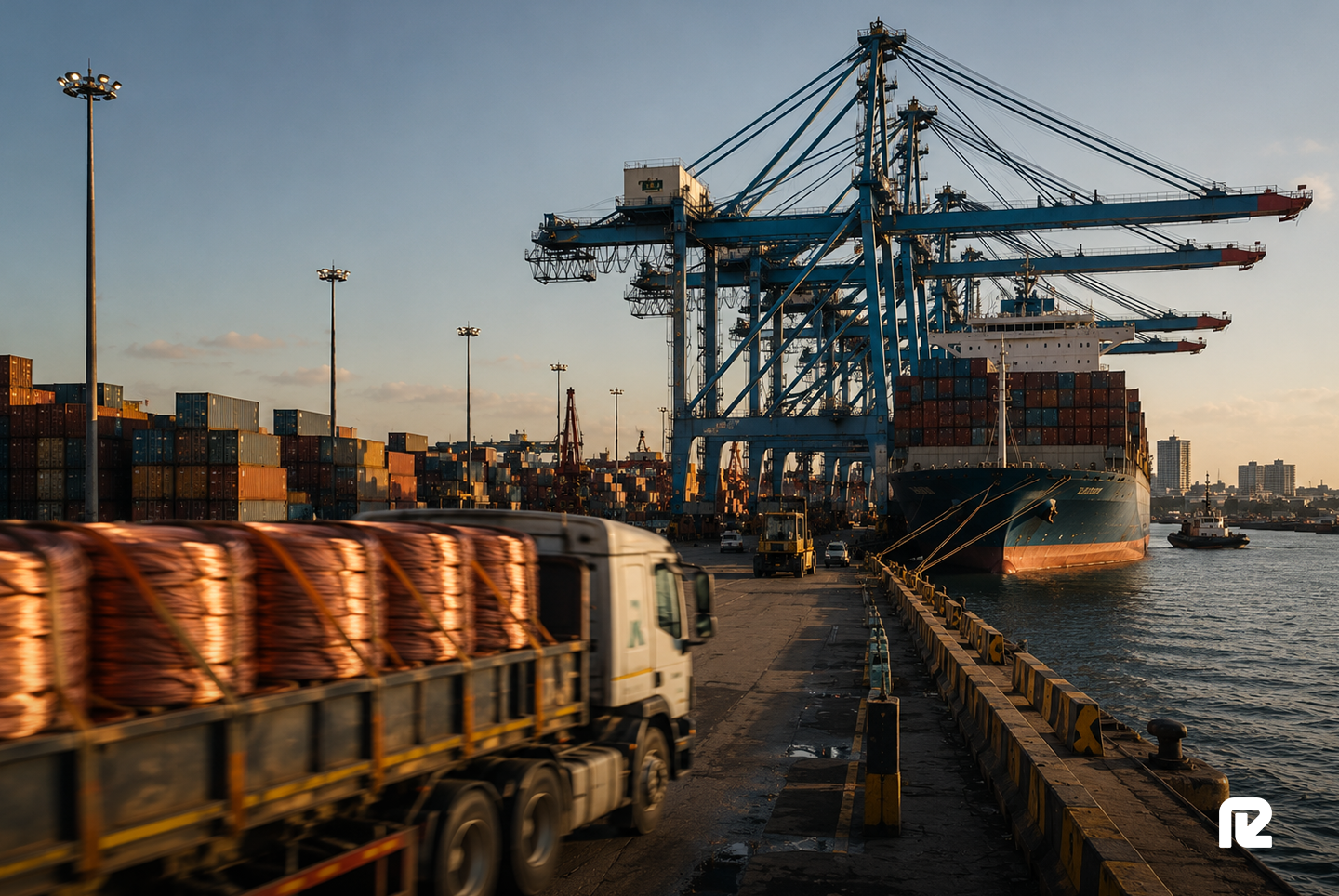

Dar es Salaam has become one of the most important gateways serving Zambia, the Democratic Republic of the Congo (DRC), and the wider Copperbelt region. For businesses moving mining exports, industrial equipment, project cargo, consumer goods, and raw materials, the port provides a critical link between international shipping routes and inland African markets. As cargo volumes through the corridor have increased, so has the importance of understanding the factors that influence transit times.
While discussions around the corridor often focus on port congestion, the reality is more complex. Delays can occur at multiple points along the supply chain, including vessel arrival scheduling, cargo handling operations, inland transport corridors, border crossings, and customs procedures. For shippers moving cargo between Dar es Salaam, Zambia, and the DRC, understanding how these different stages interact has become just as important as monitoring port activity itself.
For decades, Copperbelt exporters relied heavily on Southern African ports such as Durban, while importers used a combination of regional gateways depending on destination and cargo type. In recent years, however, Dar es Salaam has strengthened its position as a key route for both inbound and outbound cargo.
Its geographic location provides direct access to Zambia and the DRC through the Central Corridor, allowing cargo to move inland via road and rail networks that connect Tanzania to major mining and industrial centres. For Copperbelt businesses, the corridor offers an alternative to longer southern routes and creates additional routing flexibility when market conditions change.
Infrastructure investments have also improved the port's capabilities. Channel and berth upgrades have enabled larger vessels to call at Dar es Salaam, while operational reforms have helped improve throughput and vessel handling efficiency. These developments have increased the attractiveness of the corridor for both regional and international trade.
The result is a logistics network that now serves not only Tanzania's domestic market but also a significant volume of transit cargo destined for neighbouring countries.
When shipments experience delays, the cause is not always congestion within the port.
Transit performance can be influenced by several factors across the broader corridor, including:
• Vessel arrival schedules
• Container handling and cargo release processes
• Inland trucking capacity
• Border crossing procedures
• Regional transport disruptions
• Documentation and customs requirements
As a result, a shipment may move smoothly through Dar es Salaam but still encounter delays further along the route.
Many cargo owners still view transit performance primarily through the lens of port operations.
In reality, transit times are increasingly influenced by a combination of interconnected factors across the wider logistics network.
A vessel may arrive on schedule, discharge cargo on time, and complete terminal operations efficiently, yet the shipment may still encounter delays later in the journey. Inland transport availability, border processing requirements, customs documentation, infrastructure constraints, and regional disruptions can all affect total transit time.
This distinction is important because it changes how businesses should assess logistics risk.
Instead of focusing solely on how quickly cargo moves through the port itself, supply chain teams increasingly need visibility across the entire corridor.
The question is no longer:
"How quickly can cargo move through Dar es Salaam?"
It is:
"How efficiently can cargo move from origin to final destination?"
Those are very different measurements.
One of the biggest misconceptions in logistics planning is the assumption that port performance and corridor performance are the same thing.
A port can operate efficiently while the wider corridor experiences delays.
Likewise, temporary vessel queues or terminal pressure may have little impact on final delivery dates if downstream transport networks are operating smoothly.
For cargo moving between Tanzania and the Copperbelt, transit performance generally depends on four interconnected stages.
The first stage involves vessel scheduling, berth allocation, cargo discharge, and terminal handling activities.
Factors such as weather events, shipping-line schedule changes, equipment availability, and seasonal cargo surges can all influence how quickly cargo is processed after arrival.
Modern port investments have improved efficiency across many of these areas, but fluctuations in cargo volume can still affect operational performance.
Once cargo has been discharged, attention shifts to customs requirements, documentation readiness, cargo availability, and transport arrangements.
Delays at this stage often have less to do with vessel operations and more to do with coordination between stakeholders.
Issues such as incomplete documentation, late customs submissions, equipment shortages, or transport availability can extend cargo dwell times even when port operations themselves are functioning normally.
After leaving the port, cargo enters a network of trucking and rail connections that move goods toward Zambia and the DRC.
Transit performance along these routes is affected by infrastructure conditions, traffic volumes, equipment availability, fuel supply, regulatory requirements, and seasonal disruptions.
Road networks that support growing cargo volumes can experience varying levels of pressure depending on demand, making transport planning an important component of overall supply chain performance.
For many shipments, the border crossing ultimately determines total transit time.
Border posts combine customs processing, inspections, scanning procedures, regulatory requirements, and traffic management within a single operational environment.
Even relatively small disruptions can create significant knock-on effects when cargo volumes are high.
This is one reason why businesses increasingly evaluate corridors as integrated logistics systems rather than viewing ports in isolation.
For cargo moving between Tanzania and the Copperbelt, the Tunduma-Nakonde border crossing remains one of the most important points on the journey.
The crossing serves as a major gateway connecting Tanzania with Zambia and onward markets across Southern Africa. As a result, it handles substantial volumes of transit traffic moving in both directions.
Operational conditions at the border can have a direct impact on delivery schedules.
Processing requirements, traffic levels, customs procedures, system availability, infrastructure capacity, and inspection processes can all influence the amount of time cargo spends at the crossing.
The challenge for supply chain planners is that border delays are often difficult to predict with precision.
Unlike vessel schedules, which may be published weeks in advance, border performance can change quickly depending on operational conditions.
This is why experienced logistics teams monitor corridor conditions continuously rather than relying solely on planned transit times established at the start of a shipment.
When businesses think about transport delays, the first concern is usually time.
In reality, cost is often the greater issue. Delays rarely affect only one part of the logistics chain.
A shipment delayed at one stage may trigger additional expenses elsewhere, creating a compounding effect throughout the supply chain.
Potential direct costs include:
• Port storage charges
• Demurrage fees
• Detention costs
• Additional trucking expenses
• Driver waiting charges
• Temporary warehousing requirements
• Equipment repositioning costs
Indirect costs can be even more significant.
These may include:
• Production disruptions
• Stock shortages
• Missed customer commitments
• Reduced inventory availability
• Delayed project schedules
• Increased working capital requirements
For mining operations, manufacturing facilities, and project cargo movements, the commercial impact of disruption often extends far beyond the transportation budget itself.
While no company can eliminate every source of delay, proactive planning can significantly reduce risk.
Transit estimates should account for potential delays at multiple stages of the journey rather than relying solely on vessel schedules or historical averages.
Warehousing and bonded storage capacity become more valuable during periods of increased demand. Planning ahead provides greater operational flexibility.
Documentation issues are among the most preventable causes of delay. Ensuring customs, permits, and clearance requirements are completed before cargo reaches critical transit points can help reduce unnecessary hold-ups.
Conditions can change rapidly due to operational, regulatory, or market developments. Regular monitoring allows businesses to respond before disruptions become significant problems.
Alternative corridors may provide additional options when conditions change. Evaluating routing alternatives on an ongoing basis helps businesses maintain resilience and adapt when necessary.
Dar es Salaam remains one of the most important trade gateways serving Zambia and the DRC. Continued investment across the port, inland transport networks, and border infrastructure is strengthening the corridor's ability to support growing regional trade.
However, successful logistics planning increasingly depends on understanding the entire journey, not just port operations.
For businesses moving cargo into or out of the Copperbelt, transit performance is shaped by a combination of port efficiency, inland transport reliability, border processing, and supply chain preparedness.
The companies that manage these factors proactively are generally better positioned to control costs, reduce disruption, and maintain supply chain continuity in an increasingly complex logistics environment.