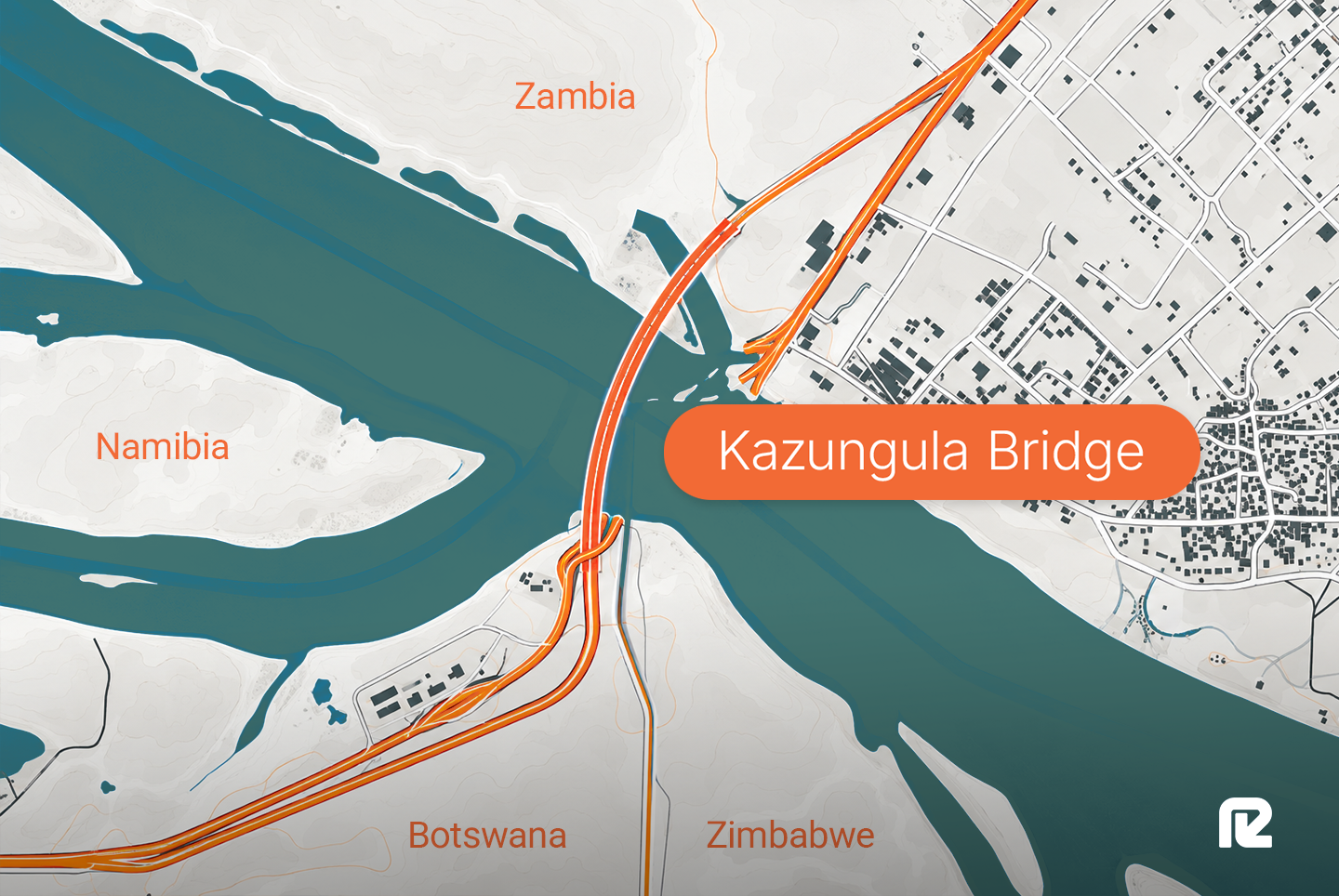
Kazungula Bridge: What It Means for Zambia-Bound Freight
September 15, 2026
Read the story
Please submit your details below and one of our logistics experts will reach out within one business day. Thank you.
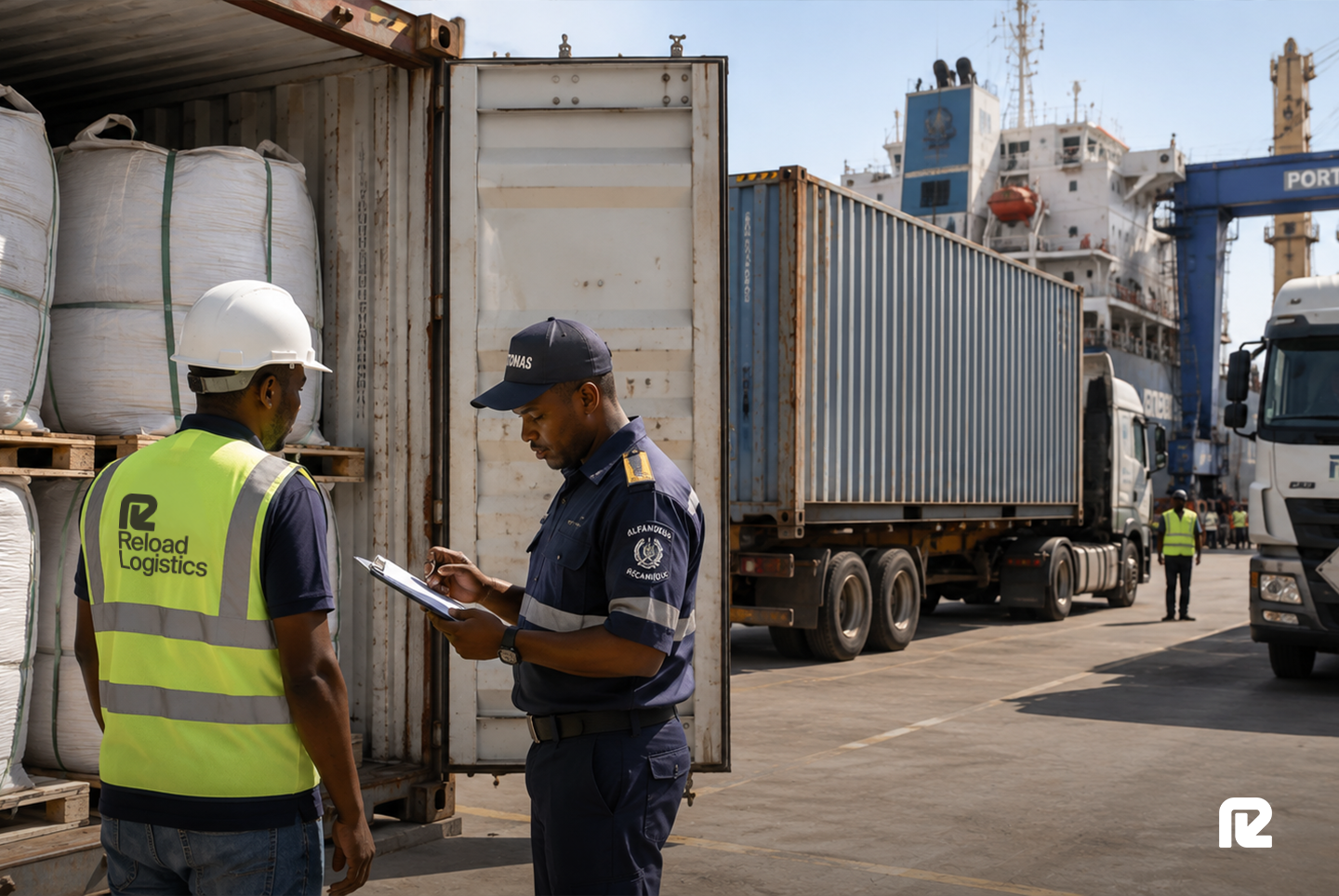

Beira is the shortest sea route for cargo moving into Zimbabwe, Zambia, Malawi, and parts of the Democratic Republic of the Congo. However, the corridor's advantage only holds if cargo clears the port cleanly. A single missing document or a mismatched declaration can turn a short sea route into a slow one.
This guide sets out what customs clearance at Beira actually involves: the documents a shipper needs, the sequence the port follows, and the points where cargo most often gets held.
Beira sits on Mozambique's central coast, connected by road and rail to the Zimbabwean border at Machipanda and onward into the Zambian and DRC interior. For cargo destined for these markets, it offers a shorter route to the coast than the alternatives further south.
That geographic advantage is separate from the clearance process itself. Our cross-border logistics guide covers the wider concept of moving cargo between jurisdictions, and our guide to customs in Southern Africa covers Mozambique's electronic customs processing more broadly.
This article looks at what happens to a shipment at Beira between vessel arrival and release for onward transport.
Customs uses the commercial invoice to establish value and the packing list to confirm what is in the container. The two documents need to match each other and the manifest. A discrepancy between the invoice value and declared goods is one of the fastest ways to trigger a query.
The bill of lading (or a waybill for non-negotiable shipments) establishes who owns the cargo and authorizes its release from the shipping line. Beira customs and the port operator both check this before goods can move.
Origin documentation determines duty treatment and, for goods moving under regional trade agreements, whether preferential rates apply. Missing or incorrectly completed origin paperwork is a common reason for a shipment to be flagged for further review.
Cargo destined for Zimbabwe, Zambia, or the DRC typically moves under transit rather than import clearance, since it is passing through Mozambique instead of entering the local market.
The declaration needs to identify the correct regime from the outset. Filing under the wrong one is a delay that shows up later in the process, often at the point where duty or bond requirements are calculated.
Cargo moving through Mozambique to a landlocked destination generally needs a bond or bank guarantee in place before it can travel under transit rather than import status. This guarantee is what allows customs to release the goods without collecting duty upfront, since it gives them a way to recover duty if the cargo never reaches its stated destination.
On the Zimbabwean side, for example, only a registered, bonded clearing agent can handle goods moving in transit through the country. The bond needs to be arranged and valid before the shipment departs Beira, not after.
The process generally follows the same order regardless of cargo type, though the party responsible shifts at each stage:
1. Pre-arrival documentation. The shipping line and the shipper's clearing agent submit the manifest and supporting documents ahead of the vessel’s arrival, allowing customs to begin processing before the cargo lands.
2. Vessel arrival and manifest reconciliation. The port operator and customs confirm what has arrived against what was declared.
3. Document verification. Customs checks the invoice, packing list, bill of lading, origin certificate, and declaration for consistency.
4. Inspection selection. Customs selects a portion of cargo for physical inspection based on risk criteria. The selected cargo cannot move until this inspection is complete.
5. Duty, bond, or transit guarantee settlement. The clearing agent settles this stage directly with customs. For transit cargo, this usually means confirming the bond rather than paying duty, since the goods are not entering the Mozambican market.
6. Release. Once documentation, inspection, and financial requirements are cleared, the port authorizes release to the transporter taking the cargo onward.
Timelines vary by cargo type, inspection outcome, and the completeness of the documentation at submission. Cargo with clean, pre-verified paperwork moves through this sequence considerably faster than cargo requiring corrections after the fact.
Document mismatches. Invoice, packing list, and manifest need to tell the same story. Any gap between them stops the file.
Incomplete or incorrect transit bonds. Cargo moving onward to Zimbabwe or Zambia needs its transit status established correctly and bonded appropriately. An import declaration filed when a transit declaration was needed creates a hold that must be corrected before release.
Tariff classification disputes. Where customs and the importer disagree on the correct tariff code, the shipment sits until the classification is resolved.
Customs valuation disputes. Separate from classification, this is a disagreement over the declared value of the goods rather than the code assigned to them. Undervaluation, real or suspected, is one of the more common reasons customs holds a shipment for further review.
Physical inspection. Inspection itself is a normal part of the process, but cargo selected for inspection is held until it is completed, and any discrepancy found during inspection extends the hold further.
Downstream congestion at Machipanda. Cargo can clear Beira port cleanly and still face delays at the Zimbabwe border further along the corridor. Port clearance and border clearance are separate points in the same route, and a shipper needs a plan for both.
Submitting the full document set before the vessel arrives gives customs time to process the file in advance, so clearance can move quickly once the cargo lands. Transit or import status should be confirmed at the point of booking, since correcting the wrong declaration later in the process is one of the more difficult holds to resolve.
Origin paperwork and bond arrangements belong at the departure stage too. Getting these finalized before the shipment leaves gives the clearing agent everything customs needs on file at Beira, rather than something to source or correct once the cargo has already arrived.
Clearance at Beira involves multiple parties across a single shipment: the shipping line, the port operator, customs, and the transporter taking the cargo onward. Each stage depends on the one before it, so a gap in documentation or a missed step earlier in the sequence tends to surface as a delay later on, often at the point where it is hardest to fix quickly.
Getting this right comes down to preparation well ahead of vessel arrival and consistent handling across each stage, rather than treating clearance as a single event at the port. This is where specialist customs clearing and consulting support tends to make the most difference for cargo moving through Beira into Zimbabwe, Zambia, and the DRC.