Kazungula Bridge: What It Means for Zambia-Bound Freight
September 15, 2026
Read the story
Please submit your details below and one of our logistics experts will reach out within one business day. Thank you.

A pontoon ferry that could only carry two trucks at a time was once the only way across the Zambezi at Kazungula, with waits reported as long as 12 days at peak.
The $259 million Kazungula Bridge has now replaced it, and that change has opened up a new routing option for cargo moving between South Africa and Zambia.
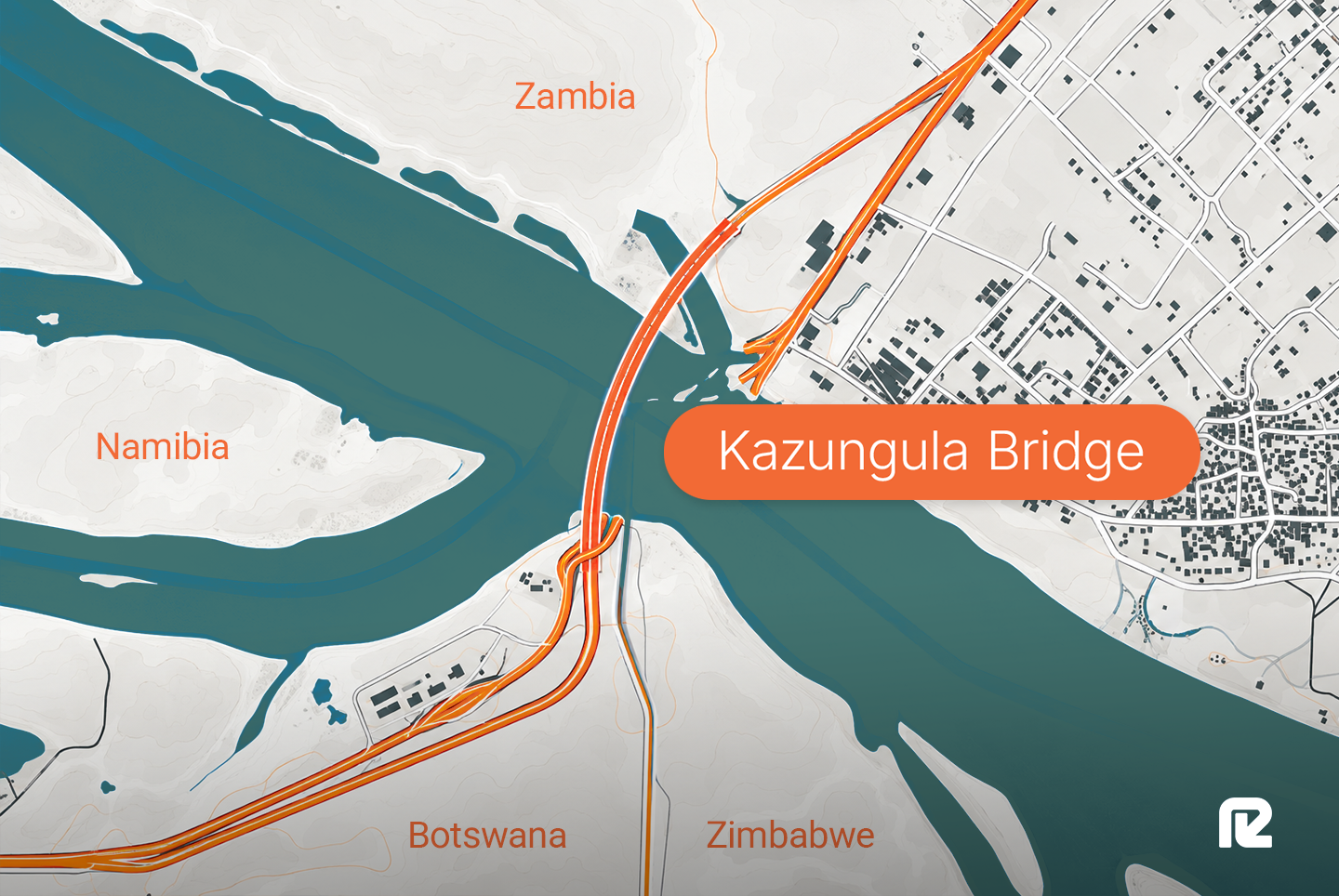
Kazungula Bridge, linking Botswana and Zambia, gives freight bound for Zambia, the DRC, and Tanzania a working alternative to Beitbridge and Chirundu.
Mining and consumer goods traders moving cargo on this corridor are the ones most likely to weigh it as an option. It has its own capacity ceiling and its own recent history of delay, and both are worth knowing before a shipment gets routed through it.
This article covers how the bridge changed the crossing, what moves through it, and where its current capacity and congestion limits sit, the three things that decide whether it's the right call for a given shipment.
The ferry's capacity problems and the subsequent delays weren't the only issue. In 2003, an overloaded truck capsized one of the pontoons, drowning 18 people, a disaster that pushed governments toward building a permanent bridge.
Construction began in 2014 and finished in December 2020. Kazungula Bridge opened on May 10, 2021, at a cost of $259.3 million, funded jointly by Zambia, Botswana, the African Development Bank, Japan's development agency, and the EU-Africa Infrastructure Trust Fund.
The bridge has a curved design, built specifically to avoid crossing into the nearby territorial waters of Zimbabwe and Namibia..
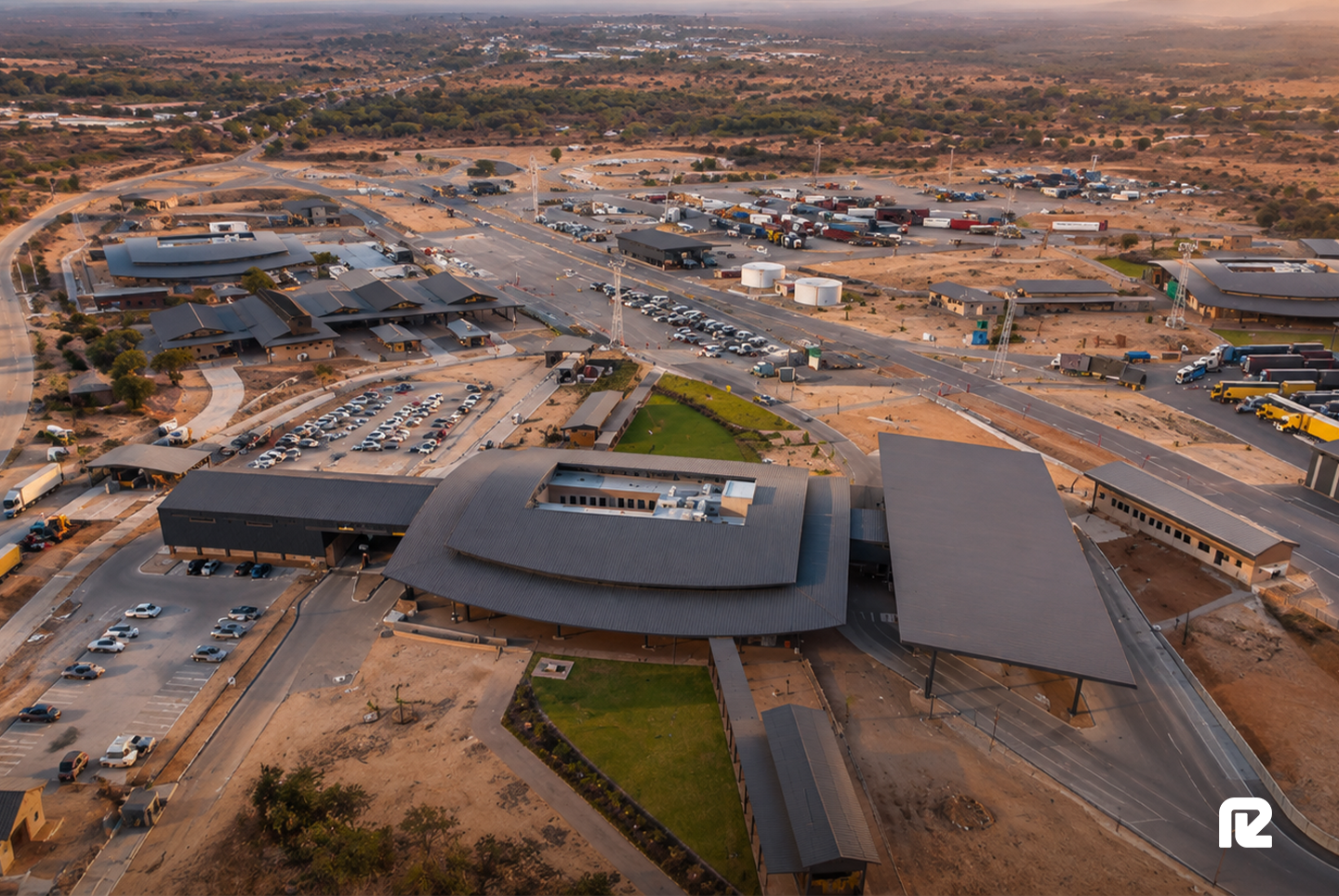
As well as replacing the ferry crossing, the bridge introduced a One-Stop Border Post on each side, so a truck clears customs once instead of stopping separately in Zambia and Botswana. That single change is what makes Kazungula a compelling routing option.
Kazungula's case for Zambia-bound freight rests on what it avoids. Cargo routed via Botswana into Zambia never touches Zimbabwe and never has to queue at Beitbridge, Southern Africa's busiest land crossing. For freight moving between South Africa and Zambia, the DRC, or Tanzania, it represents an attractive alternative corridor for trade.
The trade-off is distance. The Botswana route runs further west before turning north, covering more distance than the direct route through Beitbridge and Chirundu.
Chirundu, the more direct Zimbabwe-Zambia border crossing, was Africa's first One-Stop Border Post, so the single-clearance model at Kazungula matches what's already running there. What varies between the two, on any given week, is the level of congestion.
Beitbridge is the crossing most likely to push a shipper toward Kazungula in the first place. Truck queues there run from a few hours off-peak to several days at month-end.
Once across the border, freight joins the same road network toward Livingstone and Lusaka as Chirundu-routed cargo. The mix of cargo crossing the bridge each day says as much about that decision as the routing math does.
Copper is the biggest single commodity on the route, moving south from the DRC, Zambia, and Tanzania before onward shipment, much of it eventually bound for buyers in China.
Mining equipment travels the opposite direction, from Tanzania into the DRC and Zambia, alongside coal and timber moving south and food products moving north from South Africa.
That pattern, minerals heading out, equipment and consumables heading in, mirrors the same inbound-outbound flow that shapes freight through the wider Copperbelt corridor. Much of that copper moves as cathodes, entering the same storage and export chain that serves the wider Copperbelt corridor, just through a different border.
For traders moving mining or agricultural cargo on this lane, that mix is the practical reason Kazungula is a compelling option. It carries the same broad range of cargo that moves through Beitbridge and Chirundu.
The bridge's capacity has its limits, which has to be taken into account Kazungula moved 162 trucks on its first day of operation in 2021, against roughly 40 to 50 a day on the old ferry.
Volume has grown further since, and the One-Stop Border Post now handles between 140 and 250 trucks a day, with parking for 150 trucks on each side. That capacity is fixed, so a shipment arriving without a slot plan competes for a set number of crossing spots on a given day.,
The bridge has also had its own delays. In March 2026, a ZRA system outage combined with a cargo-scanner failure produced a queue stretching roughly 10 kilometers into Botswana. Transport operators represented by SATDAZ have since raised ongoing concerns that ZRA processing and system verification issues, separate from the physical infrastructure, remain the main source of delay at the crossing.
Industry recommendations since have focused on better data-sharing between the Zambia Revenue Authority and Botswana's revenue service, BURS, as the fix most likely to reduce clearance times, rather than further construction at the crossing itself.
Four things follow from the bridge’s limitations, and each should be considered during shipment planning.
● Kazungula's capacity ceiling means it isn't unlimited insurance against Beitbridge congestion. A shipment rerouted here at the last minute because Beitbridge isn’t guaranteed same-day passage as it is still competing for a capped number of crossing slots.
● The March 2026 outage wasn't an isolated event. The ongoing complaints about ZRA processing point to a recurring risk on the Zambian side specifically. A transit buffer applies at Kazungula for the same reason it applies at any other border, even with a faster clearance process on paper.
● Mineral cargo depends on the same scanning equipment that failed in March 2026. A shipment of copper or other bulk minerals is exactly the kind of cargo most affected by scanner outage delays since it typically requires physical inspection rather than a paperwork-only clearance.
● The bridge toll adds a cost to weigh alongside transit time. Standard vehicles pay roughly $15 at the crossing, plus a carbon tax of around $20 depending on engine capacity, as of January 2026, on top of the road levies and border handling charges that apply at any crossing. Both fees should be considered along with transit time when comparing against Beitbridge or Chirundu.
Together, these factors call for the same planning discipline any other crossing requires.
For freight bound for Zambia, the DRC, or Tanzania, the choice between Kazungula, Beitbridge, and Chirundu comes down to current conditions rather than general reputation. Each route has a different reason to be the right call in a given week:
● Chirundu runs the more direct route through Zimbabwe and offers the same One-Stop clearance model as Kazungula, over a shorter distance. It stays the default choice unless conditions elsewhere make the detour through Botswana worthwhile.
● Beitbridge is the crossing most likely to push a shipment toward Kazungula in the first place. Its queue length, from a few hours off-peak to several days at month-end, is the factor that decides whether the extra distance through Botswana pays off.
● Kazungula only pays off if it has capacity to spare. Its daily throughput is capped at 140 to 250 trucks, so a shipment rerouted here without checking current conditions risks trading one queue for another.
Kazungula gives Zambia-bound freight a genuine third route alongside Beitbridge and Chirundu, but its value depends entirely on current conditions: its own daily capacity is capped, and recent ZRA system failures have caused real delays. Checking capacity and congestion at all three crossings before committing a shipment matters more than any one route's reputation.