Lebombo Border Post: What’s Holding Up Trucks on the Maputo Corridor?
October 26, 2026
Read the story
Please submit your details below and one of our logistics experts will reach out within one business day. Thank you.
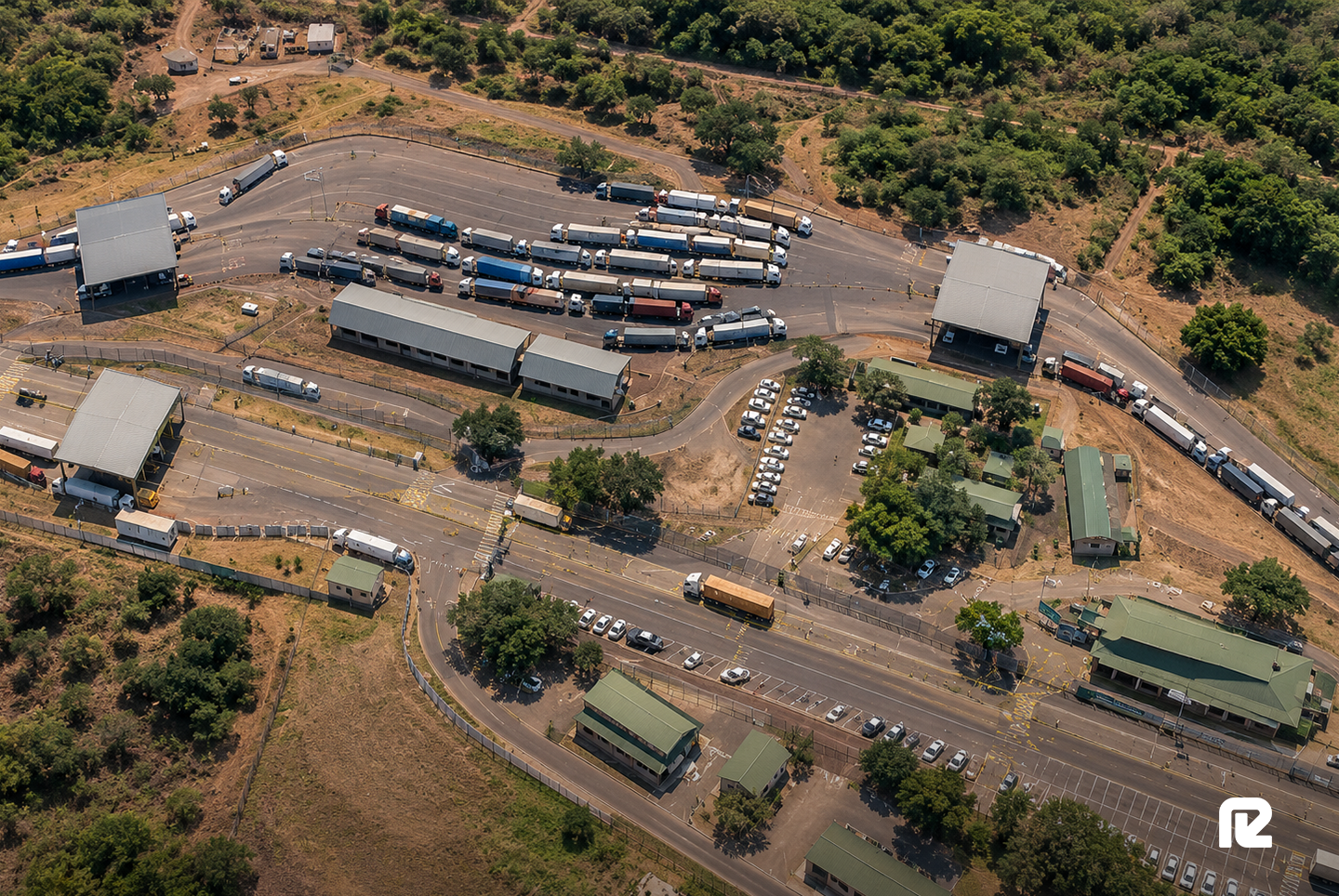

In late September, South Africa's Border Management Authority (BMA) and the South African Revenue Service (SARS) said a compliant truck can clear the Lebombo border post in under five minutes once it reaches the processing point. In the same week, trucks were reported to be spending three to four days in a queue stretching back past KM20 on the N4.
Lebombo, with Ressano Garcia on the Mozambican side, is the border crossing on the Maputo Corridor between Gauteng and the Port of Maputo. Its queue has grown through 2026, and construction has started on both sides of the border.
This article covers what moves through Lebombo, how the queue built up, what causes it, which upgrades are underway, and how to plan Maputo-bound loads around the crossing.
The N4 runs east from Pretoria to Maputo, and Lebombo is where it crosses into Mozambique. For mines in Mpumalanga and Limpopo, Maputo is the shortest route to a seaport.
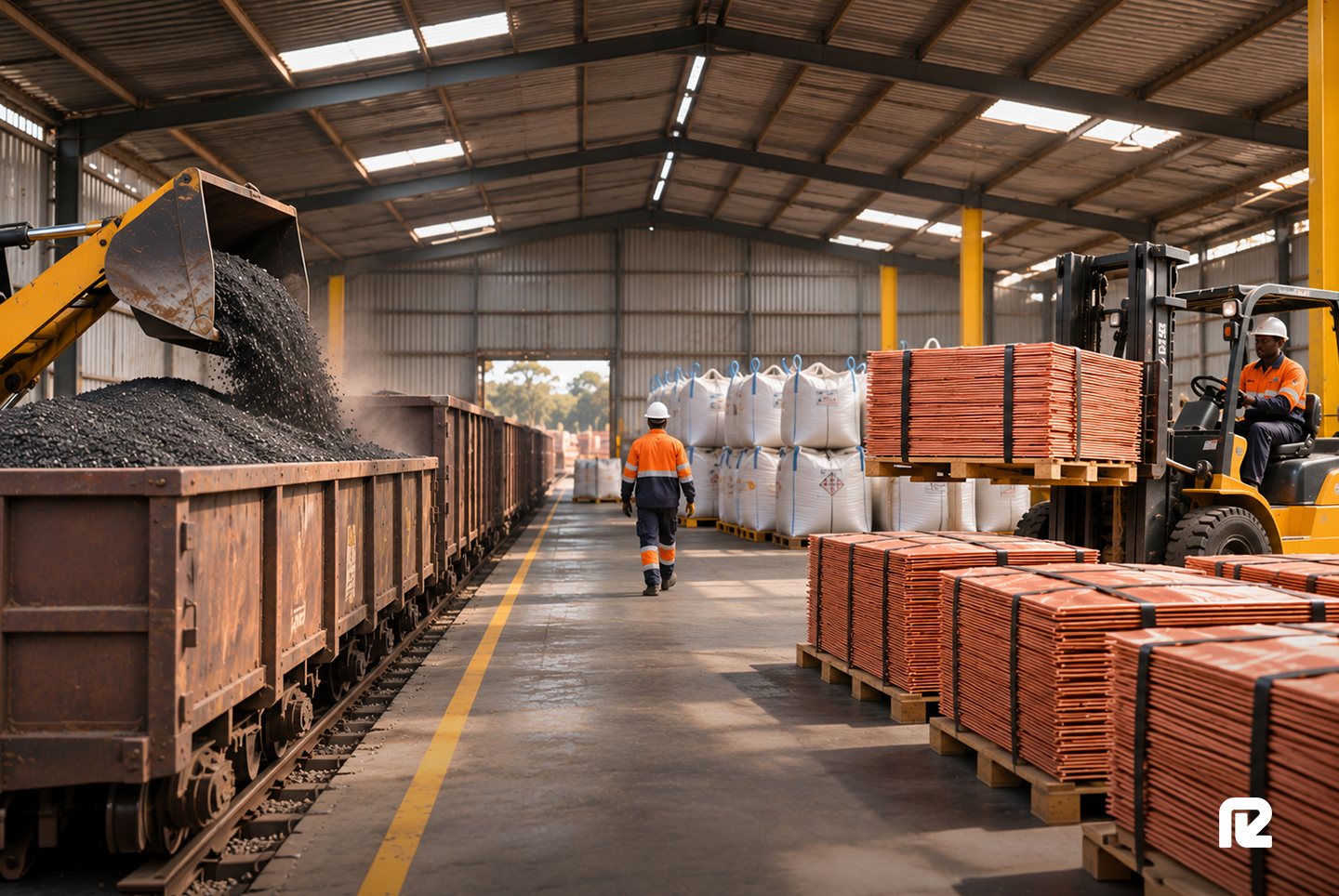
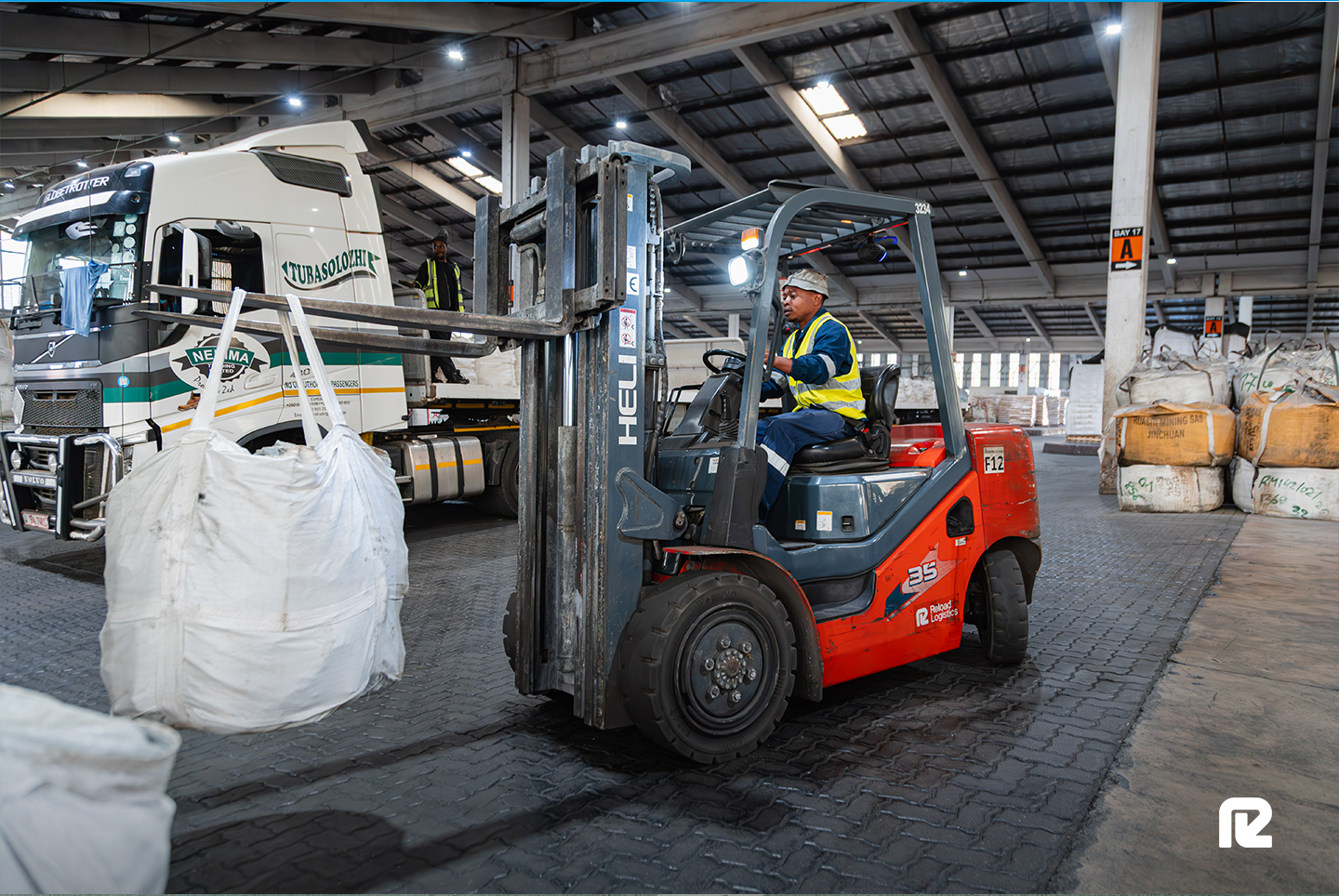
Much of the traffic is bulk minerals heading for export. Chrome and coal producers moved volume onto the N4 after rail theft and poor port performance at Richards Bay pushed bulk exporters toward Maputo. These trucks are working to a vessel schedule, so a day in the border queue can also cost a loading window at the port. General cargo exports and passenger traffic share the same approach roads.
The BMA has said Lebombo has to process 1,500 to 2,000 trucks a day. It is one of six land ports that together carry more than 80 percent of cross-border trade and passenger flows through South Africa's land borders.
The queue has worsened in stages over the past three months.
● August 17–23. Crickmay's RSA Corridor Pulse Report recorded a 180% rise in the average truck queue, to about 12km. Average queueing time rose 82% to almost four hours. End-to-end transit time between Pretoria and Maputo went from 21.5 to 23.3 hours. Crickmay rated the corridor "at risk", traced the deterioration to the border queue itself, and advised operators to allow two extra hours at Lebombo.
● September 21–24. In a joint statement, the BMA and SARS reported processing between 1,339 and 1,734 trucks a day, with a peak above 1,800 in the previous two weeks. They acknowledged severe congestion on the approach to the border.
● Late September. Trucks were reported waiting several days. Mike Fitzmaurice, vice president for Southern Africa at the African Union of Transportation and Logistics Organizations (AUTLO), said a truck that can clear in five minutes should never sit for three or four days in a queue starting at KM20.
In August, Crickmay cautioned that one week's data needed to be monitored before it could be called a trend. Six weeks later, waits were measured in days.
The BMA and SARS figures show processing holding at well over 1,000 trucks a day. The pressure builds on the road leading to the processing points.
Volume arrives in peaks. Truck traffic rises sharply from Thursday to Sunday, according to the BMA. The bypass at the port holds about 50 trucks at a time, and once it fills, the queue backs up along the N4.
Non-compliant trucks hold up the line. The authorities listed several problems on the approach:
● Trucks arriving without the SARS "Proceed to Border" authorisation
● Incomplete documentation that needs extra checks before processing
● Breakdowns and unroadworthy vehicles
● Queue jumping, double parking near the BP garage, and drivers leaving trucks in the road
● Trucks moving into oncoming lanes to pass the queue, which has caused accidents and road closures
A truck that reaches the front of the queue without its authorisation blocks every compliant vehicle behind it until it is moved aside.
Congestion on the Mozambican side slows the flow. Delays at the KM4 terminal and the bypass in Ressano Garcia back traffic up toward Lebombo.
Fitzmaurice argues that the main gap is traffic management. He has called for one standard operating procedure covering the whole approach from Komatipoort. It would specify where trucks wait and when they are released, with one authority responsible for each decision. Compliance checks would happen at staging areas before trucks join the final queue.
Trucks also pay facility charges along the approach. The South African Association of Freight Forwarders (SAAFF) and the Minerals Council South Africa have said charges at the KM7 dry port and the KM4 terminal add significant cost with little value for the trucks using them.
Both organisations have called for port-bound transit cargo to be separated from general cargo exports at the border.
Work is underway on both sides of the border, on different timelines.
Ressano Garcia (Mozambique)
Mozambique broke ground on August 17 on a 980 million metical (about R260 million) modernisation of Ressano Garcia. The freight works include:
● An upgrade of the KM4 road freight terminal for receiving, sorting and parking heavy vehicles
● Entrance and exit roads to the terminal widened to three lanes
● A new exit connecting the terminal to the N4
● Four express lanes for trucks carrying minerals to the Port of Maputo
The project also introduces a one-stop arrangement in which South African and Mozambican officials process people in sequence in the same building. That arrangement covers travellers. The freight works target congestion on the EN4, the Mozambican section of the road.
KM7 is a processing facility on the N4 about 7km from the border, on the South African side. South Africa's Department of Trade, Industry and Competition told Parliament in January that upgrades at KM7 are designed for coordinated processing by South African and Mozambican agencies, as a step toward a one-stop border post.
After a meeting with Mozambican officials and the World Bank in mid-September, Mozambique deployed officials to KM7 to process truck drivers. SARS has installed eight automatic number plate recognition (ANPR) cameras to track trucks between KM7 and KM4. It has also added four boom gates at KM7 and equipment for scanning customs declarations.
Lebombo is one of six land ports in a R12.5 billion public-private partnership (PPP) to rebuild South Africa's busiest border posts. The Raulux Consortium was selected for Lebombo in April with a three-year construction timeline.
Under the PPP, each consortium finances, builds and operates its port for a concession of up to 25 years before handing it back to the state. The BMA has said the redevelopment will support a one-stop border post and automated systems for freight.
A one-stop border post (OSBP) at Lebombo/Ressano Garcia has been planned for close to two decades. Mozambique's parliament ratified the bilateral agreement in 2007, and both governments still name it as the long-term goal. A date for full operation hasn't been confirmed.
Beitbridge shows what a long-term border concession can deliver once built. Up to 60 percent of commercial cargo there now clears in under three hours. On the current construction timeline, a comparable result at Lebombo is at least three years away.
These steps reduce the time a truck spends at Lebombo while the upgrades are being built.
● Secure the SARS Proceed to Border authorisation before dispatch. The BMA has named missing authorisations as a cause of congestion, and a truck without one is held at the border.
● Check documents and roadworthiness at the yard. An error in a transit or export declaration triggers extra checks at the border. An unroadworthy truck risks breaking down in the queue.
● Avoid Thursday-to-Sunday arrivals where the schedule allows. Traffic peaks over those four days.
● Set buffers from current data. Crickmay's two-hour guidance reflected conditions in August. Weekly corridor reports and transporter networks give a more current picture of waiting times.
● Budget for KM7 and KM4 charges. Both facilities charge trucks passing through, and those charges belong in the trip quote.
● Compare the alternatives. The Maputo Corridor is the shortest route to the sea for Mpumalanga and Limpopo cargo. Richards Bay and Durban are the other options for South African bulk exports, and each has its own congestion. Border conditions in a given week can change which route is fastest.
Most of these steps depend on the paperwork being complete before the truck leaves. When one provider handles customs clearing and cross-border transport together, the authorisation and declarations are confirmed within the same booking. The transport plan can then be adjusted as border conditions change.
Lebombo clears a compliant truck in minutes once it reaches the processing point. The delays build on the N4 approach, where traffic peaks from Thursday to Sunday and non-compliant trucks hold up the queue. Waiting times grew through 2026, from a few hours in August to several days by late September.
Upgrades are underway on both sides of the border, on different timelines:
● Ressano Garcia: Mozambique’s works expand the KM4 terminal and add express lanes for mineral trucks.
● KM7: Joint processing with Mozambican officials and new SARS automation are already in place.
● Lebombo: South Africa’s redevelopment has a three-year construction timeline, and the one-stop border post has no confirmed date.
The construction will take years to change conditions at the border. In the meantime, operators control three things: a Proceed to Border authorisation, complete documents, and a roadworthy truck. A Maputo-bound load that has all three, and arrives outside the weekend peak, has the best chance of a short crossing.