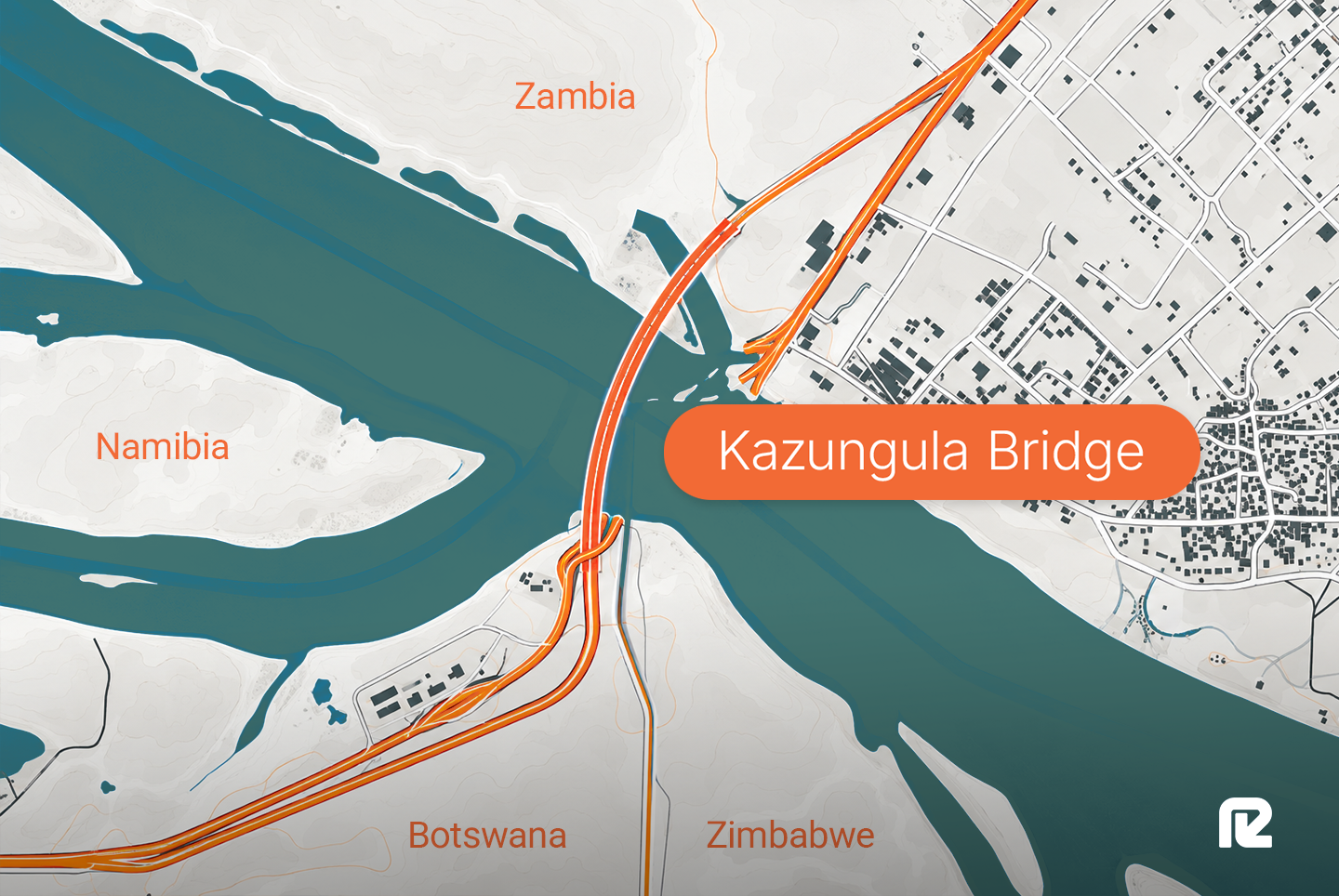
Kazungula Bridge: What It Means for Zambia-Bound Freight
September 15, 2026
Read the story
Please submit your details below and one of our logistics experts will reach out within one business day. Thank you.
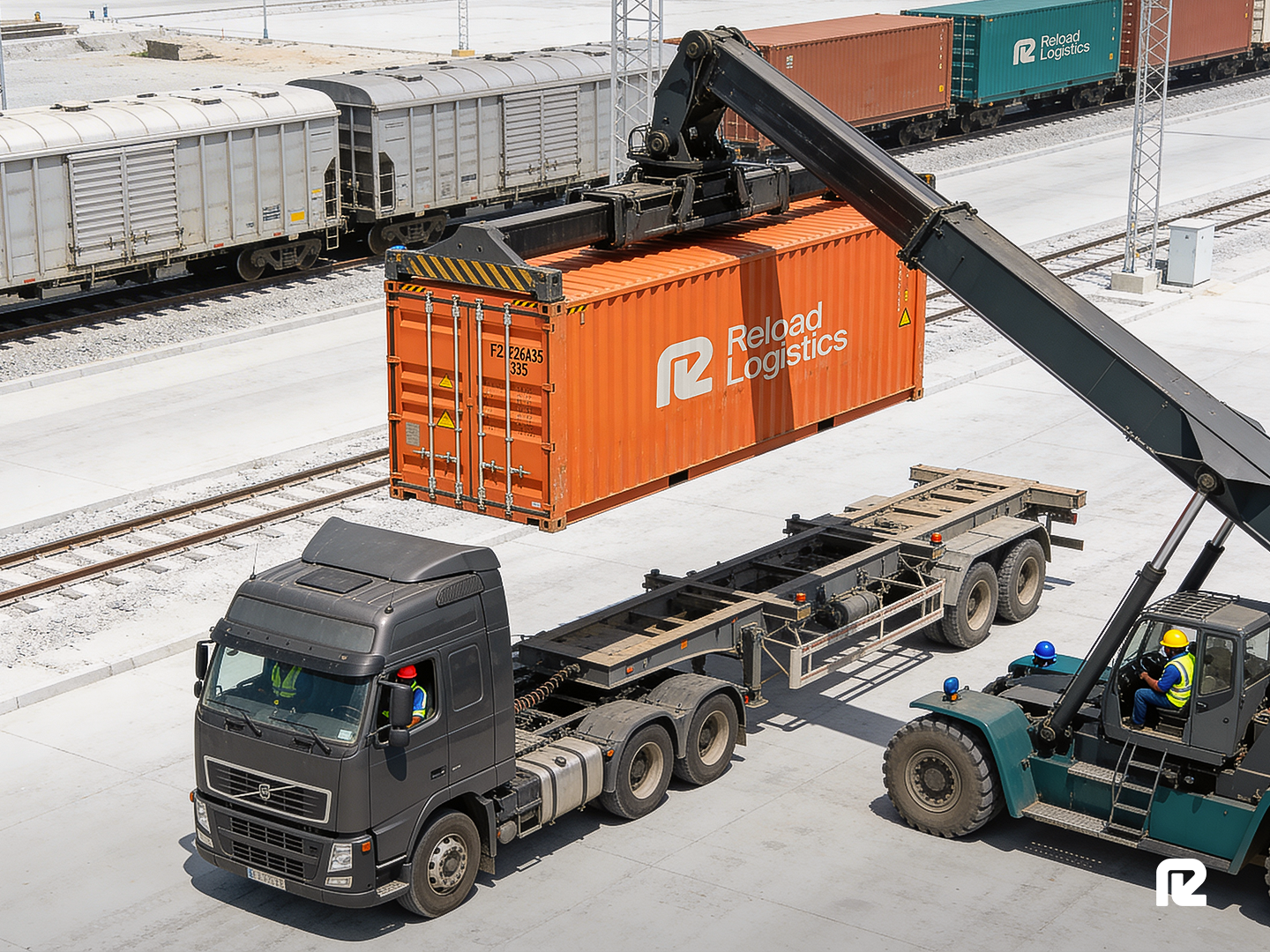

When containers arrive at a port or inland terminal, their journey is rarely over. In many cases, that is when the most critical decisions begin. Cargo may need to move from sea freight to rail, from rail to truck, or from container to flatbed before reaching its final destination. This transfer process is known as transloading. It sounds technical, but in practice, it is a routine operational decision made every day in busy trade corridors.
The term is searched frequently, particularly by teams trying to understand whether it fits their routing model, but in practice, it is often used loosely across different transport environments. At its core, transloading refers to transferring freight from one mode of transport to another. It affects routing choices, inland freight rates, container cycle times, and, in many cases, overall supply chain resilience.
Knowing when to apply transloading often makes the difference between a reactive freight plan and a structured one. In markets where congestion, cross-border friction, or infrastructure gaps shape freight flows, the right transloading strategy can make a measurable operational difference.
In logistics, transloading refers to transferring cargo from one transport mode to another at an intermediate facility before final delivery.
In simple terms, transloading means unloading freight from one transport unit and reloading it onto another. This may involve:
• Moving cargo from an ocean container to a truck
• Transferring goods from railcars to trailers
• Shifting bulk materials into packaged or palletized formats
• Reconfiguring shipments for inland distribution
At its simplest, it is a physical transfer between transport units. The real challenge is not the transfer itself but deciding when it makes operational sense to do it.
Unlike intermodal shipping, where the same container moves across different transport modes, transloading requires the cargo itself to be handled and repositioned.
For example, in a typical import flow:
• A 40-foot container arrives at a coastal port.
• The cargo is unloaded at a transloading warehouse.
• Goods are sorted and transferred onto multiple trucks for regional distribution.
This process allows businesses to optimize inland freight costs, adjust shipment sizes, reduce port dwell time, and route cargo more efficiently toward distribution centers or final customers.
In practice, most routing decisions are not made in ideal conditions. They are made under time pressure, with equipment constraints and carrier availability influencing what is actually feasible.
Transloading is commonly performed at:
• Transload facilities near major ports
• Inland rail terminals
• Container freight stations
• Bonded or non-bonded logistics warehouses
Because cargo is physically handled, careful coordination is required between freight forwarders, trucking partners, customs brokers, and warehouse teams to maintain shipment integrity and compliance.
Transloading involves physically moving cargo between transport units at a defined point in the supply chain. That point might be a port-side warehouse, an inland rail hub, or a dedicated transload facility positioned near key trade corridors.
Operationally, it begins with inbound cargo being received and documentation matched against the physical shipment. Containers are pulled from the terminal (often via short-haul drayage) to a site where they can be opened and handled safely. In busy gateways, dock windows may be scheduled in tight time slots, so a late drayage move can push unloading into the next shift and delay the outbound leg.
This is also where small issues become big ones. A seal number that does not match, a short count on one SKU, or damage that is missed at intake can create delays later, when the load is already scheduled to move.
Once freight is confirmed, it is unloaded, checked, and captured in the warehouse management system. From there, teams typically reconfigure the shipment based on the next leg: sorting by destination, repalletizing, splitting a container into multiple truckloads, or consolidating with other freight moving on the same route.
The final step is outbound loading onto the most practical equipment for onward transport, with documentation and tracking updated to reflect the handover.
Transloading and intermodal shipping are often confused, but they are not the same.
Intermodal shipping moves freight across multiple transport modes (for example, ocean → rail → truck) without unloading the cargo from the container. The same sealed container typically stays intact across the journey, which reduces handling points and can lower damage risk.
Transloading, by contrast, involves opening the container or trailer and moving the cargo itself into another transport unit. A simple transloading definition is: transferring cargo between containers, trailers, or modes at an intermediate facility before final delivery.
A common example is when an ocean container arrives at port, and the goods are removed and reloaded onto domestic trailers for inland delivery, especially when:
• shipment volumes need to be split across multiple destinations,
• domestic equipment is more cost-effective,
• Container return timelines create detention risk.
Cross-docking is related to fast distribution, while transloading is related to mode or equipment change.
Cross-docking is a warehouse flow where inbound goods are unloaded and moved directly to outbound staging for dispatch, usually with minimal storage time. It is primarily designed to speed up distribution and reduce warehousing, often within retail and e-commerce networks.
Transloading may also be fast-moving, but the purpose is different: it focuses on transferring cargo between transportation units, often because the inbound and outbound legs use different modes, equipment types, or routing strategies. Transloading may include sorting, reconfiguration, or repacking where required, particularly for containerized imports being moved into regional trucking networks.
A practical way to distinguish them:
• If the main goal is rapid redistribution across outbound deliveries, it looks like cross-docking.
• If the main goal is changing the transport unit or mode (container-to-truck, rail-to-truck, etc.), it is transloading.
Transloading and transshipment are closely related logistics concepts, but they serve different operational purposes.
Transshipment refers to the transfer of a container or shipment from one vessel, aircraft, or carrier to another during its journey to the final destination. In most cases, the cargo remains inside the same sealed container. The container itself changes transport legs, often at an intermediate port or hub.
For example, a container shipped from Asia to Southern Africa may stop at a major transshipment hub where it is transferred from one vessel to another before continuing its journey - without being opened.
Transloading, by contrast, involves physically unloading cargo from one transport unit and reloading it into another. The goods are handled, inspected, and often reconfigured before onward transportation. This may occur at a port warehouse, rail terminal, or dedicated transload facility.
The key distinction:
· Transshipment = container changes vessel or carrier, cargo remains inside.
· Transloading = cargo is physically transferred between containers, trailers, or transport modes.
Businesses typically choose transloading when they need to:
· Adjust shipment size for inland distribution
· Move from international containers to domestic trucking equipment
· Reduce detention or demurrage exposure, particularly at congested ports
· Reconfigure loads for regional routing
That distinction becomes important when planning inland transport and shaping the broader supply chain around it.
The transloading process begins when cargo arrives at a port, rail siding, inland depot, or designated transloading warehouse.
Inbound freight may arrive as:
· Ocean containers discharged from a vessel
· Railcars delivering bulk or containerized cargo
· Cross-border trucks entering a consolidation hub
Upon arrival, documentation is reviewed and verified. This may include:
· Bill of lading
· Commercial invoice
· Packing list
· Customs clearance documentation
· Delivery orders
Cargo is registered in the warehouse management system (WMS). Receiving teams then confirm container numbers, seal integrity, and shipment quantities. Proper inbound verification ensures traceability and reduces discrepancies later in the process. In fast-moving port environments, this is often where delays begin if documentation and physical cargo do not align.
Efficient cargo receipt is particularly important in high-volume ports, where container dwell time can trigger demurrage or detention fees if equipment is not moved promptly.
Once the inbound shipment is cleared for handling, the container or transport unit is opened, and cargo is unloaded.
At this point, teams usually:
· Break container seals
· Remove pallets or loose cargo
· Verify quantities against shipping documents
· Inspect for visible damage
· Record discrepancies
· Update digital tracking systems
Depending on the shipment profile, cargo may be:
· Sorted by destination
· Consolidated with other freight
· Repacked or palletized
· Labeled for regional distribution
For example, a single 40-foot container may be broken down into multiple outbound truckloads serving different provinces or neighboring countries.
Because cargo is physically handled during transloading, careful planning and supervision are required to prevent damage, misrouting, or delays. This is where operational discipline and facility expertise play a central role.
After sorting and preparation, cargo is loaded onto outbound equipment based on the next leg of its journey.
Outbound transport may include:
· Long-haul trucking for inland distribution
· Rail transport for bulk or heavy shipments
· Flatbed trailers for oversized or project cargo
· Cross-border trucks for regional trade flows
New transport documentation is issued to reflect the onward movement. Tracking systems are updated, and coordination with carriers ensures scheduling alignment.
The timing of this transfer is critical, particularly in ports where equipment queues can build quickly. Efficient outbound loading minimizes equipment idle time, reduces storage costs, and prevents unnecessary delays. When managed correctly, transloading improves routing flexibility while maintaining cargo visibility across multiple transport modes.
Not every shipment requires transloading. In some supply chains, direct container delivery works perfectly well. However, certain cargo profiles benefit significantly when freight is transferred and reconfigured before continuing inland.
Transloading becomes particularly valuable when shipment volumes, transport modes, or distribution patterns do not align neatly with how goods arrive at port. In these situations, a transloading warehouse provides the flexibility to adjust cargo safely and efficiently before it moves deeper into the supply chain.
Below are examples of cargo categories where container transloading is commonly applied.
Consumer packaged goods are frequently moved through transloading facilities, especially in high-volume import environments.
Think household items, personal care goods, packaged foods, and retail-ready merchandise often arrive in full containers. But once inland distribution begins, those goods rarely travel together. They must be divided across regional distribution centers or allocated to different retail networks.
At that stage, a single import container can be broken down into several outbound truckloads serving multiple destinations. In practice, this helps retailers maintain more balanced stock positioning and avoid overloading one warehouse while another runs short.
In fast-moving retail markets, where replenishment cycles shift quickly, this flexibility can prevent downstream delays.
Electronics and apparel shipments require a higher degree of care during handling.
Electronics may involve sensitive components that require inspection upon arrival. Even a minor impact during transfer can create warranty issues or returns further down the supply chain. For that reason, transloading facilities handling electronics typically implement controlled unloading procedures and detailed verification checks. Serial number capture and carton-level tracking are common here because it reduces disputes when claims come in later.
Apparel shipments present a different challenge. Retail compliance standards often require sorting by store group, region, or distribution schedule. During transloading, garments may be repalletized, relabeled, or reorganized to match domestic distribution requirements.
In both cases, transloading logistics provides the opportunity to adjust shipments before they enter the regional transport network. The goal is not simply movement, but alignment with downstream delivery needs.
Automotive and industrial supply chains operate on tight production timelines. Even small delivery delays can interrupt manufacturing schedules.
Automotive parts including engine components, body panels, assemblies, and replacement items often arrive in bulk ocean containers. Once inland, however, they need to move to specific plants or distribution points under carefully coordinated schedules.
Transloading allows those parts to be transferred onto dedicated line-haul trucks or railcars aligned with production demands. In some cases, shipments may also need to be adjusted for cross-border regulatory requirements or equipment compatibility.
Because manufacturing operations depend on timing precision, transloading in this context is less about storage and more about synchronization.
Construction freight presents a different operational profile. Materials may be oversized, heavy, or irregular in shape, making direct container-to-site movement impractical.
Steel beams, cement, pipes, and industrial machinery often arrive in containers but require transfer onto flatbeds, low-bed trailers, or specialized haulage equipment for final delivery.
During transloading, load planning becomes especially important. Weight distribution, safety protocols, and equipment selection must all be carefully managed. Improper handling at this stage can create compliance issues or delivery complications at project sites.
For infrastructure projects operating on strict timelines, efficient transfer between transport modes helps prevent costly on-site delays.
Raw materials such as chemicals, agricultural inputs, minerals, and other bulk commodities often move through multi-modal networks before reaching production facilities.
In these cases, transloading may involve shifting cargo from ocean containers to railcars for long inland transport, or redistributing bulk inputs into regional trucking fleets.
Manufacturers rely on this flexibility to maintain a steady input flow. When raw materials arrive in large volumes but are consumed at different rates across facilities, transloading allows shipments to be adjusted accordingly.
Rather than storing large volumes in a single location, cargo can be repositioned closer to where it will actually be used. Over time, that contributes to smoother production continuity.
Transloading is not confined to a single sector. It is used wherever freight must transition between transport modes or where the inbound shipment structure does not match inland distribution needs.
Industries that rely on transloading often operate across multiple regions, manage containerized imports, or depend on time-sensitive deliveries. In these environments, the ability to adjust cargo flow mid-route provides operational stability.
Retail and e-commerce networks depend on consistent product availability across multiple locations. However, imported goods often arrive in consolidated container loads that do not reflect final store-level demand.
Through container transloading, goods can be divided and redirected toward different fulfillment centers or retail warehouses. Instead of delivering one full container to a single location, shipments are reorganized to match actual distribution patterns.
For e-commerce operations, where demand can shift quickly between regions, this approach allows stock to be positioned more strategically. It also reduces container dwell time at port and limits exposure to equipment penalties.
In trade corridors with variable inland infrastructure, access to well-located transload facilities provides an additional layer of control.
Manufacturing supply chains prioritize continuity. Whether moving components, assemblies, or raw inputs, timing accuracy is critical.
In many cases, imported freight is transferred into domestic transport configurations that align with plant schedules. This may involve splitting shipments across multiple production facilities or coordinating delivery windows precisely.
In cross-border trade environments, transloading also helps reconcile equipment differences and regulatory requirements between regions.
Rather than relying on rigid transport flows, manufacturers gain a mechanism for adapting freight movements without disrupting production.
Food and beverage logistics introduce additional complexity, particularly when temperature control and shelf-life constraints are involved.
Transloading is often used when imported food products must transition from refrigerated ocean containers to domestic reefer trucks, or when bulk beverages require reorganization for retail distribution.
Because product integrity is essential, controlled handling procedures at the transloading warehouse are critical. Inspection, documentation accuracy, and transfer speed all influence quality outcomes.
In regions where port congestion or cross-border transit variability affects delivery schedules, transloading provides flexibility while maintaining compliance and traceability.
Many companies initially view transloading as a way to lower transport costs. In reality, its strategic value often shows up in routing flexibility and risk control rather than in immediate line-item savings. While cost control is important, the operational advantages extend well beyond that.
When used strategically, transloading becomes a practical tool for improving routing flexibility and managing container exposure across multiple transport modes.
It is not just a handling step. It is a routing decision point. And that distinction matters.
Freight plans rarely remain static. Port congestion, carrier capacity constraints, or inland infrastructure limitations can quickly require adjustments.
A transload facility creates space for those adjustments to happen efficiently. Instead of being locked into one fixed routing structure, cargo can be redirected based on current conditions.
For example, goods may be shifted from road to rail for long inland stretches, divided across multiple trucking routes to support regional distribution, or rerouted toward alternative hubs if bottlenecks arise. In cross-border environments, this flexibility is particularly valuable.
In practice, this agility often comes down to equipment coordination and load planning. Having the ability to reconfigure freight at the right point in the journey reduces exposure to disruption and preserves delivery reliability.
Transport costs typically represent one of the largest variable expenses in the supply chain. Transloading provides several mechanisms to manage those costs more effectively.
Rather than moving international containers deep inland - where detention risk and equipment repositioning costs increase - cargo can be transferred to domestic trailers better suited for regional transport networks.
Rail can be introduced for long-distance inland moves, where appropriate. Shipments can be consolidated or divided to align more precisely with demand patterns. These adjustments may appear incremental, but over time, they create measurable budget stability.
Cost optimization through transloading is about aligning transport mode, equipment type, and routing to actual operational needs.
Port congestion and container cycle pressures can quickly generate unexpected charges. Demurrage applies when containers remain inside the terminal beyond the allotted free time. Detention applies when equipment is held outside the terminal longer than permitted.
Transloading reduces this exposure by accelerating container turnaround, particularly in major Southern African trade corridors where inland repositioning delays can quickly trigger detention charges. Once cargo is removed at a nearby facility, empty containers can be returned promptly to the shipping line.
In busy trade lanes, even small delays in container return can accumulate into significant cost overruns. A structured transloading process helps avoid those penalties while maintaining schedule discipline.
Although transloading adds an extra handling stage, in many situations it shortens the overall journey.
By breaking down shipments immediately upon arrival, cargo can move toward multiple destinations simultaneously instead of waiting for sequential unloading at one site.
Inland departures can be scheduled around actual capacity rather than container availability. This becomes especially relevant in regions where equipment shortages or port congestion create uncertainty.
The result is often a smoother distribution flow rather than a slower one.
Inventory positioning plays a significant role in supply chain performance. Instead of directing all imported freight to a single warehouse, transloading allows goods to be distributed closer to demand points.
This reduces overconcentration of stock in one location and supports more balanced replenishment cycles. For manufacturers operating just-in-time models, it helps maintain consistent material input without unnecessary dwell time.
Inventory efficiency gains may not always be immediately visible, but they contribute to long-term working capital improvements.
Transloading facilities are typically designed for movement rather than storage. Cargo passes through the facility quickly instead of remaining in long-term warehousing.
By redistributing freight immediately after arrival, businesses reduce reliance on centralized storage and avoid extended container holding.
In many cases, transloading serves as a transitional flow point rather than a static storage solution. That distinction supports leaner inventory levels while maintaining supply chain responsiveness.
A transload facility is a logistics site where cargo is physically transferred from one mode of transportation to another before continuing to its final destination.
In high-volume trade environments, turnaround time is often measured in hours rather than days, especially near major ports.
In practical terms, a transload facility may be:
· A port-adjacent warehouse
· An inland rail terminal with loading docks
· A container freight station
· A dedicated transloading warehouse near major trade corridors
The primary function of a transload facility is to support the physical handling of freight during the transloading process. This includes:
· Receiving inbound containers or railcars
· Unloading cargo
· Inspecting and verifying shipments
· Sorting or reconfiguring loads
· Reloading goods onto outbound trucks or rail
Unlike a traditional warehouse designed for long-term storage, a transloading warehouse is typically focused on throughput efficiency. Cargo moves through the facility quickly, minimizing dwell time and reducing exposure to storage costs or container detention fees.
Well-positioned transload facilities are usually located:
· Near major ports
· Along rail corridors
· Close to border crossings
· Within industrial freight zones
Their strategic placement allows businesses to shift freight between transport modes efficiently while maintaining cargo visibility and compliance.
In high-volume import environments or complex inland routing networks, access to a well-managed transload facility often determines whether freight flow stays controlled or becomes reactive.
Transloading in trucking refers to the transfer of cargo from one truck or container to another truck for continued inland transportation.
This process is commonly used when:
· International containers cannot move directly inland due to equipment restrictions
· Long-haul routes require different trailer types
· Cross-border freight must shift to local carrier networks
· Shipment volumes need to be divided across multiple delivery points
For example, cargo arriving in a 40-foot ocean container may be unloaded at a transloading warehouse and reloaded onto domestic trailers better suited for regional road infrastructure. This avoids moving international containers deep inland and reduces detention risk.
In trucking operations, transloading may involve:
· Trailer-to-trailer transfer
· Container stripping and pallet redistribution
· Rebalancing weight for regulatory compliance
· Adjusting load configuration for road restrictions
The key distinction in trucking is that the cargo itself is transferred, not simply reassigned to another carrier while remaining sealed. That distinction matters, particularly when equipment type and road regulations vary across regions.
By enabling equipment changes and route optimization, transloading in trucking improves inland freight efficiency, supports cross-border trade, and allows businesses to adapt quickly to capacity constraints or infrastructure limitations.
FOB (Free On Board) and EXW (Ex Works) are internationally recognized trade terms defined under the Incoterms framework. They clarify where responsibility shifts between the seller and the buyer during international shipping.
Under FOB, the seller is responsible for delivering goods onto the vessel selected by the buyer at the agreed port of shipment. Once the cargo is loaded on board, the risk transfers to the buyer.
Under EXW, the seller’s responsibility is more limited. The goods are made available at the seller’s premises, and the buyer assumes responsibility for transport, export clearance, and risk from that point forward.
These terms influence how freight is coordinated, insured, and handed over within the broader supply chain.
Yes, FOB is generally treated as a shipping point term. Risk transfers at the port of shipment once the goods are loaded onto the vessel.
From that moment onward, the buyer assumes responsibility for freight costs and onward logistics arrangements. Clear documentation at this stage is essential to avoid disputes later in the transport process.
In commercial practice, two variations are commonly referenced:
· FOB Shipping Point (FOB Origin) – Risk transfers when the goods are shipped.
· FOB Destination – Risk transfers only when the goods reach the buyer’s location.
In international trade governed by Incoterms, FOB typically applies to sea freight, with risk transferring once the goods are loaded on board the vessel.
FOB itself does not determine whether a shipment is safe. It simply defines when risk shifts from seller to buyer.
Shipment safety depends on factors such as proper packaging, reliable carrier selection, adequate insurance coverage, and accurate documentation. When responsibilities are clearly defined, coordination tends to be smoother, and disputes are less likely.
“Shipped on board” is a shipment status confirming that cargo has physically been loaded onto a vessel.
FOB, by contrast, is a contractual term that determines when risk transfers between parties. A “shipped on board” notation on a bill of lading is often used to confirm the moment at which FOB conditions have been fulfilled.
Under official Incoterms rules, FOB is intended for sea and inland waterway transport only. It is not designed for air freight, rail, or purely road-based shipments.
For multimodal transport, terms such as FCA (Free Carrier) are usually more appropriate.
The purpose of FOB is to clearly define:
· When risk transfers
· Who pays for freight
· Who manages export clearance
· Where liability changes between seller and buyer
By clarifying these responsibilities upfront, FOB reduces ambiguity and helps freight forwarders, carriers, customs brokers, and transloading facilities coordinate more effectively.