Kazungula Bridge: What It Means for Zambia-Bound Freight
September 15, 2026
Read the story
Please submit your details below and one of our logistics experts will reach out within one business day. Thank you.

Shipping containers move every product and cargo type around the globe, from clothing to industrial machinery and fresh produce. Yet, many businesses struggle with container selection, which leads to wasted space, damaged cargo, or unexpected costs.
The difference between choosing a 20ft or a 40ft container isn’t only about cargo length; it also affects freight rates, load planning, and the safety of your cargo. Picking either a standard or high cube container can mean the difference between fitting your entire cargo load into one shipment or needing two.
This article breaks down the different container types, sizes, and capacities you should know specifically for moving ocean freight, along with some practical considerations to make sure you’re selecting the right options for your specific cargo type.
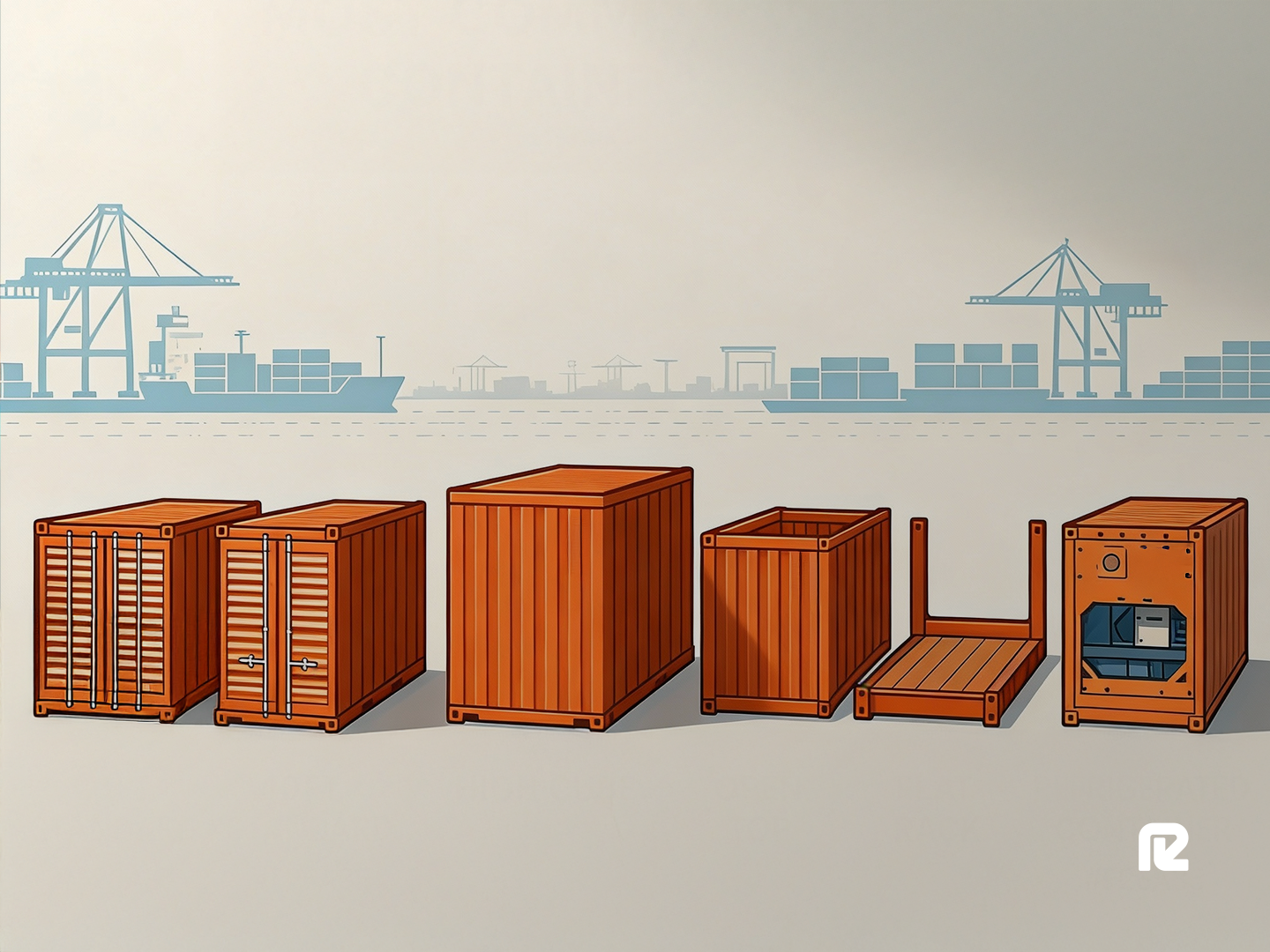
Ocean freight containers typically fall into two broad categories, either standard containers, which are enclosed, weather-resistant, and suitable for almost all manufactured general cargo, and specialized containers, used for more specific handling requirements. These containers include reefers, tank containers, and flat racks, which address specific needs like temperature control, liquid transport, or oversized loads.
Understanding which category fits your cargo determines everything from your shipping costs to your customs documentation.
To prevent damage that comes from container movement during ocean transit, there must be proper cargo securing practices, which include using the appropriate lashing equipment, blocking, and bracing based on the specific cargo type.
During ocean transit items should be secured to container lashing rings, and dunnage should be used to fill gaps and make sure nothing can move around during weather events and rough seas.
For containerized vehicles, wheel chocks are used along with multiple tie-down points, and for palletized cargo, anti-slip mats can be used.
Hazardous or dangerous materials require specialized containers, proper classification, and extensive documentation. They must comply with the International Maritime Dangerous Goods (IMDG) Code, which specifies packing, labeling, segregation, and emergency response requirements.
Penalties for non-compliance while shipping hazardous goods include fines, confiscation of cargo, and potentially criminal charges.
Pre-shipment inspections identify loading issues before containers leave facilities, and arrival inspections catch damage early, supporting cargo insurance claims and dispute resolution.
Make sure to document the condition of containers with photos and written reports when loading and unloading to create clear evidence if disputes do arise about when or how damage occurred.
There are several benefits to choosing the right container for specific cargo types, including improved space utilization to reduce costs per shipped unit. Businesses that align container type with specific cargo characteristics have better control over the costs of logistics, reduced risk of cargo damage, and improved delivery reliability.
Container dimensions are standardized globally to ensure compatibility across ships, trucks, rail, and port equipment. While variations exist, most ocean freight relies on a handful of core sizes.
• External: 20ft long × 8ft wide × 8ft 6in high
• Internal: 19ft 4in × 7ft 8in × 7ft 10in
• Capacity: 33 cubic meters (CBM)
• Maximum payload: approximately 28,000 kg
20ft containers work well for dense, heavy cargo. Its compact size allows you to fully load by weight without exceeding limits and is ideal for machinery, metal products, or small shipment volumes.
• External: 40ft long × 8ft wide × 8ft 6in high
• Internal: 39ft 6in × 7ft 8in × 7ft 10in
• Capacity: 67 cubic meters (CBM)
• Maximum payload: approximately 26,500 kg
40ft containers offer double the volume with only slightly reduced payload capacity. This makes it cost-effective for lighter, high-volume goods like consumer products and textiles, which fill the space before hitting weight limits.
High Cube (HC) containers add an extra foot of height to standard dimensions, providing approximately 9ft 6in of internal height instead of 7ft 10in.
• Internal: 39ft 6in × 7ft 8in × 8ft 10in
• Capacity: 76 cubic metres (CBM)
• Maximum payload: approximately 26,000 kg
That extra 30 cm of height translates to roughly 13% more cubic capacity, which is significant when shipping bulky, lightweight items like furniture or automotive parts. If cargo is volume-constrained rather than weight-constrained, high cube containers typically offer better value per unit shipped.
45ft containers provide additional volume but aren't universally accepted across all trade lanes and inland transport networks. They're most common on North American and European routes, where infrastructure supports the extra length.
Some regional trade lanes also use 10ft containers for smaller shipments, though these represent a tiny fraction of global container traffic.
Dry containers are the most common type of container. They are fully enclosed, weatherproof, and stackable steel boxes designed for general cargo. Dry containers are typically used for electronics, clothing, furniture, packaged goods, non-perishable foods, and a lot of commonly manufactured products.
These are temperature-controlled, maintaining ranges from -30°C to +30°C throughout transit. These containers are more expensive to use than standard dry containers but are essential for products like pharmaceuticals, frozen foods, and fresh produce.
Tank containers transport bulk liquids and gases within a standard ISO container frame. This design allows liquid cargo to move through conventional container networks while meeting safety regulations. Common uses include chemicals, industrial gases, and hazardous liquids.
Flat racks can accommodate cargo that is wider or taller than standard sized containers, typically used for machinery, project cargo, construction equipment, and vehicles. It’s important to note that cargo on flat racks must be properly lashed and secured, and since it is exposed, it needs additional protection. Cargo travelling in flat rack containers must comply with oversized cargo regulations at every port.
With removable roofs and tarpaulin covers instead of solid roofs, open-top containers are designed to suit tall cargo that requires crane loading from above. Typical uses include heavy machinery, glass, and large industrial equipment.
Open side containers feature full-length side doors in addition to standard end doors, which makes loading and unloading of longer items simpler and allows forklift access. These containers are popular for timber and piping.
Half-height containers (typically 4ft 3in tall) are designed for dense, heavy cargo like coal, minerals, and scrap metal. The reduced height makes it easier to fill by weight without exceeding payload limits while maintaining safe loading heights.
Double door containers provide access from both ends, streamlining loading and unloading in warehouse environments where cargo enters from one end and exits from the other. They're particularly useful for cross-docking operations.
Combine features of dry and open top containers with a removable steel roof. This provides weather protection of a standard container with the top-loading convenience of an open top.
These feature ventilation openings that allow air circulation while protecting against weather. They're designed for cargo that produces moisture or requires airflow, like organic products and coffee beans.
Insulated containers have thick insulation in walls, floors, and ceilings to help stabilize internal temperatures. These are used for products like wine, chocolate, and pharmaceuticals that are sensitive to weather fluctuations but do not require precise temperature control.
Platform containers are essentially a flatbed that integrates with standard container handling systems. They're used for extremely heavy or oversized cargo that can't fit any other container type.
CA containers control oxygen, carbon dioxide, and nitrogen levels inside the container. This extends shelf life for fresh produce during long-haul shipments.
Food grade containers prevent contamination of consumable goods. They undergo rigorous cleaning and meet food safety certifications.
Heavy rated containers feature reinforced floors, corner posts, and structural elements to support payloads exceeding standard limits. They're essential for dense cargo like machinery parts, industrial equipment, or metal products.
Standard containers typically support 28,000-30,000 kg total weight; heavy rated versions can handle significantly more depending on specification.
When standard options don't fit, custom containers can be engineered for specific requirements. These require advance planning, cost more, and may have limited availability, but they solve problems that would otherwise require expensive project cargo solutions.
Proper packing should distribute weight evenly across the container floor and place heavier items at the bottom and lighter items on top. Cargo should be loaded tightly to minimize movement while leaving enough space for air circulation in ventilated containers.
Before loading, containers need to be inspected for holes, water damage, functioning doors, and structural integrity. When containers are damaged, it can lead to cargo loss and insurance disputes.
Reefer containers need additional checks to verify that refrigeration is working properly, check insulation, and make sure monitoring systems are functional.
Every container has a maximum gross weight (typically 30,480 kg for 20ft and 40ft containers). This includes the container's tare weight (empty weight) plus your cargo.
Exceeding weight risks cargo:
• Refused loading at port
• Fines and additional charges
• Safety hazards during handling
• Damage to chassis and handling equipment
• Potential accidents during transport
Always verify weight regulations for your specific shipping route, as some jurisdictions impose stricter limits than ISO standards.
Reload Logistics advises clients on container selection, load planning, and compliance requirements to ensure cargo moves safely and cost-effectively across global trade routes. Our team combines operational expertise with practical planning to help businesses optimize container usage and reduce avoidable risk throughout the supply chain.
Speak to Reload and set up a meeting to discuss your cargo and container needs.
Dry containers, reefer containers, tank containers, and flat rack containers.
40ft containers come in several variants: Standard dry, high cube, open top, flat rack, reefer, and specialized options like hard top and open side configurations.
A standard 40ft container holds approximately 67 CBM. A 40ft High Cube container offers around 76 CBM.
The most common sizes are 20ft and 40ft containers. High cube versions provide additional height, and 45ft containers are used in specific trade lanes.
HC stands for High Cube, a container with standard length and width but approximately one foot of additional internal height.
SW (Special Width) containers are used in certain regional trade lanes where non-standard widths are permitted.