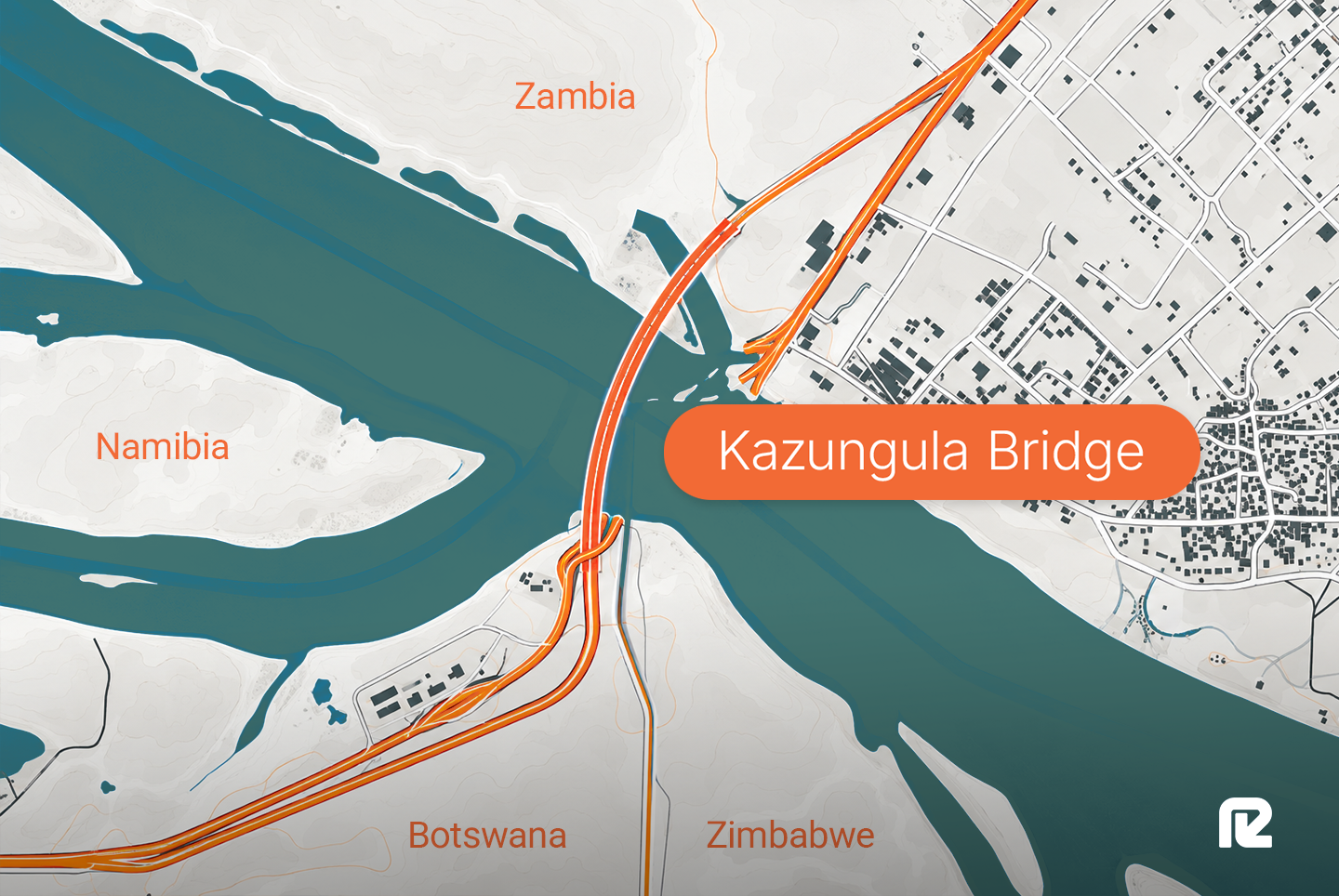
Kazungula Bridge: What It Means for Zambia-Bound Freight
September 15, 2026
Read the story
Please submit your details below and one of our logistics experts will reach out within one business day. Thank you.
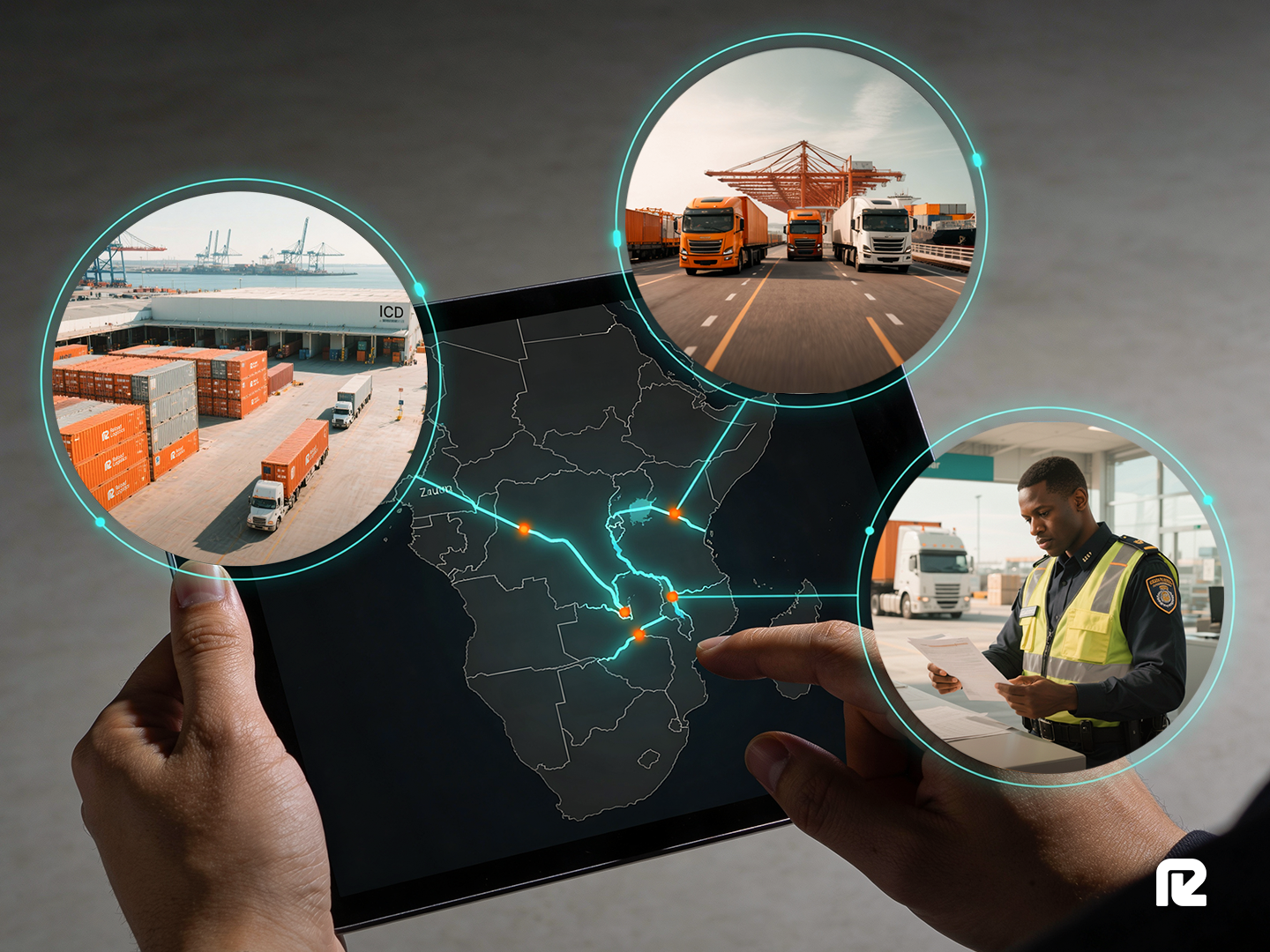

4PL logistics is the acronym of fourth-party logistics, a model where a single provider oversees and manages the entire supply chain on behalf of a company.
Unlike 3PL providers , which execute warehousing or transportation functions directly, a 4PL operates at a higher level by integrating multiple logistics partners, coordinating transportation and warehousing networks, and providing centralized visibility across the supply chain.
For organizations operating across regions, channels, and transport modes, 4PL logistics is not about storage or trucking but about orchestration. In fact, this model introduces centralized control over fragmented logistics operations.
In this guide, we'll look beyond transportation and warehousing services and examine how supply chain strategy, technology integration, and performance management are structured end-to-end to understand what 4PL logistics is.
4PL logistics is a supply chain management model in which a provider assumes responsibility for designing, managing, and optimizing the entire logistics network on behalf of a client.
In practical terms, a 4PL:
· Oversees multiple 3PL providers
· Coordinates transportation and warehousing partners
· Integrates supply chain data systems
· Monitors performance metrics
· Manages strategic planning and continuous optimization
The 4PL does not necessarily own warehouses or trucks. Instead, it acts as a central control tower managing relationships, information flow, and operational alignment across the network.
This structure is often used by companies with complex, multi-country operations where fragmented logistics providers create visibility gaps and inefficiencies.
If 3PL "simply" executes logistics operations, 4PL goes further, managing and optimizing the entire logistics ecosystem.
The shift from 3PL to 4PL typically reflects increasing supply chain complexity.
A 3PL provider handles operational tasks such as:
· Warehousing
· Transportation
· Order fulfillment
· Distribution
A company may use multiple 3PLs across regions or functions.
As the number of service providers increases, coordination becomes more difficult. Inventory visibility may be fragmented across systems. Performance reporting may lack consolidation. Contract management becomes more complex.
A 4PL model then becomes essential when businesses require:
· Centralized oversight
· Unified data reporting
· Cross-provider optimization
· Network-level cost analysis
· End-to-end accountability
Companies do not move from 3PL to 4PL because warehousing fails, but because orchestration becomes necessary.
A typical 4PL example involves a provider managing:
· Multiple regional 3PL warehouses
· Ocean and air freight carriers
· Inland transportation providers
· Customs brokers
· Technology platforms
The 4PL coordinates contracts, monitors service level agreements, and delivers consolidated reporting to the client.
The defining feature is not asset ownership, but centralized supply chain management responsibility.
No, a 4PL is not a freight forwarder, although there can be an overlap. A freight forwarder mainly arranges the transportation of goods between the origin and destination. Its core function involves:
· Booking cargo space
· Preparing shipping documentation
· Coordinating with carriers
· Managing customs processes
A 4PL, by contrast, operates at a broader strategic level. It may oversee freight forwarders as part of a wider and omnichannel logistics structure, but it does not focus solely on transport booking.
In many complex supply chains, freight forwarding becomes one component within a 4PL-managed ecosystem.
The distinction is in scope:
· Freight forwarder = transport coordination
· 4PL = full supply chain orchestration
A 4PL provider operates as the central coordinator of the logistics network. Its responsibility is not limited to a single warehouse or transport leg. It oversees the interaction between all logistics components.
The core functions of a 4PL include all or some of the following:
· Selecting and managing multiple 3PL providers
· Coordinating freight forwarders and transport carriers
· Designing distribution networks
· Consolidating operational data into unified reporting
· Monitoring service level agreements (SLAs)
· Identifying inefficiencies across regions
One of the first operational challenges a 4PL addresses is system fragmentation. When different 3PLs operate separate warehouse management systems and transport platforms, inventory and shipment visibility become inconsistent. A 4PL introduces standardized reporting structures and centralized performance dashboards.
In many cases, the 4PL also manages exception handling. When a shipment is delayed, inventory levels drop below the threshold, or inbound forecasts shift unexpectedly, the 4PL coordinates corrective actions across providers rather than leaving resolution to isolated operators.
While traditional 3PL providers focus on execution, 4PLs typically expand into strategic and analytical services.
These may include:
· End-to-end supply chain mapping
· Demand forecasting integration
· Procurement and carrier tender management
· Cross-border compliance coordination
· Risk analysis and contingency planning
· Network redesign during expansion phases
In operational environments where companies rely on multiple regional warehouse partners, a 4PL often standardizes:
· KPI definitions
· Inventory accuracy targets
· Dock-to-stock metrics
· Order fulfillment performance thresholds
· Escalation procedures
The advantages of 4PL logistics are most visible in multi-node, multi-country supply chains, which is where issues are easy to escalate.
A 4PL provides one point of accountability instead of multiple service provider contacts. This reduces coordination overhead for internal teams.
Inventory, transport status, and cost metrics are consolidated into a single reporting structure. This improves decision-making accuracy.
Rather than optimizing a single warehouse or transport lane, a 4PL works on the entire supply chain structure. For example, shifting inventory positioning between two regional 3PLs may reduce overall transport cost even if local storage rates increase slightly. That level of optimization requires network-wide data visibility.
In periods of disruption (port congestion, carrier capacity shortages, customs delays), a 4PL can reroute freight across alternative providers without renegotiating individual contracts from scratch. This agility supports supply chain continuity.
4PL models are not universally suitable and are most effective when internal supply chain maturity is already established. Otherwise, the following cons may arise easily.
Companies relinquish a layer of operational control. Strategic decisions may be influenced by the 4PL’s network design rather than internal logistics managers.
While a 4PL simplifies coordination externally, contract governance internally may require structured oversight. Clear KPIs and escalation pathways must be defined.
4PL providers often manage multiple subcontracted logistics partners. Without clear pricing breakdowns, companies may struggle to distinguish orchestration fees from underlying operational costs.
Relying heavily on one 4PL increases concentration risk. If performance declines or contractual disputes arise, transitioning away can be complex.
Optimization under a 4PL model operates at network scale rather than facility scale.
A 4PL analyzes:
· Transport lane performance
· Inventory positioning across warehouses
· Carrier contract utilization
· Service level adherence
· Working capital tied to stock
Rather than focusing on isolated cost reduction, the 4PL identifies structural inefficiencies.
For example, if two warehouses repeatedly exchange inventory due to inaccurate demand allocation, the issue is not operational execution, but it's structural. And a 4PL can intervene exactly at that structural level.
Resilience depends on visibility and alternative routing capacity. When logistics providers operate independently, disruption in one region may not immediately surface across the network.
A 4PL introduces centralized monitoring, allowing early detection of:
· Port delays
· Inventory imbalances
· Carrier capacity shortages
· Regulatory changes
In practice, resilience improves when contingency routing and backup providers are pre-negotiated rather than reactive.
A 4PL formalizes that contingency structure.
One of the defining characteristics of 4PL logistics is centralized visibility.
In multi-provider environments, inventory and shipment data often sit across separate warehouse management systems, transport platforms, and carrier portals. Without integration, this creates a reporting lag and inconsistent KPI measurement.
A 4PL introduces a consolidated control layer.
Operationally, this may include:
· Unified shipment tracking across ocean, air, rail, and road
· Inventory reporting across multiple 3PL warehouses
· Transport milestone alerts
· Exception dashboards for delays or service breaches
· Centralized performance reporting
In corridor-heavy trade lanes, visibility becomes critical. Port congestion, border inspections, and carrier capacity shifts can change lead times quickly.
Rather than waiting for separate providers to escalate issues individually, a 4PL control structure identifies disruption patterns early and coordinates adjustments across the network.
Visibility, in this context, is not just tracking. It is coordinated decision-making based on consolidated data.
Cost savings in 4PL logistics do not typically come from reducing individual warehouse fees.
They come from structural optimization.
A 4PL evaluates:
· Carrier contract utilization
· Mode selection (air vs ocean vs rail)
· Consolidation opportunities
· Inventory positioning efficiency
· Multi-region cost imbalances
In complex supply chains, inefficiencies rarely sit in one warehouse. They sit in disconnected decisions.
For example:
If freight is consistently expedited due to inaccurate demand planning, the cost issue is not transportation rates - it is coordination between forecasting, warehousing, and transport booking.
A 4PL addresses those coordination gaps.
Over time, structural alignment can reduce:
· Emergency freight surcharges
· Duplicate safety stock
· Cross-warehouse transfers
· Carrier penalty fees
· Idle capacity under long-term contracts
Cost optimization under a 4PL model is systemic rather than transactional.
At face value, a 4PL may appear more expensive because it adds an orchestration layer on top of execution services.
However, direct comparison can be misleading.
A 3PL charges for operational services such as storage, picking, and transportation. A 4PL charges for managing and optimizing the entire logistics network.
The question is not whether 4PL costs more than 3PL. The question is whether the network inefficiencies exceed the orchestration fee.
In fragmented supply chains operating across multiple providers, uncoordinated decisions often generate hidden costs that are not visible in a single 3PL contract.
When coordination improves, overall supply chain cost per unit handled may decrease, even if orchestration fees are introduced.
Selecting a 4PL requires evaluating strategic maturity rather than just operational capacity.
Key evaluation criteria include:
Does the provider have experience coordinating multiple 3PLs and carriers across regions?
Managing one warehouse is not the same as consolidating performance metrics across five.
A credible 4PL must demonstrate:
· Data integration capability
· Control tower reporting tools
· Real-time milestone tracking
· API connectivity with ERP systems
· Centralized KPI dashboards
Without a robust technology infrastructure, orchestration becomes manual coordination rather than systemic integration.
Clear service level agreements, escalation procedures, and reporting cadence must be defined.
In high-volume corridors, response time during disruptions determines whether supply chain stability is maintained.
A structured governance framework reduces ambiguity during operational pressure.
Because a 4PL may subcontract multiple logistics providers, pricing transparency is critical.
Companies should understand:
· Management fees
· Underlying service costs
· Margin structures
· Performance-based pricing elements
Clarity prevents confusion between orchestration fees and execution charges.
4PL logistics is particularly valuable in industries where multi-country sourcing is common, and inventory flows cross several transport modes. On top of this, when regulatory complexity is high and volume fluctuations require network-level adjustment, 4PL logistics can be a savior.
Industries that frequently adopt 4PL models include:
· Automotive manufacturing
· Industrial equipment production
· Retail with international sourcing
· Consumer electronics
· Pharmaceuticals
· Fast-moving consumer goods with global distribution
In these sectors, coordination gaps can lead to inventory misalignment, stockouts, or excess working capital. Using a 4PL can reduce that fragmentation and centralize control.
Although 4PLs do not typically operate last-mile fleets directly, they influence last-mile performance through network design and coordination.
For example, a 4PL may:
· Reposition inventory closer to demand centers
· Select region-specific last-mile carriers
· Standardize delivery performance metrics
· Integrate last-mile tracking into centralized reporting
In corridor-intensive regions where urban congestion and regulatory constraints vary significantly, last-mile performance often depends on upstream coordination.
If inventory arrives late at the regional distribution node, last-mile performance suffers regardless of carrier quality.
By aligning upstream logistics with downstream delivery schedules, 4PL orchestration supports more consistent final-mile outcomes.
As supply chains expand across regions and service providers, coordination gaps become more costly than isolated operational inefficiencies.
Whether managing multiple 3PL warehouses, cross-border transport lanes, or integrated distribution networks (also on a local basis), structured oversight improves visibility, cost control, and resilience. If your organization is evaluating a 4PL model, you should assess not only service scope, but corridor familiarity, technology integration, and governance discipline.
Reload supports complex logistics environments through coordinated supply chain management, multi-provider oversight, and structured performance reporting designed for growing regional and international operations. Get in touch for more information on how Reload Logistics operates and how your company can benefit from it.