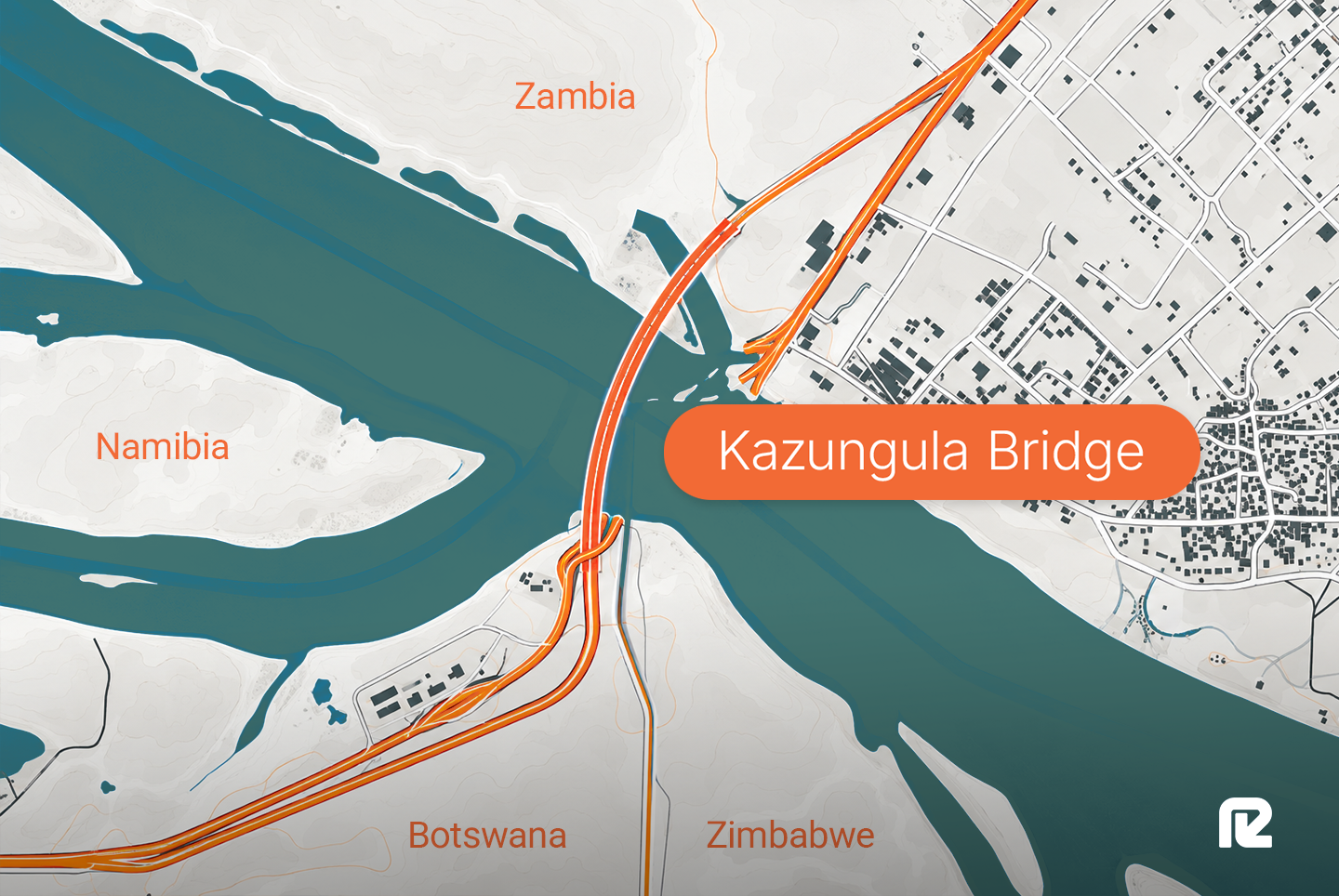
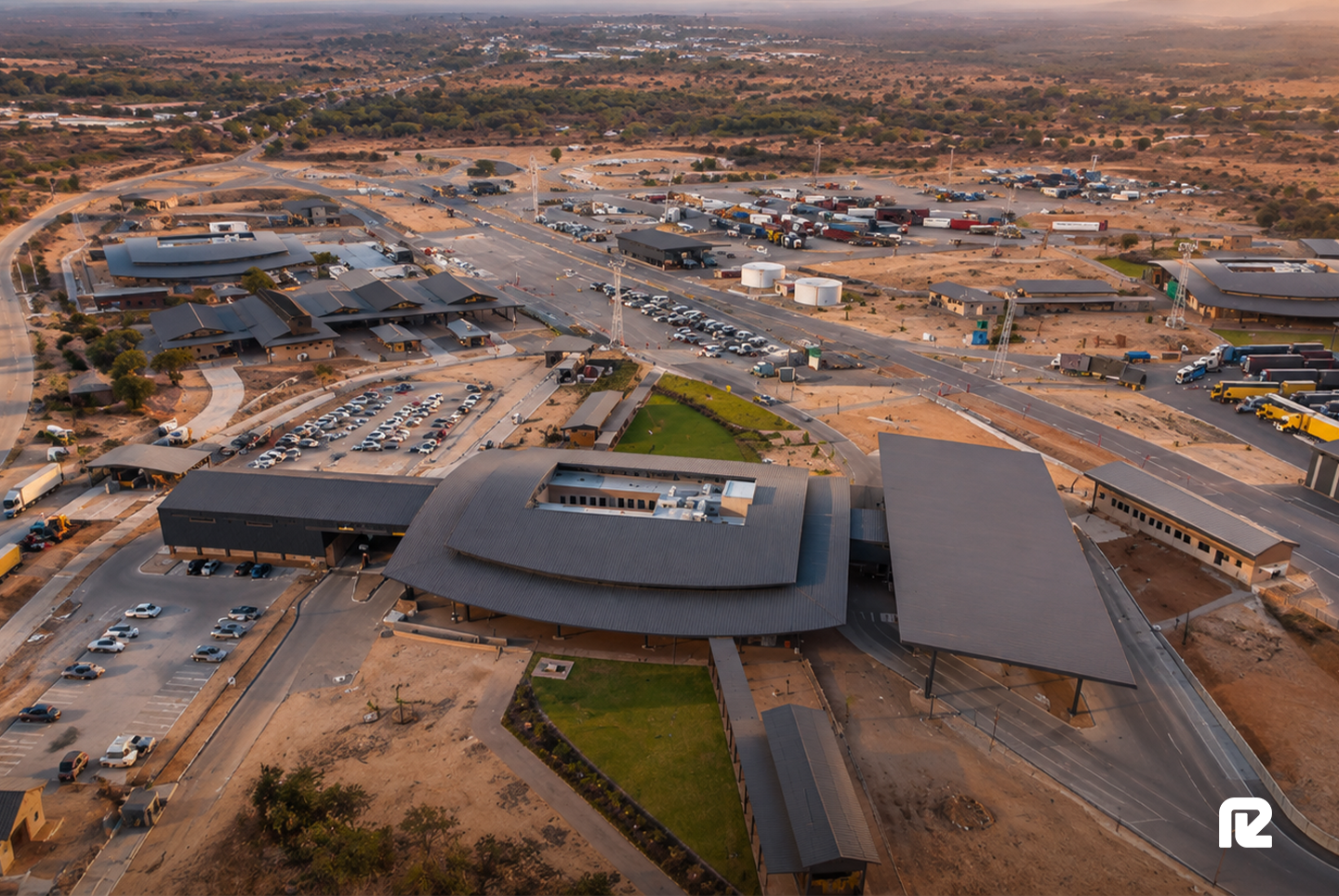
Kazungula Bridge: What It Means for Zambia-Bound Freight
September 15, 2026
Read the story
Please submit your details below and one of our logistics experts will reach out within one business day. Thank you.


Capacity management has become one of the most defining factors of supply chain performance, especially as logistics systems need to operate through fluctuating trade volumes, corridor bottlenecks, seasonal surges, and infrastructure limitations. The ability to anticipate demand, allocate resources, and maintain continuity directly affects trade stability.
For logistics providers and exporters, capacity management determines whether operations run predictably or fall into costly backlogs. In this context, capacity management makes sure logistics systems continue to function even when conditions change quickly and abruptly.
This article will look at exactly what capacity management is in logistics and supply chains, the entire step -by-step process of capacity management, and much more.
Capacity management is the process of planning, controlling, and optimizing resources so supply chains can meet demand without needing to spend more on over or under-capacity. This process is a balancing act of making sure facilities, fleets, and staff all remain aligned with the volume of goods moving through the system.
In practice, capacity management requires logistics operators to forecast demand, monitor operational performance, identify bottlenecks, and adjust resource levels before those bottlenecks become bigger issues, affecting other areas of the supply chain.
Consider mining exports from Zambia. When the demand for copper increases, transport capacity needs to be reallocated, sometimes pulling trucks from general cargo lanes or agriculture routes. This reallocation requires careful planning to avoid leaving other customers unsupported.
In agricultural seasons, imports of fertilizer can overwhelm border posts if warehouse capacity is not aligned with expected throughput. Logistics providers have the ability to deploy temporary storage, increase handling staff, or stage cargo at inland facilities to prevent congestion.
The same applies to port disruptions. When Durban faces vessel delays, cargo may need to be rerouted through Walvis Bay or Beira. Such decisions depend on whether enough warehouse space, trailers, and labor capacity are available to support the diversion.
It’s important to firstly understand that the stages of capacity planning run more like a continuous cycle than a checklist that has a clear end. However, the main stages of this cycle are the following:
Analyzing historical data and volumes, customer forecasts, mining and agricultural cycles, and external factors such as expected port congestion or seasonal import peaks.
Logistics teams evaluate how much their current infrastructure, including warehouse space, fleet availability, labor levels, and equipment performance, can realistically support. This considers not just physical limits but the operational realities that influence effective capacity.
Once projections and available resources have been organized, planners should identify where the shortages could occur. These gaps might include insufficient warehouse space, inadequate transport, or labor shortfalls.
After all this, the next step is for logistics providers to provide solutions. This could include leasing additional space, reassigning trucks, adjusting shift patterns, or staging inventory to prevent congestion.
The final step is execution and monitoring with real-time tools to track warehouse occupancy, fleet performance, and border delays. This is crucial to maintaining stability and adapting capacity quickly.
There are a few more stages of capacity management that happen as a result of the main processes, typically taking place more in the background.
• Design Capacity refers to the maximum output a system can achieve if every resource operates at peak performance. For example, a warehouse could be designed to handle 200 pallets per hour with full staffing and equipment availability.
• Effective Capacity adjusts this figure above to account for realistic conditions, such as maintenance downtime, weather disruptions, or staff variability. A warehouse’s effective capacity may be significantly lower during rainy seasons when open-yard operations slow down.
• Actual Output Capacity represents the real performance achieved day to day. In regions where border delays and unpredictable road conditions affect operations, actual capacity can vary widely. Capacity managers aim to minimize the gap between effective and actual output through strong planning and decision-making.
Capacity has a direct influence on how smoothly a supply chain operates as when resources are aligned with demand, cargo moves predictably, and service levels remain stable.
A shortage of trucks during peak mining exports, for example, can slow collections, extend border queues, and push delivery schedules out significantly. Similarly, an overfilled warehouse reduces throughput, causing dispatch delays that affect operations along the way. Strong capacity planning helps supply chains absorb these pressures, maintain consistent lead times, and stay resilient.
While metrics such as those mentioned above are essential, they are only accurate if interpreted along with an awareness of local day-to-day realities.
For example, a warehouse may show only 75% space utilization yet experience throughput constraints due to slow-moving cargo or delayed documentation. Similarly, a fleet may appear fully deployed, but if too many trucks are stuck at a border post, transport capacity is effectively reduced.
Key indicators must be analyzed together to form a complete picture of capacity, giving more of an overall average depending on factors like the time of year and daily realities of keeping an entire supply chain moving.
Capacity management teams carry responsibility for forecasting demand, planning resources, monitoring performance, and coordinating across departments to maintain operational continuity.
These teams make sure:
• Warehouses do not reach gridlock
• Fleets are deployed efficiently
• Equipment is maintained proactively
• Labor is scheduled in line with volume
Capacity managers must be ready for sudden changes that can transform capacity quickly. The ability to adapt quickly is often what separates efficient operations from unstable ones.
Possibly one of the most impacted areas of capacity decisions is the influence it has on cost structures. When demand exceeds capacity, bottlenecks can quickly appear which leads to overtime costs, extra equipment rentals, and the need for additional support, which in turn can all mean paying demurrage and storage penalties as delays accumulate. Costs can also increase the other way around, and when capacity exceeds demand, underutilized assets increase operational costs without generating any revenue.
Profitability is therefore tied closely to how well capacity is matched to demand. An optimized fleet running high-yield routes with minimal empty legs creates far stronger margins than a fleet reacting to last-minute volume changes. Similarly, a warehouse operating at balanced capacity maintains both efficiency and cost control, while an overloaded facility quickly becomes expensive to run.
When discussing operational capacity, it refers to three interconnected areas; warehouse, transport, and labor/equipment capacity, which function as one single system and rely on each other to keep the entire supply chain moving smoothly and on time.
Even when a warehouse has open space, if staffing is insufficient, the throughput will slow, or there may be a large fleet of trucks, but if loading areas are congested, the trucks will be delayed.
The two crucial elements of warehouse capacity management are flow and space. Many facilities reach their true limits, not when they are physically full, but when their throughput becomes restrained by external factors like weather, delays with documentation, or delayed cargo.
Warehouse capacity is also influenced by factors such as:
• Layout and rack design, which determine how efficiently cargo can move through the facility.
• Inbound and outbound scheduling, particularly during peak agricultural or mining seasons.
• Handling speed, shaped by labor availability and equipment uptime.
• Temporary storage solutions, which help relieve pressure during volume surges.
Transport capacity is the backbone of efficient logistics, and transport availability can change overnight due to port congestion, or delays at bottlenecks.
Strong transportation capacity management often includes:
• Rebalancing fleet assets between high and low-volume corridors.
• Using subcontractors strategically to expand short-term capacity.
• Scheduling night operations to reduce delays at congested border posts.
• Anticipating seasonal peaks, such as fertilizer imports or fuel deliveries.
When these strategies are aligned, transport becomes a stabilizer rather than a pressure point in the supply chain.
Labor and equipment capacity are major factors in determining how well warehouse and transport systems will operate. Even when there are sufficient space and a fleet of resources, operations will slow down if either of these two factors become constrained.
Key aspects of labor and equipment capacity include:
• Multi-skilled teams capable of switching between tasks during high-volume periods.
• Accurate staffing forecasts, ensuring that loading, documentation, and yard operations stay in sync.
• Equipment availability, especially forklifts, reach stackers, cranes, and weighbridges.
• Preventative maintenance programs, which reduce downtime and protect throughput.
• Rapid repair response, critical in markets where spare parts and technicians may not be immediately accessible.
In many logistics' hubs, equipment downtime is one of the most significant threats to capacity, making proactive planning essential to overall performance.
Outsourcing to a third-party logistics provider gives businesses the ability to expand capacity without heavily investing. A 3PL can provide access to broader warehouse networks, scalable fleets, specialized equipment, and experienced operational teams.
Outsourcing to 3PLs is often the most practical way to navigate peak seasons, border delays, and infrastructure constraints. Reload Logistics frequently supports clients by absorbing overflow demand, providing cross-border capacity, or supplying temporary warehousing during volume spikes.
By integrating forecasting, resource planning, real-time monitoring, and operational expertise, logistics providers help businesses navigate complexity, maintain continuity, enhance reliability, and reduce costs.
Schedule a chat with Reload Logistics to discover how we can support your capacity management planning.
Design capacity, effective capacity, and actual capacity. These represent the theoretical maximum, the realistic operating level, and the output achieved in real conditions.
The process of ensuring that available resources can meet demand efficiently and without disruption.
They include physical capacity, labor capacity, process capacity, and transport capacity, which together define how much a supply chain can handle.