AfCFTA and Customs Reality: What Free Movement of Goods Requires at the Border
October 19, 2026
Read the story
Please submit your details below and one of our logistics experts will reach out within one business day. Thank you.


Moving freight across Africa over long distances is expensive. Infrastructure gaps, border delays, fuel costs, and the sheer scale of the distances involved all push the cost of African logistics higher than comparable routes in more developed markets. Multimodal freight, combining road, rail, and sea in a planned, coordinated sequence, is one of the most effective tools available for reducing that cost without sacrificing reliability.
This article covers how multimodal logistics works on Africa's key long-haul routes, where the cost savings come from, and which sectors stand to benefit most.
Multimodal freight transport is the movement of cargo using more than one mode of transport under a single contract and a single point of accountability. The cargo may move by road to a rail terminal, by rail to a port, and by sea to its destination, but the shipper deals with one provider responsible for the whole journey rather than contracting each leg separately.
Africa's long-haul freight moves across four primary modes, each with a different cost and capability profile:
● Road is the most flexible mode and dominates African freight by volume, but it is the most expensive per ton per kilometer over long distances and the most exposed to fuel price volatility and infrastructure deterioration
● Rail offers significant cost advantages for bulk cargo over long distances when it performs reliably, with fuel efficiency per ton moved far exceeding road transport
● Sea is the lowest cost mode for international and coastal movements, and the primary gateway for Sub-Saharan Africa's commodity exports
● Air is reserved for high-value, time-critical cargo where speed justifies the cost premium, a small fraction of total freight volume
The terms are often used interchangeably, but have a technical distinction. Intermodal shipping refers specifically to the use of standardized containers that transfer between modes without the cargo being repacked.
Multimodal shipping is the broader concept covering any combination of modes under a single contract, whether or not standardized containers are used. In practice, the distinction matters less to shippers than the outcome: a coordinated, cost-efficient movement from origin to destination.
Freight forwarders are central to multimodal logistics. They hold relationships with carriers across different modes, understand the specific requirements of each leg, manage the documentation that different modes and jurisdictions require, and take on the coordination responsibility that would otherwise fall to the shipper.
In African logistics, where multi-country movements involve diverse regulatory environments and variable infrastructure, an experienced freight forwarder is often the difference between a multimodal solution that works and one that creates more complexity than it saves.
Long-haul African routes carry a cost structure that differs from comparable routes elsewhere. Several factors compound:
● Distance and geography. The corridors connecting Southern Africa's mining regions to export ports, or landlocked agricultural producers to coastal markets, cover distances that make transport cost a significant share of delivered product cost. For bulk commodities with thin margins, freight cost can determine whether a mine or farm is commercially viable.
● Road dependency. The majority of African freight moves by road, even where rail exists, because rail reliability has been inconsistent. Road freight over long distances costs more per ton than rail, and that premium is paid repeatedly on every shipment.
● Border crossing costs. Multi-country movements accumulate border crossing costs, both direct fees and indirect costs from delays, that do not exist on domestic routes. A shipment crossing three borders can add days and high cost compared to a single-country movement of equivalent distance.
● Infrastructure deterioration. Poor road conditions on key corridors push up vehicle operating costs, slow transit times, and increase damage rates. Higher fuel consumption, more frequent maintenance, and reduced speeds all feed directly into what it costs to move freight.
Multimodal route optimization works against each of these factors by selecting the most cost-efficient mode for each leg rather than sending everything by road from start to finish.
The North-South Corridor covers roughly 3,200 kilometers and runs from Durban through Zimbabwe, Zambia, and into the DRC Copperbelt. It is the most heavily used freight corridor in Sub-Saharan Africa and the primary route for copper, cobalt, and other mineral exports moving south to Durban for export.
The corridor is predominantly road-based, but rail plays an important role in bulk mineral movements where capacity and reliability allow. The combination of sea freight from Durban to international markets with rail or road for the inland leg is the standard multimodal model on this corridor. Cost optimization on this corridor comes down to three things: getting as much of the inland movement onto rail as reliability allows, keeping border dwell times at Beitbridge and Chirundu as short as possible, and timing vessel bookings at Durban tightly enough to avoid demurrage.
According to the Reload Logistics 2025 Outlook Report, the North-South Corridor remains the backbone of Southern African trade, with infrastructure investment at key border posts and the rail reform programme both contributing to improved corridor performance over the medium term.
The East African Corridor runs from the Port of Mombasa through Kenya into Uganda, Rwanda, and beyond, serving some of the fastest-growing economies on the continent. The standard gauge railway from Mombasa to Nairobi, and the ongoing development of rail connections further inland, are changing the multimodal economics of this corridor.
For cargo moving between Southern and East Africa, the combination of sea freight along the Indian Ocean coast and inland road or rail distribution is the most cost-effective approach for most freight types. The corridor is particularly relevant for agricultural exports from landlocked East African countries accessing Indian Ocean shipping lanes.
The Lobito Corridor through Angola represents the most significant new multimodal infrastructure development in Southern Africa. The rehabilitated Benguela Railway gives DRC mineral producers an Atlantic Ocean outlet that reduces dependence on the longer southern corridors. Trial shipments have already started, and for Western DRC mining operations, the potential cost reduction from a shorter Atlantic route is real and material.
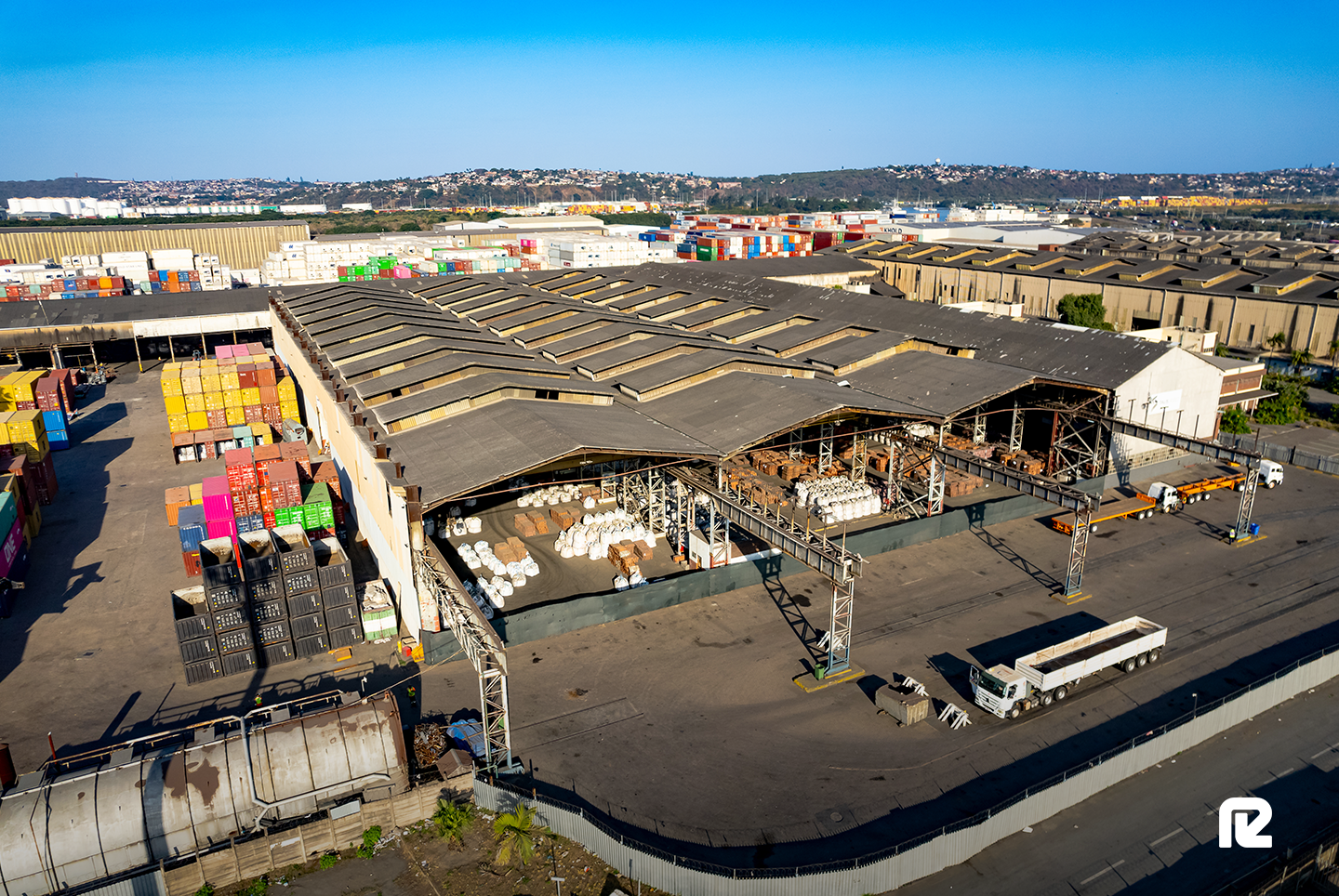
Inland dry ports are expanding alongside these corridor developments. Facilities that handle customs clearance, consolidation, and mode transfers away from congested coastal ports reduce pressure on the primary gateways and create new multimodal connection points further inland. The Kasumbalesa dry port development on the DRC-Zambia border is one example of that shift in action.
West African trade routes, including the Lagos-Abidjan corridor and the Trans-Saharan routes linking North and Sub-Saharan Africa, sit outside the established corridor network that defines Southern African logistics. Road dominates, rail is limited, and the multimodal options are more constrained. These routes are outside Reload's primary operational geography but represent a growing share of intra-African trade as AfCFTA continues to reduce barriers and stimulate cross-regional flows.
The core of multimodal cost saving is matching the right mode to each leg of a journey. Rail moves bulk cargo at a fraction of the cost per ton of road over long distances. Sea freight offers the lowest cost per ton for international and coastal movements. Road provides the flexibility for first- and last-mile legs where rail and sea cannot reach.
A shipment that moves by road from a mine to a rail terminal, by rail to a port, and by sea to the destination will typically cost significantly less than the same shipment moving by road for its entire journey, provided the rail leg is reliable enough to maintain schedule.
Empty running, vehicles traveling without cargo, is one of the most significant sources of inefficiency in African road freight. On some corridors, imbalanced trade flows mean trucks run loaded in one direction and empty in the other, with the cost of empty running factored into the loaded rate.
Multimodal planning, combined with better visibility across networks, creates opportunities to reduce empty running by consolidating freight, matching return loads, and shifting imbalanced flows to modes better suited to one-directional traffic patterns.
For bulk mineral and agricultural cargo, rail offers cost savings that compound over long distances. The rail reform programme underway in South Africa, including the conditional approval of 11 private train operating companies in August 2025 with access to six main export corridors, is directly targeted at improving the reliability and capacity of rail as a viable alternative to road for bulk freight.
As rail reliability improves, the economic case for shifting bulk cargo from road to rail on long-haul routes strengthens. For mining companies and agricultural exporters moving large volumes consistently, even a modest reduction in cost per ton across hundreds of kilometers adds up to significant savings at scale.
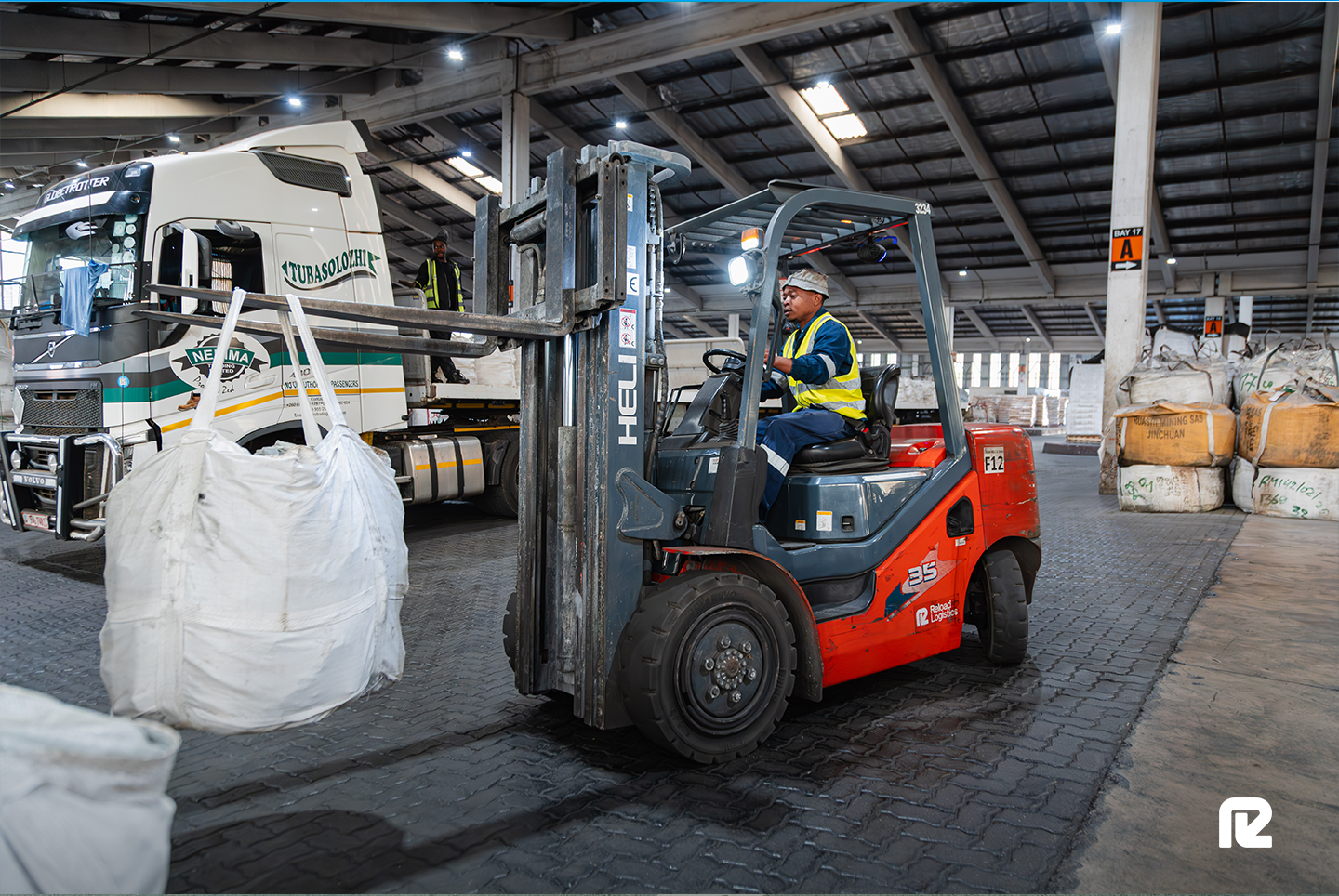
For cargo moving between inland origins and international export markets, the combination of road for the inland leg and sea for the international leg is the standard multimodal model. The cost advantage of sea freight over road or air for international movements is substantial, and the inland road leg is typically unavoidable given the location of most African production relative to port infrastructure.
Optimizing this combination means minimizing the road leg where possible, ensuring inland transport schedules align with vessel bookings to avoid port storage costs, and managing the interface between road and port efficiently to reduce dwell time.
Border crossings, ports, and mode transfer points all generate delays, and on long-haul African routes, those delays accumulate into real cost. Storage charges build up. Demurrage exposure grows. Working capital sits tied up in cargo that isn't moving.
Integrated multimodal planning addresses this by scheduling each leg with buffer time built in for the delays that are predictable, and escalation protocols ready for the ones that aren't. Managing the full movement as a single planned sequence reduces both the frequency and the cost of delays compared to treating each leg as a separate problem.
A freight forwarder with visibility across the full movement, rather than just one leg, is better positioned to intervene before a delay on one leg cascades into a problem on the next.
Mining is the sector where multimodal cost savings are largest in absolute terms. High volumes, long distances, and thin margins make every reduction in cost per ton commercially significant. The combination of rail from mine to port and sea for international export is the optimal model for most bulk mineral movements, and the ongoing investment in rail infrastructure and private operator access is directly improving the viability of that model.
Automotive supply chains in Southern Africa use multimodal logistics for both inbound components and outbound finished vehicles. Components arrive by sea through Durban and Port Elizabeth, move by road to assembly plants, and finished vehicles move by road to vehicle processing centers before RoRo vessel export. Optimizing the handoffs between modes, particularly at ports, is where the cost and time savings are concentrated in automotive multimodal logistics.
Agricultural freight presents a multimodal challenge shaped by seasonality and perishability. The combination of road for first-mile collection from farms, rail, where available for bulk grain movement, and sea for export is the cost-optimal model.
For perishables, the cold chain adds another layer. Reefer containers need to maintain temperature through every mode transfer, and the scheduling of each leg has to keep total transit time short enough that cargo arrives in marketable condition. A multimodal plan that works for dry bulk does not automatically work for fresh produce.
Project cargo, including the oversized equipment and machinery required for mining, energy, and infrastructure projects, uses multimodal logistics by necessity. Most project cargo arrives by sea, transfers to heavy-lift road transport for inland delivery, and may require rail for particularly heavy or long loads.
The multimodal coordination required for project cargo is among the most technically demanding in African logistics, requiring route surveys, permit management, and specialized equipment across multiple legs.