AfCFTA and Customs Reality: What Free Movement of Goods Requires at the Border
October 19, 2026
Read the story
Please submit your details below and one of our logistics experts will reach out within one business day. Thank you.
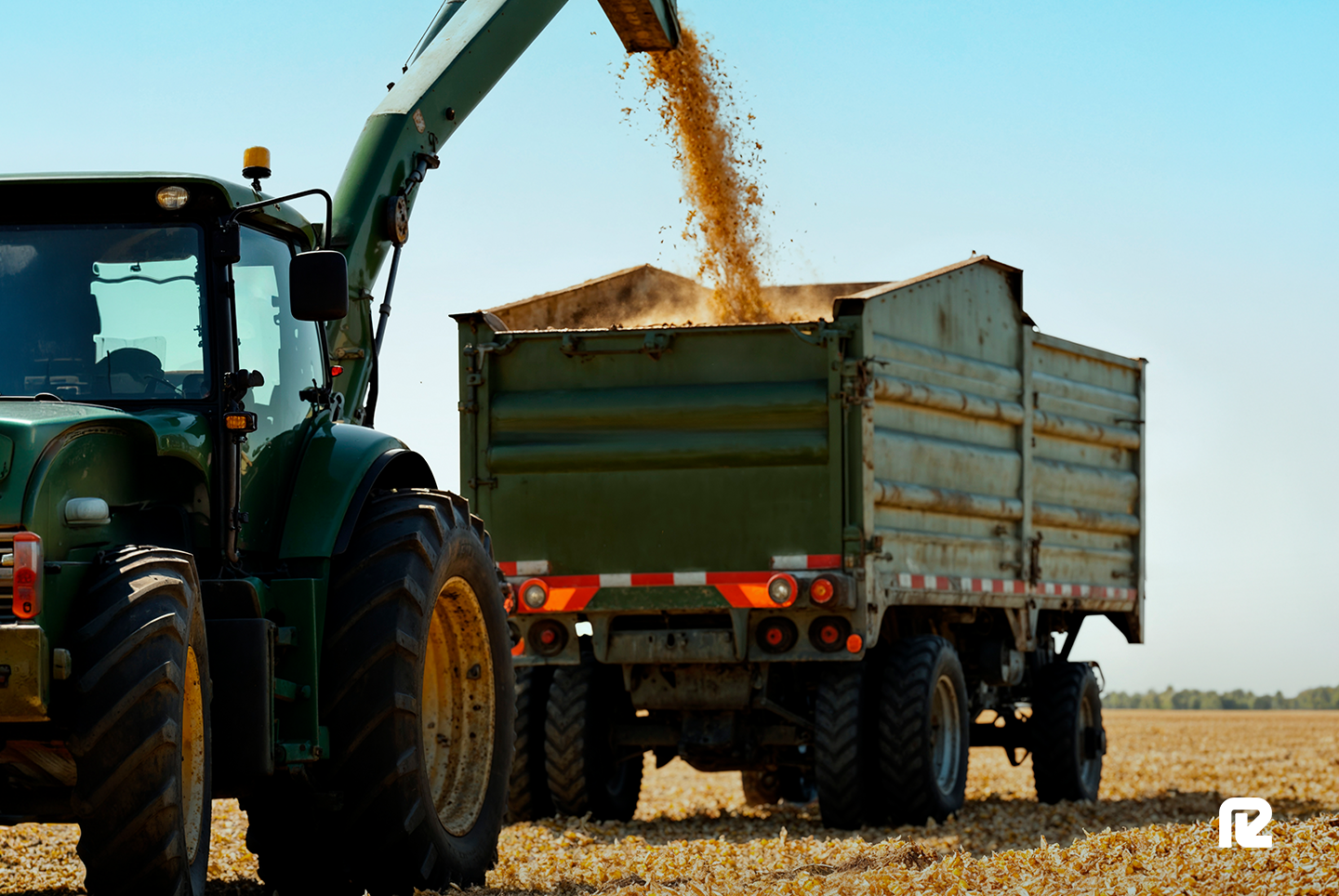

South Africa's agricultural export sector had a record year. Q3 2025 trade data shows that agricultural exports reached US$15.1 billion in 2025, up 10% from 2024. Citrus alone hit a record 203.4 million cartons, a 22% increase on the previous year, making South Africa the world's second-largest citrus exporter after Spain.
Behind those numbers is a logistics network that has to move soft commodities, many of them perishable, seasonal, and destined for markets thousands of kilometers away, through ports, cold chains, and rail and road corridors that are themselves in a state of change.
This article looks at what is driving demand, where the pressure points are, and how the logistics behind South Africa's soft commodity exports are evolving.
Soft commodities are agricultural products grown rather than mined or extracted. In South Africa, the category covers a wide range of goods with very different logistics profiles:
● Citrus, including oranges, lemons, and grapefruit, is South Africa's largest single agricultural export category by value
● Maize, the country's dominant grain crop and a major export to African markets
● Wine, exported in bulk and bottled formats to markets across Europe, Asia, and the Americas
● Sugar, produced primarily in KwaZulu-Natal and Mpumalanga for both domestic and regional markets
● Coffee and specialty crops, a smaller but growing category as South Africa develops niche export lines
Each commodity places different demands on the logistics chain. Citrus needs cold chain integrity from the pack house to the destination. Maize moves in bulk through silos and bulk vessels.
Wine needs careful handling and, for bulk shipments, specialized tank container infrastructure. Sugar moves both in bulk and in bags, and coffee increasingly travels through the same containerized networks as other high-value goods.
Agricultural exports are one of South Africa's genuine economic bright spots. Citrus and wine continue to be flagship export categories, benefiting from strong demand in Africa, Asia, and the Middle East, and the sector has kept growing even as other parts of the economy face pressure.
The geography of South Africa's agricultural exports has been shifting. According to the IOL Business Report, in the last quarter of 2025, the African continent accounted for 53% of the total value of South Africa's agricultural exports, the largest regional share by a clear margin.

The US market tells a more complicated story. Agricultural exports to the US fell 39% in Q4 2025 to US$81 million, with the annual total down 3% to US$504 million.
The African Growth and Opportunity Act has given South African citrus, wine, and nuts duty-free access to the US market for years. According to Bizcommunity, without that preferential access, those categories could face US tariffs of between 3% and 15%, a risk that is pushing exporters to diversify further into African, Asian, and Middle Eastern markets.
Q4 2025 agricultural exports came in at US$3.4 billion, up 7% on the same period a year earlier. Higher volumes and stronger commodity prices both contributed, and market access expansion added further momentum.
IOL Business Report notes new market access for stone fruit into China and the first table grape shipment to the Philippines, with South Korean access following in January 2026.
For the logistics sector, sustained export growth means sustained pressure on the infrastructure that moves these commodities to port.
Roads dominate the movement of agricultural commodities from farm to port, pack house, or silo. For most fresh produce, the distances involved and the need for temperature control make road transport the only practical option for the first leg.
Grain is the exception. Maize and wheat can move by rail from inland silos to coastal terminals where capacity allows. The challenge, as with mineral bulk freight, is that rail performance has been inconsistent, and grain that cannot move by rail moves by road instead, at higher cost.
Three ports carry the bulk of South Africa's agricultural export volumes, each playing a different role:
● Durban handles the largest share of containerized agricultural exports, including citrus, wine, and processed products moving in reefer and standard containers
● Cape Town sits closest to the Western Cape's fruit and wine producers, making it the natural export point for those categories
● Ngqura has grown into an additional containerized gateway, particularly for citrus from the Eastern Cape
According to the IOL Business Report, port efficiency has improved on the back of policy reforms across South Africa's network industries. But the improvement is not yet consistent everywhere.
Disruption at the Port of Cape Town in November and December 2025 added to financial pressure on the fruit industry at exactly the point in the season when timing matters most. One difficult month at a single port can undo a lot of progress elsewhere.
Africa's growing share of South African agricultural exports reflects both proximity and the development of regional trade infrastructure. Maize, wheat, and processed products move north through the same corridors that carry South Africa's broader export trade into Zambia, Zimbabwe, and beyond.
Asia and the Middle East have become increasingly important for high-value horticultural products. Growing demand for food imports in these markets, driven by urbanization, rising incomes, and food security strategies, has supported South African citrus and fruit exports even as Western markets have become more uncertain.
The EU remains a core market for citrus and wine. The Americas, a smaller share overall, remain important for specific high-value categories built up over the AGOA period.
Cold chain infrastructure is where much of the recent investment in South African agricultural logistics has gone, and where the stakes are highest. A break in the cold chain at any point affects the quality and marketability of fresh produce on arrival.
The record 2025 citrus season put the cold chain under real pressure. Moving 203 million cartons through pack houses, cold stores, and onto reefer vessels within tight seasonal windows requires capacity that scales with peak demand, not average demand.
A container that loses temperature control during a delay can result in a consignment arriving in a condition that affects its value, sometimes substantially. For exporters, the cold chain is the infrastructure that protects the value of everything that moves through it.
More of South Africa's agricultural exports are moving in containers than ever before. Citrus, wine, and processed products that once travelled as bulk or break-bulk cargo are increasingly packed into containers, a shift driven by the nature of these products and by the access container shipping provides to a far wider range of destination markets.
That shift puts new demands on port infrastructure. Container terminals at Durban, Cape Town, and Ngqura all need sufficient reefer plug capacity, yard management suited to temperature-sensitive cargo, and shipping line connectivity that matches the spread of markets South African agricultural exports now reach.
Record export volumes don’t necessarily mean record margins. Exporters are dealing with mounting pressure from congested ports, ageing rail infrastructure, and slow cross-border payment systems, all of which eat into profits even as the topline numbers improve.
Rail underperformance is part of the problem. Grain that should move by rail ends up on the road instead, competing directly for capacity with the seasonal surge of fresh produce heading to port during harvest. Two types of freight chasing the same limited road capacity at the same time of year push rates up just when exporters most need them to stay manageable.
Citrus is South Africa's largest agricultural export category by value. The record 2025 season raised an important question: Can logistics capacity keep pace with this kind of growth?
Two-thirds of local citrus production is exported as fresh fruit, accounting for 95% of the sector's annual earnings. Every one of those cartons needs to move through pack houses, into cold storage, onto transport, and through a port within a tight seasonal window. The challenge is fundamentally one of capacity matching, with continued growth depending on cold chain, port, and reefer container capacity keeping pace with production.
Grain logistics depends on the silo network, rail connections from inland production areas to coastal terminals, and bulk vessel capacity at export ports. For grain, the challenge is less about specialist handling and more about volume and reliability, getting large tonnages from inland silos to port efficiently, ideally by rail.
Sugar moves through a combination of bulk and bagged shipments depending on the destination. Regional African markets, a significant destination for South African sugar, often receive bagged product moved by road and rail through the same corridors that carry other regional trade, competing for capacity with everything else moving north.
Coffee and specialty crops represent a smaller but growing category. While South Africa is not a major coffee producer compared to East African nations, specialty and niche agricultural products are an area of export diversification, typically moving through the same containerized networks as other high-value goods, with quality and traceability requirements that matter increasingly to buyers in premium markets.
South African agricultural exports look set to keep climbing. The AfCFTA framework is steadily reducing tariff and non-tariff barriers across participating countries, and the shift toward African, Asian, and Middle Eastern markets shows no sign of slowing down.
For logistics operators, continued growth in citrus, wine, and grain exports means continued pressure on cold chain capacity, port efficiency, and the road and rail networks connecting production regions to export gateways.
The exporters who perform best in this environment will likely be those working with logistics partners who understand the seasonal, perishable, and market-specific demands of soft commodity exports, and who have the cold chain, port, and corridor relationships to match production growth with logistics capacity.