Kazungula Bridge: What It Means for Zambia-Bound Freight
September 15, 2026
Read the story
Please submit your details below and one of our logistics experts will reach out within one business day. Thank you.
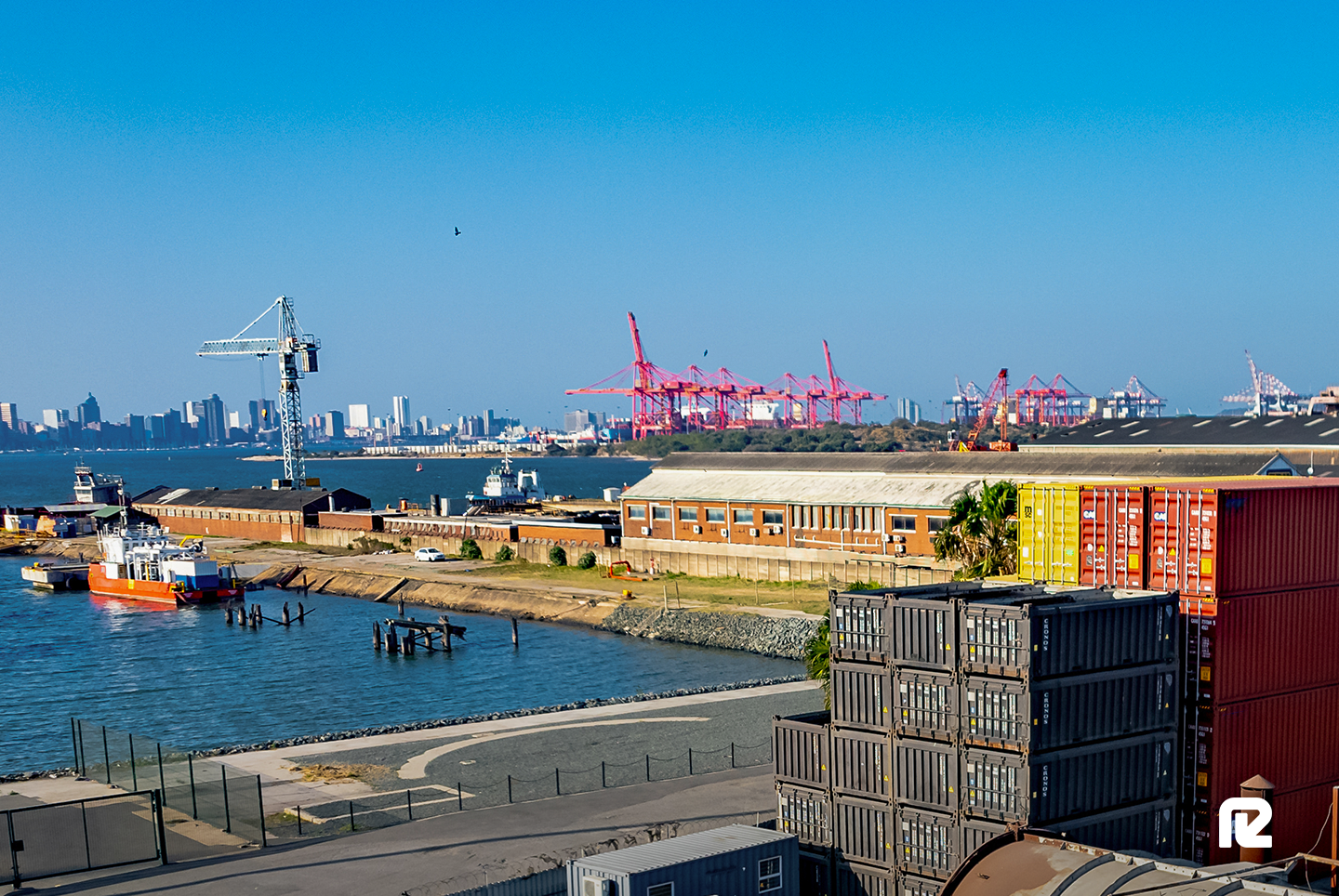

Ports are where global trade meets local infrastructure, and increasingly, where the sustainability credentials of supply chains are tested. For businesses moving cargo through Southern Africa, the environmental performance of the ports they use is no longer just a compliance question. It is becoming a factor in how those businesses are assessed by their own customers, investors, and regulators.
This article looks at where Durban, Richards Bay, and Walvis Bay stand on green port development, what is changing on the ground, and what it means for logistics operators and the clients they serve.
A green port initiative is any program, investment, or operational change that reduces the environmental impact of port activities. That covers a wide range: switching port equipment from diesel to electric power, installing solar generation on port land, managing dust and stormwater from bulk cargo handling, implementing shore power so docked vessels can cut their engines, and monitoring the health of the marine ecosystems surrounding port infrastructure.
The pressure to go green isn't coming from one place. Shipping regulations are tightening on vessel emissions. Investors and lenders are demanding credible sustainability strategies before committing capital, and the buyers of African commodities are looking harder at the supply chains behind the goods they purchase, ports included.
With demand for green logistics projected to reach $350 billion globally by 2030, the commercial stakes of getting this right are clear, and for port authorities in Southern Africa, all of these pressures are arriving at once.
Each of the three ports faces a different version of the same underlying problem: port operations generate environmental impacts that are becoming harder to ignore.
● At Richards Bay, it's bulk cargo. Coal and mineral handling produce dust, particulate matter, and contaminated runoff at a scale that requires active, ongoing management.
● In Durban, the problem is more urban. Ships sitting at berth burn fuel and generate emissions that fall on a dense city, with direct consequences for air quality and community health.
● At Walvis Bay, the concern is ecological. The port operates alongside a Ramsar-designated lagoon of international importance, and the pressure to demonstrate that commercial activity and conservation can coexist is real and growing.
South Africa's climate commitments under the Paris Agreement, combined with tightening International Maritime Organization regulations on vessel emissions, are creating a clearer regulatory direction for port operators.
Transnet National Ports Authority, which operates both Durban and Richards Bay, has publicly committed to reducing the carbon footprint of South African port operations.
In Namibia, Namport set a formal target to achieve green port status by 2025/2026, backed by a memorandum of understanding with French port authority Grand Port Maritime de Dunkerque and development finance institution Agence Française de Développement.
Durban's sustainability challenge is shaped by its scale and its urban context. It is the busiest container port in Sub-Saharan Africa, operating in a dense city environment where the health and amenity impacts of port operations fall directly on surrounding communities.
Durban has been through a period of operational reform that has produced measurable results. New ship-to-shore cranes, better container management, and daily coordination meetings have all contributed to faster vessel turnaround.
Between mid-2024 and August 2025, Transnet data showed:
● Vessel anchorage time in South African ports fell by around 75%
● Crane productivity improved by 13%
● Ship working moves rose by 25%
That matters environmentally as well as operationally. A ship that clears the port faster spends less time burning fuel at anchor. The sustainability case for operational efficiency and the commercial case is, in this instance, the same case.
Shore power, sometimes called cold ironing, is under development at Durban. The technology allows docked vessels to connect to grid electricity and shut down their onboard engines, eliminating a significant source of emissions in the port precinct. Implementation at scale requires both port infrastructure investment and vessel-side compatibility, which means progress is measured in years rather than months.
The longer-term vision for Durban includes a shift toward a Smart City Eco-Port model, with renewable energy integration, digital efficiency improvements, and an explicit sustainability identity for the port and its surrounding area. The ambition is real, but so are the operational challenges that need to be resolved alongside it.
Richards Bay is South Africa's largest port by cargo volume and its primary export gateway for bulk commodities including coal, minerals, and agricultural products. Its environmental profile reflects that role.
The most significant green initiative currently underway is the development of a 20 MW solar photovoltaic plant on port land. Construction began in mid-2024, with the facility expected to become operational by mid-2026. Transnet National Ports Authority describes it as a key component of its broader sustainability program, and its success at Richards Bay is intended to set a precedent for similar installations elsewhere.
Alongside the solar project, the port has put in place a range of operational environmental measures:
● Dust suppression systems for bulk cargo handling
● Shore power connections to reduce emissions from docked vessels
● Waste management and recycling program
● Investment in automated systems to lower the overall environmental footprint
The bulk cargo handling challenge at Richards Bay deserves particular attention. Coal and mineral exports generate dust and contaminated runoff that require active management. Dust suppression technology, enclosed handling where feasible, and stormwater management systems all form part of the environmental management approach at the port, but the scale of the challenge is significant and ongoing.
On the infrastructure side, Richards Bay is also expanding its Bayvue Rail Yard to accommodate longer trains, in anticipation of rail recapturing freight volumes that have been handled by road in recent years.
Shifting bulk cargo from road to rail is one of the highest-impact environmental interventions available at a port like Richards Bay, reducing emissions, road wear, and community disruption simultaneously.
Walvis Bay is the outlier in this comparison, and not in a negative sense. While Durban and Richards Bay are working through the incremental sustainability improvements typical of large, established ports, Walvis Bay is at the center of something more fundamental: Namibia's emergence as a regional hub for green hydrogen production and export.
Namport formally committed to achieving green port status by 2026, following the signing of a tripartite memorandum of understanding with Grand Port Maritime de Dunkerque and Agence Française de Développement. That commitment has been backed by concrete action.
A green hydrogen plant with a capacity of 5 MW began operations at Walvis Bay port in December 2025. Developed by Plug Power together with Cleanergy Solutions Namibia, the facility is one of the first fully integrated commercial green hydrogen plants on the African continent, operating entirely on renewable energy and producing hydrogen used to power port equipment, including yard trucks, cargo cranes, and small service vessels.
By 2026, Cleanergy will extend the scope of the project into transport and maritime applications:
● A diesel locomotive is being converted to hydrogen, one of Africa's first rail decarbonization pilots
● A hydrogen-powered harbor vessel, under construction in the Netherlands, will be deployed at Walvis Bay
● The facility has already trained 185 Namibians in hydrogen technology
Namport has also committed to a three-year ecosystem health monitoring programme for the Walvis Bay Lagoon, a Ramsar-designated site of international ecological importance that borders the port. The program, backed by a N$3.7 million investment from Namport, is designed to track the impact of port operations on the lagoon's marine environment and support compliance with international conservation obligations.
Walvis Bay's green hydrogen ambitions extend well beyond port operations. The port city hosted a Parliamentary Green Investment Dialogue in July 2025, bringing together energy and climate leaders from six African countries to discuss mobilizing climate finance for green energy zones and corridors across Southern and East Africa.
The scale of investment being discussed, multiple projects targeting hundreds of thousands of tonnes of green hydrogen and ammonia annually, positions Walvis Bay as a potential anchor for green maritime corridors connecting Southern Africa to European and Asian markets.
The three ports are at different stages of their green transitions, and for different reasons.
Durban is the most operationally complex. Its scale, urban context, and the legacy infrastructure of a major commercial port mean that sustainability improvements are incremental and hard-won.
The improvement in vessel turnaround times is meaningful because faster ships emit less, but the port still has significant work to do on shore power, emissions monitoring, and the longer-term transition to cleaner cargo handling.
Richards Bay's solar plant is the most concrete near-term infrastructure commitment of the three South African ports in this comparison. Combined with its dust suppression systems and rail re-investment, it represents a credible sustainability direction for a bulk export port. The challenge is maintaining momentum given the complexity of Transnet's operational and financial situation.
Walvis Bay is moving the fastest and with the most ambition. The green hydrogen plant is not just a sustainability gesture; it is a commercial infrastructure investment that positions the port as a node in emerging global green energy supply chains. For logistics operators and their clients, this has practical implications: Walvis Bay is developing capabilities that will be relevant to businesses that need to demonstrate clean supply chains from port to buyer.
Green port infrastructure can be expensive, and many African port authorities have restricted budgets. Transnet is managing its own financial pressures alongside the operational reform program at its ports, which means green investment has to compete for capital against more immediate operational needs.
The Richards Bay solar plant is a useful example of how that constraint gets resolved: a competitive bid process brought in a private sector partner to develop and fund the facility. That model, public ambition backed by private capital, is likely to define most of the significant green investment across South African ports going forward.
In Namibia, the picture is different. Development finance from institutions including Agence Française de Développement and the African Development Bank has played a direct role in backing Namport's green port program, filling a gap that neither the port authority nor the private sector could close alone.
South Africa's port reform process, including the development of a framework for private sector participation in port terminals, creates both opportunity and uncertainty for green investment.
Private operators are generally more willing to invest in sustainability infrastructure when they have long-term operating agreements that justify the capital outlay. Progress on port reform is therefore directly relevant to the pace of green port development.
The green port transition in Southern Africa is uneven, but it is progressing. Walvis Bay is making moves that will matter globally. Richards Bay has a concrete renewable energy project coming online. Durban is improving operationally in ways that have environmental co-benefits, even if the deeper sustainability transformation is still in progress.
For logistics operators, the direction of travel is clear: port sustainability credentials will become an increasingly visible part of the supply chain proposition. Clients who need to report on scope 3 emissions will be asking about the ports their cargo moves through. Operators who can demonstrate that their port network is moving in the right direction will be better positioned than those who cannot.
For businesses choosing logistics partners in Southern Africa, it is worth asking not just how efficiently their cargo will move, but through which ports, and what the sustainability trajectory of those ports looks like.