Dar es Salaam Port Delays: What They Mean for Cargo Moving to Zambia and the DRC
August 28, 2026
Read the story
Please submit your details below and one of our logistics experts will reach out within one business day. Thank you.


Mining logistics covers the movement of mineral cargo from the mine to the port it ships from, often across long distances and international borders. It is a demanding part of the mining supply chain, involving heavy loads, multiple customs steps, and corridors where delays are common. Many exporters still manage this freight with phone calls and spreadsheets, which leaves them without a clear view of where their cargo is or what it is costing.
Digital freight management is the shift away from that guesswork. It uses tracking, shared systems, and data to give an exporter a live picture of its freight and the numbers to act on. This article covers what digital freight management involves, why mining freight in particular is hard to manage, and what the technology changes for a business moving minerals out of the interior.
Digital freight management is the coordination of freight using connected systems rather than manual, disconnected records. The cargo, the transport, the paperwork, and the costs all sit in one place that updates as the shipment moves, so everyone involved works from the same current picture instead of chasing each other for status.
The practical difference is about information. In a manual operation, the location of a truck sits in a driver's head, the customs status sits with the clearing agent, and the cost is in an invoice that arrives weeks later.
A digital operation pulls those threads into a shared system. A tracking device on the vehicle reports its position. The customs milestone updates when the agent clears the cargo. Costs increase as shipments move. The exporter sees the whole journey without making a single call, and the provider running the freight can see a problem forming before it becomes a delay.
Three capabilities sit underneath it. Tracking is the raw feed of where cargo is, usually from devices on the vehicles and updates at fixed points along the route. Visibility is what turns that feed into something a customer can use, a clear view of the shipment and its status. Data is the record all of this leaves behind, which becomes the basis for planning the next shipment better than the last. Reload's freight operations run on this combination, giving mining clients a live view of cargo across the corridor and the reporting to go with it, without the exporter needing systems of its own.
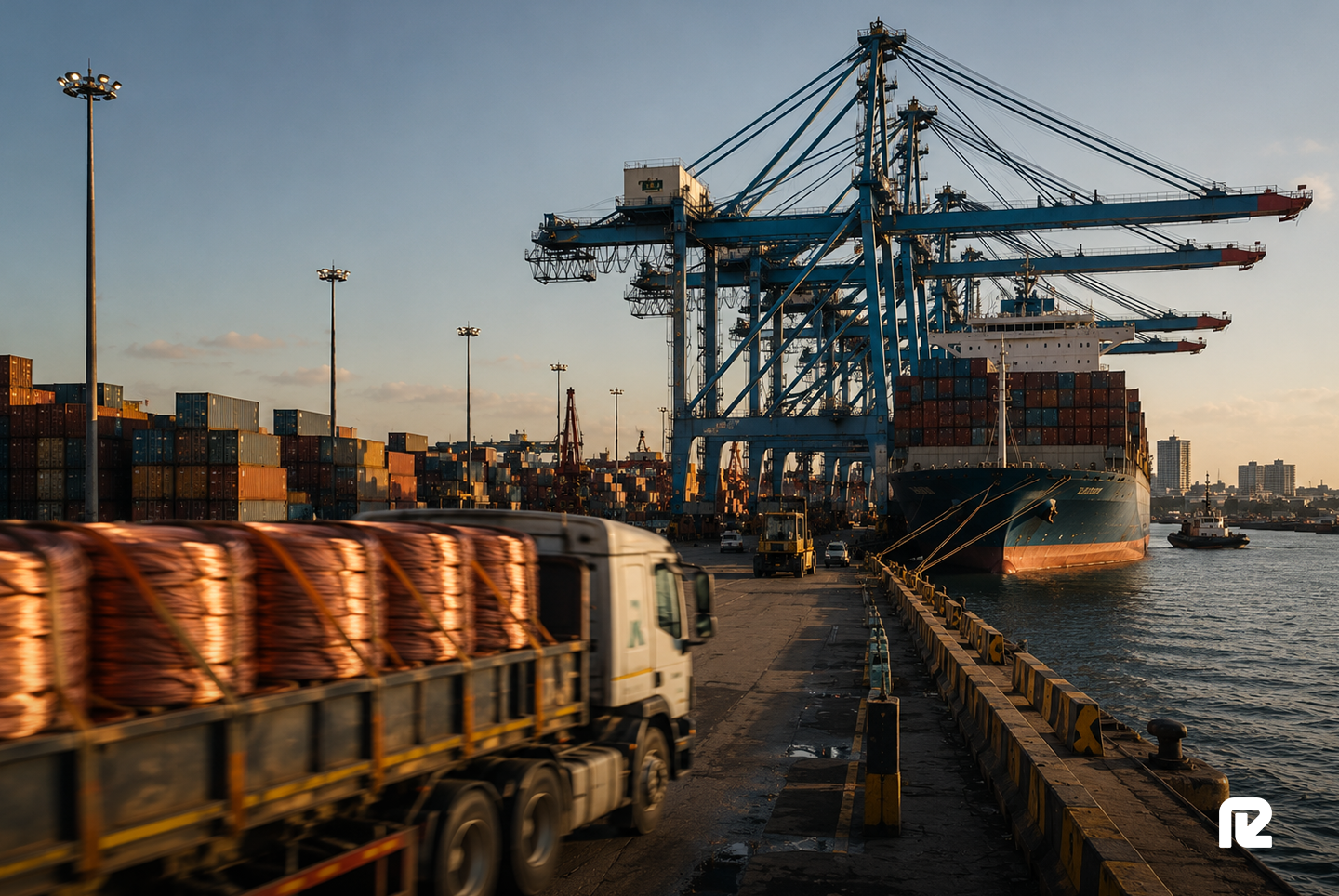
Mineral cargo from the interior travels a long way to reach the sea, and it usually crosses at least one border on the route. Copper from the Copperbelt heading to a South African or Mozambican port passes through several jurisdictions, each with its own customs process and its own border delays. The length of the journey and the number of handoffs give a manual operation many places to lose track of cargo.
Mining moves in volume, and much of it needs specialized handling. A single export program can involve a steady stream of trucks running for weeks, and the cargo can be heavy, abrasive, or hazardous.
Coordinating that many vehicles, keeping them loaded and moving in the right sequence, and knowing at any moment how much has shipped and how much remains is a scheduling problem that manual methods struggle with once the volume climbs.
Mines are often located far from towns and major infrastructure, sometimes beyond reliable mobile coverage.
Sub-Saharan Africa remains the least-connected region in the world, and the coverage gap sits mostly in rural and remote areas, which is exactly where mines operate. Any digital freight system used in mining has to work with intermittent connectivity rather than assume a constant signal, holding data locally and syncing when the network returns.
The clearest change is knowing where the cargo is. For an exporter with a shipment worth a great deal moving across several countries, live supply chain visibility means it can see progress against the plan and spot a stalled truck or a held consignment while there is time to react.
It also matters for security. High-value mineral cargo is a theft target, and continuous cargo tracking is part of how it is protected on the road.
A live picture of the whole operation improves decision-making. When a provider can see the trucks, the border queues, and the port slots together, it can sequence loading, hold a vehicle back from a jammed crossing, and line up cargo against vessel schedules. Fewer trucks arrive at a border or a port to wait, and the export program runs closer to its plan.
Delay is where mining freight leaks money, and much of it is demurrage and detention: charges that build when cargo sits where it should be moving. A truck held at a border, a consignment that misses its vessel and waits for the next, a container kept past its free days all add cost that never had to happen.
Seeing the movement in real time lets a provider keep cargo flowing and head off the charges before they start, which on a large export program is a large saving.
Compliance and Documentation
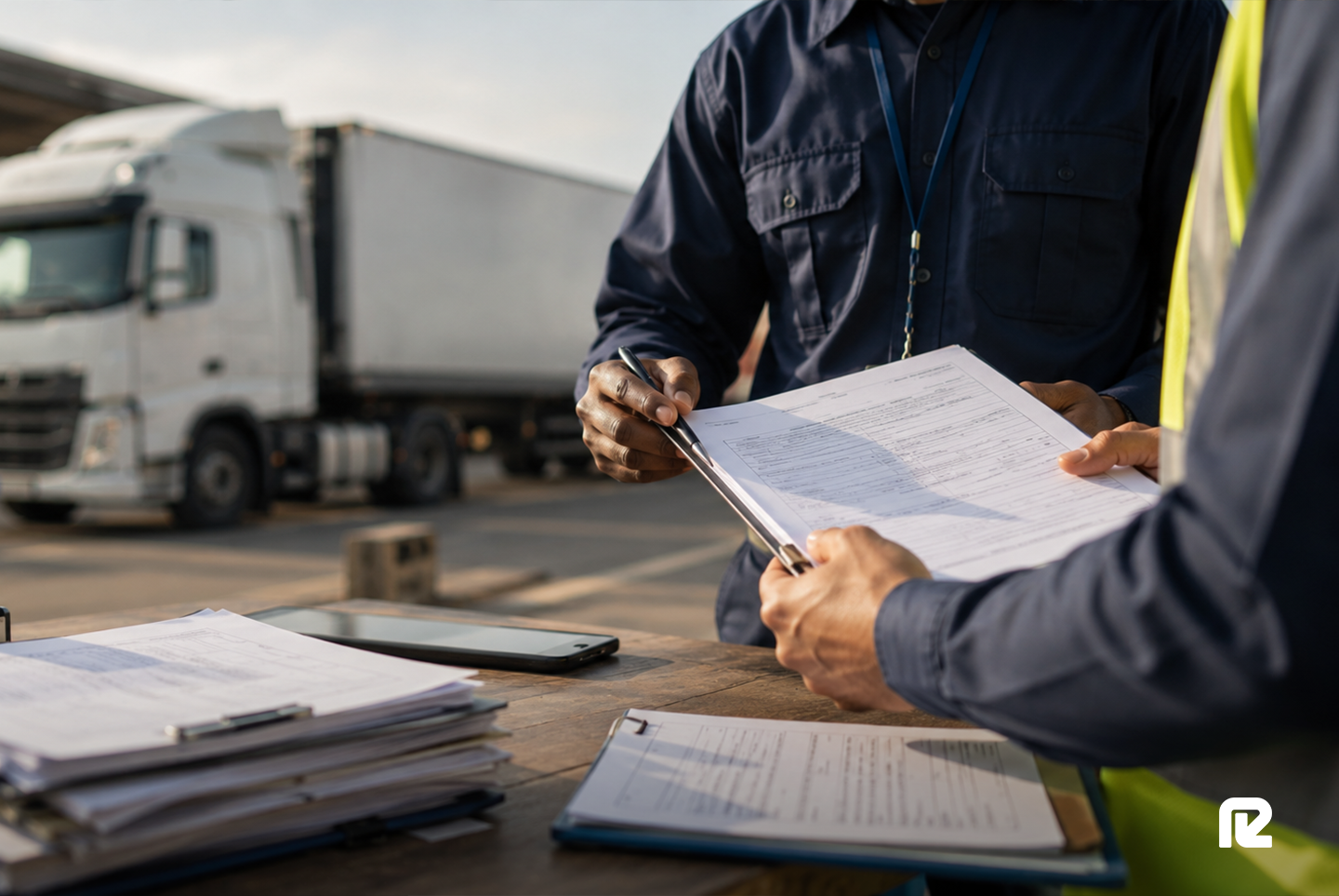
Cross-border mineral exports carry a heavy paperwork load, and getting it wrong means a delay or a fine. Digital systems keep the cargo shipping documentation attached to the shipment and the customs milestones current, so the right papers are ready at each border rather than chased at the last moment. For regulated cargo, that record also proves the shipment was handled correctly.
The data a digital operation leaves behind is worth as much as the live tracking, because it learns from patterns over time, showing which corridors cleared fastest, which border cost the most time, and where trucks sat waiting.
An exporter can use that to route the next program more effectively, and a provider can use it to hold itself to account on the performance it promised.
General freight analytics covers the wider discipline. In mining specifically, the useful measures are concrete: transit time per corridor, turnaround at the loading point, tonnage shipped against plan, and cost per ton delivered to the port. The value is not the dashboard. It is the decision the dashboard supports.
Technology helps, but it has limits. It cannot move a truck through a border faster than the customs officers work, and it cannot create a mobile signal where there is none, so remote-site operations still need systems that work offline.
Data is only as useful as what goes into it, so a tracking feed that nobody acts on is a cost rather than a benefit. Power and connectivity are not guaranteed in this region, so the best operations pair the technology with people who know the route and with procedures that hold when the systems go down. The exporters who get the most from digital freight management treat it as a tool, used by people who know what they are doing.
Most providers now claim some form of tracking, so the question is what sits behind the claim. A few things separate real capability from a dashboard bolted on for show:
● Ask what the system does when the signal drops. A provider that works mining corridors will have an answer, because it has dealt with dead zones. One that assumes constant connectivity has not run the routes that matter.
● Ask to see the data, not just the map. Live tracking is table stakes. The reporting that turns a season of shipments into better routing is where the value sits, so ask what the provider measures and how it feeds the next decision.
● Ask who acts on the alerts. A system that flags a problem is only useful if someone is watching and empowered to move on it. The technology and the operational control behind it have to come together.
● Ask for a mining track record. Moving minerals across borders in bulk is its own discipline, and a provider that has done it can show how its systems held up under real volume and real conditions.
Digital freight management is changing how mineral exports move, giving the businesses that use it a clearer view of their cargo, tighter control of their costs, and a record to plan from.
The technology matters, but it earns its keep in the hands of a provider that knows the corridors and acts on what the systems show. For a mining exporter, that combination is what turns a long, uncertain freight journey into one it can see and rely on.