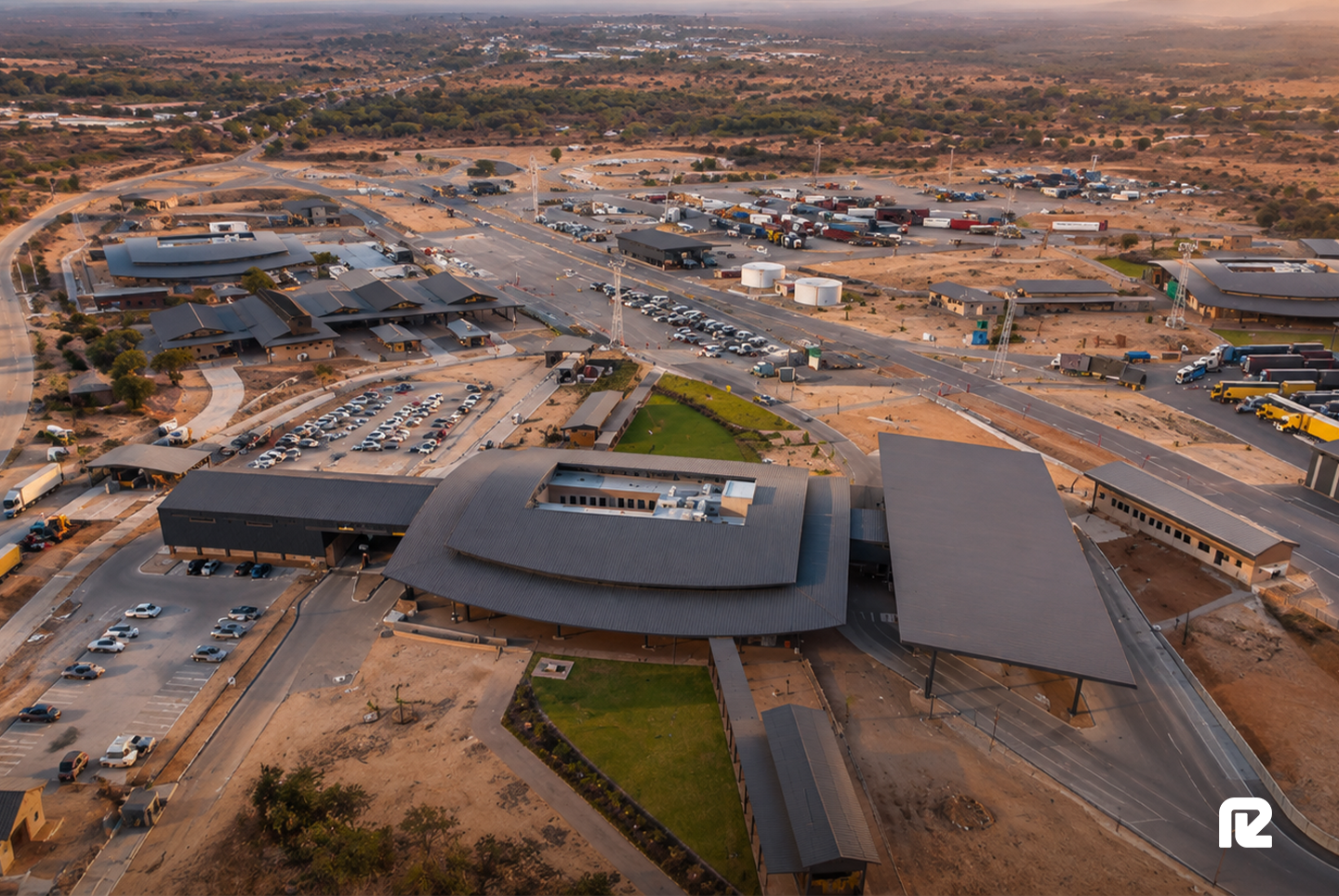
Beitbridge: Southern Africa's Busiest Border Post
September 1, 2026
Read the story
Please submit your details below and one of our logistics experts will reach out within one business day. Thank you.
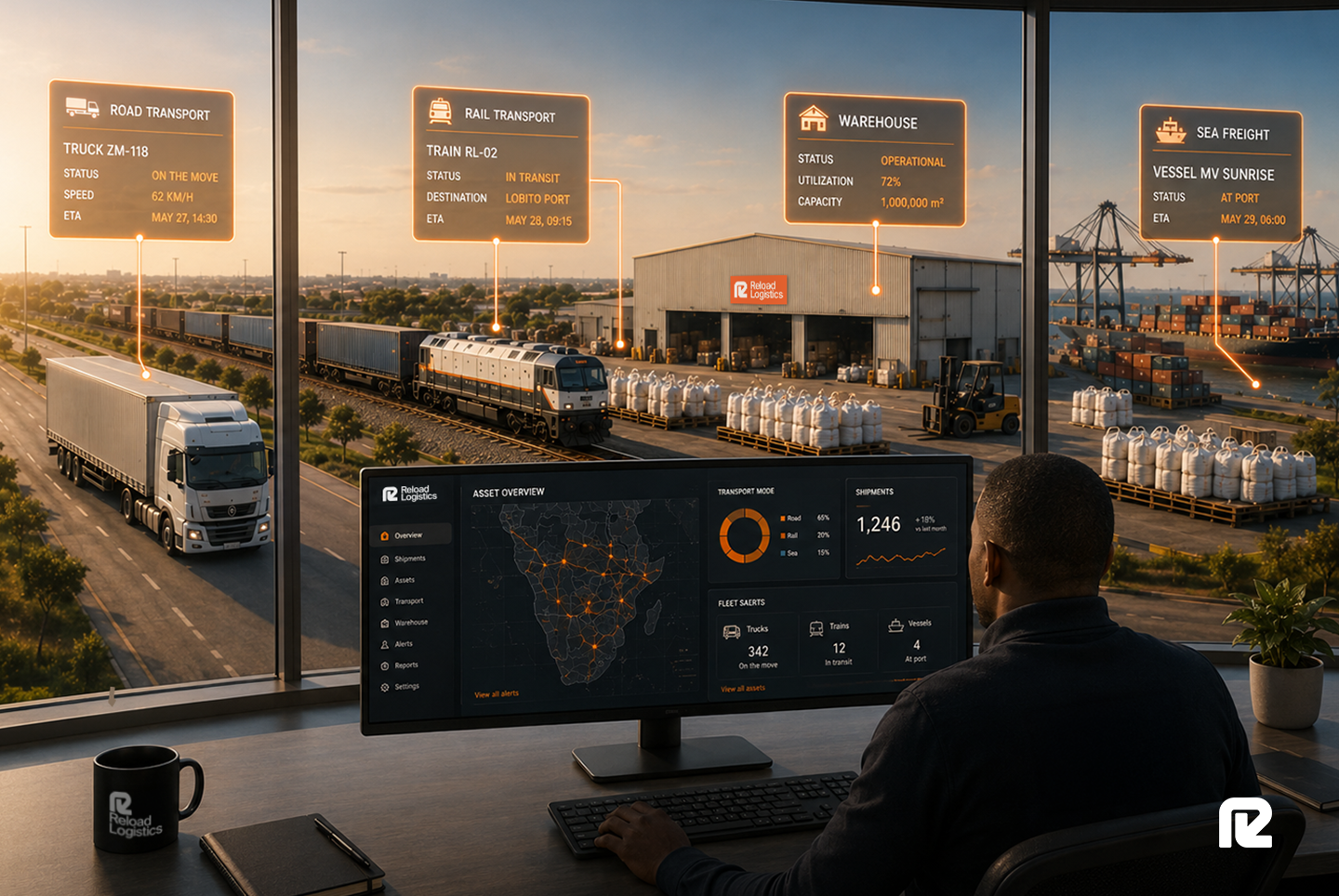

There's a point in every supply chain delay where the problem is still fixable, and the reason is visibility. If you can catch problems early enough, you can reroute, reschedule, or make a call.
For logistics teams managing complex, multi-leg movements across multiple countries, it's a daily operational reality. Visibility comes into its own when supply chains are under pressure.
At its core, supply chain visibility means being able to track every movement and update across your network with accuracy and confidence, from beginning to end.
Getting visibility across a supply chain is harder than it sounds. Suppliers, freight forwarders, port operators, and warehouse managers all hold a piece of the picture, and pulling that into something coherent and timely is where businesses can struggle.
Data is a key factor in visibility, and the challenge is using data from each stage to give decision-makers with an accurate and up to date picture of what's happening.
Supply chain visibility is dependent on data integration, tracking technologies, and reporting systems that connect the points along the chain and surface key information. When it works well, a logistics manager can see where a shipment is, whether it's on schedule, and what impact a delay might have, before that delay becomes a problem.
Visibility doesn't reduce costs by itself, but it does give businesses the information they need to make decisions that do.
Demurrage is one example. Cargo sitting at a port beyond the free period accumulates charges, but with real-time visibility, a logistics team can see a delay developing, act on it, and in many cases avoid the charge entirely. Without it, they’ll only find out when the invoice arrives.
The same logic applies to inventory. Businesses that can see stock levels in real time across their warehouse network don't need to hold as much buffer stock. That frees up working capital that would otherwise be tied up in goods sitting on shelves as insurance against uncertainty.
Empty runs, missed slots, and poor load utilization all have the same root cause, which is decisions being made without accurate information. Visibility fixes that and produces improvements across every operation, every day.
Poor coordination between departments is one of the most common sources of supply chain inefficiency.
For example, a sales team might commit to a delivery date that the operations team can't meet. Or perhaps procurement teams place an order based on stock levels that the warehouse department knows are wrong. These are failures of information.
Visibility solves this by giving every department access to the same data. So, when sales teams can see what's in transit and when it's due, they can make commitments with confidence, and so on.
The result is a faster, more coordinated business that doesn't spend half its energy firefighting problems that better information would have prevented.
These are some of the KPIs that logistics teams use to make informed decisions, reduce costs, and improve delivery times.
● On-time delivery rate is straightforward: are shipments arriving when they're supposed to? It's the metric customers care about most.
● Dwell time should be watched closely. Cargo that sits too long at a port, a warehouse, or a transfer point is costing money. Finding those pockets of delay is exactly the kind of thing visibility is built to do.
● Order cycle time tracks how long it takes from order placement to delivery. Shortening it is often where visibility investments pay back most directly.
● Purchase order tracking monitors order status across the supply chain, at every stage, and this visibility helps to prevent delays and miscommunication problems.
Inventory management becomes harder as supply chains get longer. When goods are moving across multiple countries and through multiple handover points, knowing what you have, and where it is, becomes a genuine challenge.
Real-time visibility changes, so logistics teams can see inventory levels as they change rather than relying on periodic stock counts or end-of-day reports. That means faster replenishment decisions, less buffer stock, and fewer instances of either running out of goods or holding more than necessary.
Most supply chain disruptions will come with some advance warning. A port gets congested, a weather event affects a corridor, or a customs clearance takes longer than expected. The warning signs are usually there if you're looking at the right data.
Proactive monitoring means watching for those signals and acting before a delay becomes a crisis. That might mean rerouting a shipment, bringing forward an order, or simply alerting a customer before they have to call you. None of that is possible if you're working from information that's already hours old.
Customers want their goods on time, but they also want to know where their goods are, and transparency helps to build trust with customers by providing this information. Uncertainty causes frustration, and businesses that can offer genuine shipment transparency have a real advantage over those that can't.
It means being able to give an accurate answer when a customer asks where their order is and flagging proactively when something has changed.
Sustainability reporting is no longer optional for most businesses. Customers, regulators, and investors want to know about emissions, and supply chains are often where the largest share of those emissions sits.
Visibility makes sustainability reporting possible, as without traceable data on how goods move, fuel consumption, and routing decisions, any sustainability claim is built on estimates. With it, businesses can measure accurately, report credibly, and identify where the real opportunities for improvement are.
Speed matters in logistics. A delay that's identified and acted on in an hour costs less than one that's identified and acted on the following day. The difference is almost always information.
Data-driven visibility surfaces what's happening and what it means, which shipments are at risk, which customers need to be contacted, which alternative routes are available. That context turns information into action.
Tracking tells you where something is, but visibility tells you what that means.
A GPS ping showing a truck's location is an example of tracking. Knowing that the truck is running two hours late, that it's carrying a shipment with a tight delivery window, and that missing that window will trigger a penalty clause, that's visibility.
The distinction matters because tracking alone doesn't support decision-making. It tells you a fact without context. Visibility connects the fact to the rest of the supply chain and surfaces the implications. That's what allows logistics teams to act rather than just observe.
It starts with data collection at every relevant point in the network, so shipments are tracked as they move, inventory levels are updated in real-time, and exceptions are flagged automatically.
The data collected flows into a central system where it can be used by the people who need it, which may be a port agent monitoring incoming vessels, a warehouse manager planning inbound receipts, or a finance team tracking exposure to demurrage.
The most effective systems provide alerts, recommendations, and in some cases trigger automatic responses to keep the supply chain moving.
Disruption will happen in supply chains, but the question is how quickly and effectively a business can respond when it does.
A business that knows immediately when a port closes, a shipment is delayed, or a supplier misses a production deadline can start working on alternatives straight away, while one that finds out hours later is already behind.
Visibility shortens that gap. It doesn't prevent problems, but over the course of a year, across hundreds of shipments, the difference adds up to a meaningfully more resilient operation.
Demurrage and detention charges are among the most direct costs which can be reduced thanks to visibility. Both charges accumulate when cargo sits at a port or equipment is held beyond agreed timeframes, and both are largely avoidable with enough advance warning.
Inventory carrying costs fall when businesses replenish more precisely, safety stock requirements drop, and capital tied up in excess inventory is freed. In addition, fuel and routing costs come down when empty miles are reduced and loads are matched more efficiently, while expediting costs become less frequent when problems are caught early enough to solve without urgency.
The warehouse is often where supply chain visibility either holds together or falls apart. An effective system of warehouse management allows real-time visibility into stock levels, locations, and movements within the facility, and connects what's in the warehouse to what's in transit, what's been ordered, and what has been promised to customers.
Without accurate warehouse data, even the best transport visibility is incomplete. You might know exactly where a shipment is in transit, but if the receiving warehouse doesn't have accurate stock data, the downstream planning built on that information will be wrong.
These three technologies do different things and suit different parts of the supply chain.
GPS does one thing well: it tells you where a vehicle or container is, continuously, across long distances. That makes it the backbone of most transport visibility systems.
RFID works differently. It's less about continuous tracking and more about accuracy at high volume, at receiving docks, dispatch points, warehouse locations where dozens of items are moving at once.
IoT sensors are the most versatile of the three. Location is almost secondary. What they're really monitoring is condition (temperature, humidity, shock) which matters most when the cargo itself is sensitive, whether that's pharmaceuticals, fresh produce, or high-value equipment.
Choosing between them is a question of what decisions you need the data to support.
Historical visibility data builds into a picture that supports more accurate planning. In this way, a business that can see how demand has moved over time, and how the supply chain has performed in response, is better placed to forecast what it will need to order, when, and how much buffer to build in.
Capacity planning benefits too, as knowing when peaks are likely to occur allows businesses to arrange transport and warehouse capacity in advance, rather than scrambling for it at short notice when prices are higher and options are fewer.
Without traceable records of how goods moved, which routes were used, and how much fuel was consumed, any emissions figure is an estimate. Traceable supply chain data makes sustainability reporting accurate and auditable, which matters as regulatory requirements around disclosure tighten in many markets.
Beyond compliance, visibility data can actively support improvement. Identifying the highest-emission legs of a supply chain, the routes with the most empty miles, or the suppliers with the longest lead times all point toward real opportunities to reduce the environmental footprint of logistics operations.
Supply chain visibility means being able to track every movement and update across your network with accuracy and confidence, from beginning to end.
It matters as it allows decisions to be made with the benefits of timely information, thus reducing time and costs.
Key benefits include better management of inventory, the reduction of demurrage and detention charges, improved customer communication, faster response to disruptions, as well as more accurate sustainability reporting.
Tracking tells you where something is, while visibility tells you what that means for the rest of your operation. The difference is the context which supports decision-making.
GPS for transport and container tracking, RFID for warehouse and distribution center operations, and IoT sensors for condition monitoring of sensitive cargo. Most visibility systems draw on a combination of these, integrated into a central platform that surfaces the relevant data to the right people at the right time.
By shortening the time between a disruption occurring and a response being underway. A business that knows immediately when something has gone wrong can start solving the problem straight away. One that finds out later is already behind.