AfCFTA and Customs Reality: What Free Movement of Goods Requires at the Border
October 19, 2026
Read the story
Please submit your details below and one of our logistics experts will reach out within one business day. Thank you.


Fleet management in logistics is about controlling cost, uptime, safety, compliance, asset utilization, and service performance across a moving network of vehicles and equipment, not just keeping vehicles on the road. In practice, that means managing not only trucks and vans, but also trailers, cold-chain units, pallets, handling equipment, spare parts, and the data systems that tie them together.
That broader view matters even more today where fleet management is considered a connected, data-driven operating system, often enabled by AI, rather than a simple transport control function.
Fleet management in logistics is the planning, administration, tracking, maintenance, deployment, and performance control of vehicles and related mobile assets used to move goods through the supply chain.
In practical terms, it covers everything needed to keep logistics assets productive and compliant: vehicle acquisition, route assignment, fuel control, preventive maintenance, driver oversight, utilization monitoring, safety procedures, and replacement planning. In larger operations, it also includes telematics, dispatch software, asset visibility tools, and centralized reporting.
A basic example is a regional distribution company managing a mixed fleet of box trucks and vans for outbound deliveries. Fleet management in that setting means scheduling routes, monitoring idle time, planning maintenance windows, controlling fuel spend, and ensuring vehicles are available when orders need to ship.
A more complex example is a cold-chain operator running refrigerated vehicles across multiple regions. There, fleet management also includes temperature-control monitoring, tighter maintenance standards, stricter downtime planning, and route decisions shaped by product sensitivity and delivery windows.
In both cases, the principle is the same: fleet management exists to keep transport assets available, efficient, safe, and commercially productive.
Fleet management operations are usually built around a few core components: asset acquisition and replacement, dispatch and route planning, telematics and tracking, fuel management, maintenance planning, compliance control, driver management, and cost reporting.
These components should not be treated as separate silos. Route planning affects fuel use. Maintenance affects uptime. Dispatch affects delivery performance. Asset age affects both repair cost and reliability. The reason fleet management becomes complex so quickly is that every operational lever influences another.
This is why modern fleet platforms are moving toward more unified systems.
The core objectives of fleet management in supply chains are straightforward, even if execution is not. A logistics fleet should help the business move goods reliably, control operating costs, maintain asset availability, improve safety, support compliance, and scale service without losing operational discipline.
A well-managed fleet should also reduce avoidable waste; this includes wasted fuel, wasted time, wasted capacity, unnecessary downtime, and poor asset rotation. The best fleet operations do not simply ask whether vehicles are moving but whether those vehicles are moving profitably, safely, and in line with service expectations.
Logistics fleets are not all built for the same job. The type of fleet depends on the goods being moved, the geography, the delivery model, and the service promise.
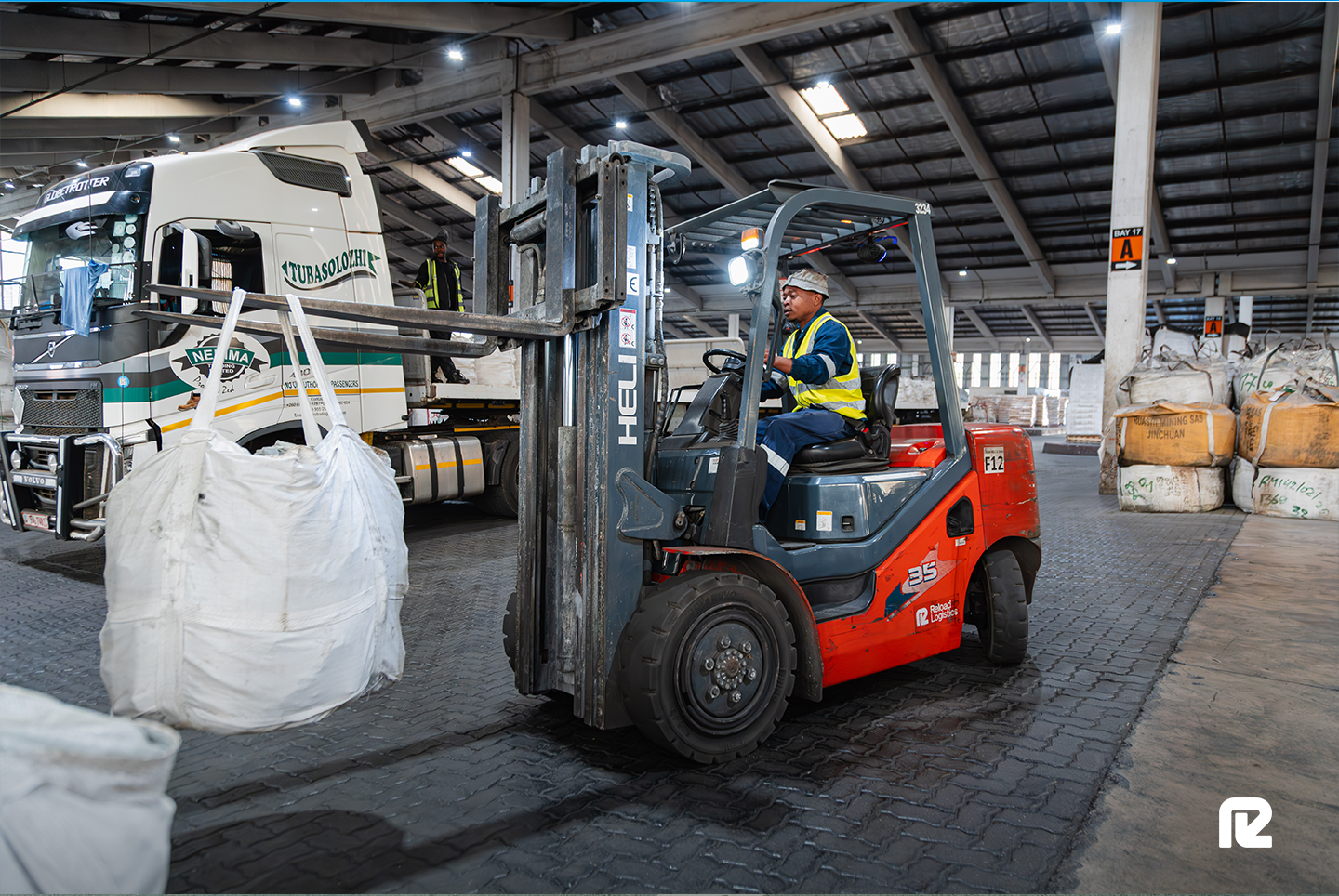
Heavy trucks are central to line-haul and high-volume freight movement. Vans are common in city distribution and last-mile delivery where flexibility matters more than payload size. Refrigerated fleets are essential in food, pharma, and temperature-sensitive supply chains. Flatbeds, tankers, and specialized trailers support industrial, bulk, and sector-specific transport needs.
In many operations, the fleet is mixed by design. A company may use articulated trucks for inter-regional transport, rigid vehicles for urban delivery, and smaller vans for time-sensitive last-mile work. That mix complicates planning, but it is often necessary if the business serves multiple customer types or transport environments.
Fleet management brings real advantages to logistics operations. It gives businesses more control over delivery performance, asset use, maintenance timing, service quality, and operating cost visibility. It can also improve responsiveness, especially when demand changes quickly or routing needs to be adjusted in real time.
The downside is that fleet operations are capital-intensive, data-intensive, and unforgiving when controls are weak. Vehicles age. Fuel prices move. Maintenance backlogs build. Safety risk never disappears. And the larger the fleet becomes, the more expensive poor planning gets.
So the real issue is not whether fleet management is useful, but whether the business has the systems, discipline, and visibility needed to manage fleet complexity properly.
Fleet assets have a lifecycle, and good operators manage that lifecycle deliberately rather than reactively. It begins with acquisition, where the business decides what types of vehicles or mobile assets it actually needs. It continues with utilization, where those assets are deployed, maintained, monitored, and measured over time. It ends with replacement or remarketing, when the asset is sold, redeployed, or retired because it no longer fits performance or cost requirements.
This is important because poor lifecycle management usually shows up in hidden ways before it becomes visible in the accounts. A vehicle may still be operational, but it may now be too expensive to maintain, too unreliable for critical routes, or too inefficient compared with newer alternatives. Current commercial transportation analysis increasingly links lifecycle strategy to uptime, safety, AI-enabled maintenance planning, and broader cost control.
One of the most common fleet-management blind spots is the idea that the fleet begins and ends with powered vehicles. In reality, logistics performance often depends just as much on non-powered assets such as trailers, pallets, cages, refrigeration units, returnable containers, and handling equipment.
If those assets are not tracked properly, businesses can lose utilization without realizing it. Trailers sit idle, pallets disappear into customer networks, and equipment bottlenecks slow loading or unloading. Strong fleet asset management, therefore, needs to extend beyond the cab and into the wider logistics asset pool.
Fleet operations depend on their own internal supply chain. Vehicles need parts, consumables, tires, fluids, and replacement components, and those items need to be available when maintenance is due. If spare parts are not available at the right time, preventive maintenance slips into reactive repair, and uptime falls quickly.
This is why parts procurement and spares management are more important than they often appear on paper. A fleet can have strong route planning and a solid dispatch team, but if workshop availability is undermined by weak spare-parts control, service levels will still deteriorate. Fleet management is therefore partly a transport discipline and partly an internal supply-chain discipline.
Fleet implications differ depending on where the vehicle sits in the flow of goods.
Inbound logistics usually emphasizes reliability, scheduling discipline, and coordination with supplier or production timelines. Outbound logistics puts more pressure on delivery windows, customer service, route density, and proof of delivery. Reverse logistics introduces another layer of complexity because the vehicle may be collecting returns, reusable assets, or unsold stock with less predictable handling requirements.
This is crucial because one fleet policy rarely works equally well across all three. A network designed for outbound customer delivery may not perform well if it also has to absorb reverse collections without planning changes. Fleet strategy should reflect the actual logistics mix, not just the vehicle count.
Fleet KPIs matter because they turn operations into something measurable and improvable. Without clear performance indicators, businesses tend to react to symptoms rather than manage causes.
Route planning and optimization affect delivery speed, route density, driver time, mileage, and fuel efficiency. Current route optimization tools increasingly use real-time and AI-supported rerouting to adapt to traffic, disruption, or new delivery requirements, with industry guidance highlighting meaningful efficiency gains when route design and telematics are connected.
Dynamic dispatching matters when orders change during the day, traffic conditions shift, or asset availability changes unexpectedly. The KPI angle here is not dispatching itself but the impact on utilization, response time, on-time performance, and missed-task rates.
Fuel management remains one of the most immediate cost levers in fleet operations. Telematics platforms now routinely connect fuel data to driving behavior, route performance, and engine state to highlight waste and improvement opportunities.
Idle time is one of the clearest examples of avoidable fleet waste. It increases fuel consumption, adds wear, and reduces productive use of the asset. Modern fleet systems track engine-state transitions specifically to help operators analyze and reduce idle behavior.
Maintenance scheduling affects uptime, breakdown risk, service continuity, and total lifecycle cost. In practice, the important KPI is not whether maintenance exists on paper, but whether it is completed on time and whether it prevents unplanned downtime.
Safety management should be measured through incident rates, risky driving events, policy compliance, coaching outcomes, and claims trends. Current telematics trends continue to position safety as one of the central value drivers of connected fleet systems.
Scaling a fleet is not only about adding more vehicles. It is about maintaining control as complexity rises. The useful KPIs here include utilization, cost per trip, cost per delivery, vehicle availability, dispatch responsiveness, and service performance as the operation grows.
A fleet audit is a structured review of how well the fleet is performing against cost, compliance, utilization, maintenance, safety, and service objectives.
In practice, a useful fleet audit usually starts by checking what assets exist and whether records are accurate. It then reviews usage patterns, maintenance history, downtime, fuel performance, dispatch practices, and safety compliance. From there, the business can identify underused assets, poor route design, maintenance gaps, or cost leakage.
The importance of fleet audits is simple: they expose where the operation is drifting. Without periodic audits, businesses often rely on surface-level visibility and miss the deeper reasons why the fleet is becoming more expensive or less reliable.
Last-mile delivery puts unique pressure on fleet management because it combines dense routing, customer-facing service, urban constraints, failed deliveries, and frequent stop-start driving. Vehicles in last-mile networks often experience a very different pattern of wear and utilization compared with long-haul fleets.
That means fleet management in last-mile settings needs tighter attention to dispatch responsiveness, route sequencing, dwell time, failed-delivery rates, and maintenance planning for urban-use conditions. It also means that vehicle type matters more. A fleet that is efficient online haul may be completely wrong for dense urban delivery.
Fleet management in South Africa has region-specific pressures that make local context especially important. Public policy and industry reporting point to a logistics environment shaped by infrastructure reform efforts, road-freight dependence, broader freight-system constraints, and the need for more resilient network design.
For fleet operators, that means a few practical factors matter more than generic best practice. Route reliability can be influenced by infrastructure conditions. Asset utilization may be shaped by corridor risk and port or rail interface issues. Maintenance planning becomes more important when vehicle wear is affected by operating conditions. Cost sensitivity is also higher when operators are working in an environment marked by volatility and the need to do more with less.
A company managing fleets in or through South Africa therefore cannot rely on generic global fleet logic alone. It needs a model that reflects regional infrastructure realities, asset stress, service expectations, and the practical economics of freight movement. Reload Logistics is specialised in South Africa and works with companies that need transport operations to be commercially realistic, operationally disciplined, and resilient enough to perform under real conditions. Whether the issue is day-to-day fleet administration, asset utilization, logistics planning, or broader fleet management operations, speaking with Reload Logistics can help turn fleet complexity into a model that is easier to run and stronger over time.