Beitbridge: Southern Africa's Busiest Border Post
September 1, 2026
Read the story
Please submit your details below and one of our logistics experts will reach out within one business day. Thank you.

LTL freight shipping is one of the most widely used transport models for businesses that move palletized goods but do not have enough volume to justify a full trailer. It sits between parcel shipping and full truckload transport, which is exactly why it continues to matter.
In practice, LTL (Less Than Truckload) is a network-based service model. Multiple shippers share trailer capacity, and carriers move those shipments through terminal networks designed to consolidate, sort, and redistribute freight across regional and national lanes. That is what makes LTL cost-efficient, but it is also what introduces complexity.
Every terminal transfer adds a handling point. Every handling point adds both efficiency opportunities and service risk. Freight can move economically across long distances because carriers combine loads, but transit times become more dependent on terminal flow, lane density, and connection timing than in direct truckload shipping.
For shippers, the value of LTL freight is lower cost, but also the ability to move inventory in flexible volumes without overpaying for unused trailer space. For carriers, the model only works when network density, pricing discipline, and terminal execution stay aligned.
LTL, or Less Than Truckload, refers to freight shipping for loads that are too large for parcel networks but too small for an entire trailer.
Instead of booking a dedicated truck, the shipper pays for a portion of trailer capacity. The carrier then combines that freight with shipments from other customers moving in similar directions. This shared-capacity model is the foundation of LTL freight shipping.
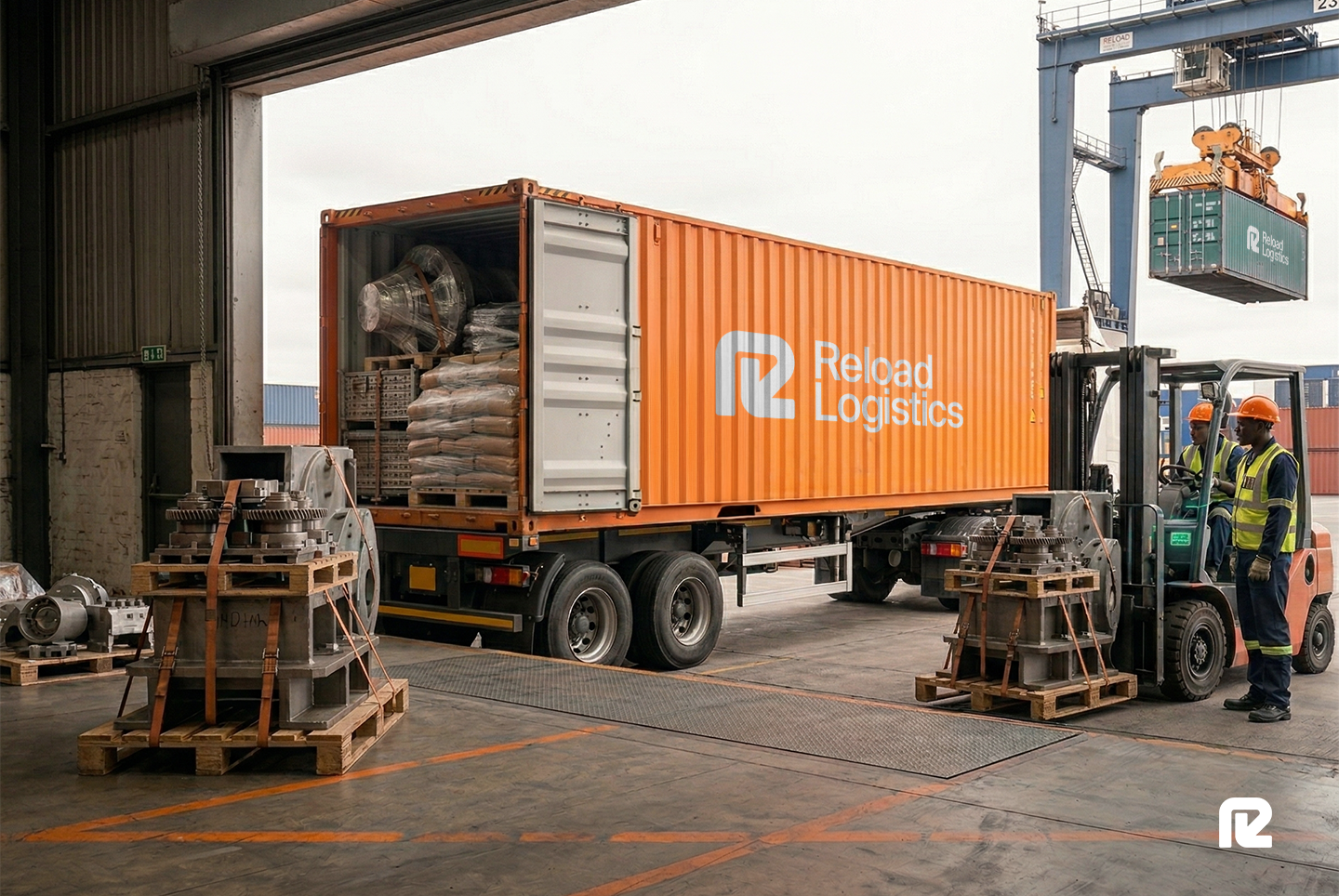
In most cases, LTL shipments are palletized, crated, or prepared as handling units that can be moved through terminal networks using forklifts and dock equipment. The freight is picked up locally, transferred through one or more hubs, and then routed toward the delivery region.
That point is important. LTL freight's meaning is tied not only to shipment size, but to network structure. A shipment becomes LTL because it is moving within a shared linehaul and terminal system rather than as a dedicated origin-to-destination movement.
This is why LTL often works well for:
· replenishment shipments to warehouses or retail stores
· inter-facility transfers
· mid-volume e-commerce inventory moves
· B2B freight that is not urgent enough for air or parcel and not large enough for full truckload
The commercial advantage comes from cost sharing, but the most interesting part is the operational trade-off coming from additional handling and transfer points.
There is no single universal maximum weight for LTL freight, because limits vary by carrier, equipment type, terminal capability, and lane structure.
In practical terms, however, many LTL shipments fall well below 10,000 pounds, and once a load starts approaching the upper end of trailer capacity, carriers and shippers begin comparing it against partial truckload or full truckload alternatives.
What matters more than headline weight is the combination of:
· total shipment weight
· weight per pallet
· dimensions
· density
· handling requirements
· freight class
A 4,000-pound shipment can still be problematic in an LTL network if it is oversized, awkward to handle, or concentrated on a single pallet that exceeds forklift or dock tolerances. By contrast, a heavier shipment can move efficiently if it is dense, well-palletized, and easy to load with other freight.
This is why LTL quoting is rarely just a matter of kilograms or pounds. Carriers evaluate whether the freight is suitable for terminal handling and whether it fits profitably into their network. Once a shipment becomes too heavy, too large, or too operationally disruptive, the economics usually shift toward truckload or dedicated transport.
On-time delivery is one of the most watched LTL performance metrics, but it needs to be interpreted correctly.
In a terminal-based network, on-time performance is influenced by more than driver execution. It depends on whether the shipment makes each terminal connection on schedule, whether linehaul trailers depart as planned, and whether the delivery terminal has enough capacity to complete final-mile distribution, especially in high seasons.
A high on-time delivery rate usually indicates strong terminal coordination and healthy lane density. A weak rate may point to network imbalance, missed cross-dock transfers, or service instability on certain routes.
This metric is critical when freight supports replenishment schedules, production continuity, or retail delivery windows.
Damage rate is important in LTL because freight is touched more often than in direct truckload shipping.
A shipment may be picked up on one trailer, unloaded at a local terminal, reloaded onto linehaul equipment, transferred again at a destination terminal, and then loaded onto a local delivery truck. Every transfer increases exposure.
A low damage rate usually reflects:
· disciplined dock handling
· good palletization standards
· clear labeling
· proper load planning inside trailers
A high damage rate often indicates that the issue is not confined to packaging, but it needs to be handled at a network quality level.
Claims per shipment measures how often shippers submit damage, shortage, or loss claims relative to total volume.
This metric gives a broader picture than damage rate alone because it reflects both freight condition and dispute frequency. Some carriers may have low visible damage but still generate high claims due to handling shortages, delivery exceptions, or poor documentation.
For shippers, claims frequency is a practical indicator of whether a carrier is operationally reliable enough for repeat business, especially on high-touch or fragile freight.
The difference between LTL and FTL shipping is not only trailer space but also in network design, handling structure, and service model.
FTL, or Full Truckload, is a dedicated movement. One shipper uses the truck, and the freight usually moves directly from pickup to delivery with minimal intermediate handling. This makes FTL more predictable for larger or time-sensitive shipments.
LTL, by contrast, is a shared network service. The freight is consolidated with other shipments and routed through multiple terminals before delivery. That lowers cost for smaller loads, but it also means more handling, more scheduling dependencies, and more exposure to service variability.
Operationally, the choice between the two models comes down to this:
Use FTL when:
· The shipment is large enough to fill most of the trailer
· direct transit matters
· handling must be minimized
· the freight is high-value, fragile, or highly time-sensitive
Use LTL when:
· The shipment is too large for a parcel but too small for a dedicated truck
· flexibility matters more than direct speed
· The economics of shared capacity are more favorable than paying for unused trailer space
Booking an LTL shipment sets off a chain of operational steps that are not always visible to the shipper.
First, the carrier or broker receives the shipment details: weight, dimensions, freight class, pallet count, origin, destination, and any accessorial requirements. Accuracy at this stage is extremely important: in fact. Incorrect dimensions, wrong freight class, or missing service details can create billing adjustments and service problems later.
Once booked, the freight is picked up and taken to a terminal where it is unloaded, scanned, sorted, and assigned to the appropriate outbound linehaul trailer. If the destination is not served directly, the shipment will move through one or more intermediate terminals before reaching the final delivery region.
At each terminal, the freight is then reintroduced into the network, and this means the shipment’s performance depends on:
· terminal throughput
· available dock labor
· trailer loading sequence
· linehaul departure timing
· local delivery scheduling
This is why good packaging and accurate paperwork matter so much in LTL. If a shipment is hard to handle, incorrectly labeled, or mismatched to the original booking data, the problem compounds with every transfer.
LTL pricing is one of the most misunderstood areas in freight shipping because it is not based on a single variable. Carriers look at a combination of commercial and operational factors, and each one affects profitability differently.
The most important pricing inputs are:
· freight class
· shipment weight
· dimensions and density
· origin and destination lane
· minimum charges
· fuel surcharge
· accessorial services
Freight class plays a central role. It reflects how difficult the freight is to move, based on density, stowability, handling characteristics, and liability. Dense, stable, palletized freight usually prices better than bulky, fragile, or hard-to-stack freight.
Lane structure is another important layer: a carrier may price one lane aggressively because it has strong network density there, while another lane is more expensive because the carrier has weaker coverage or needs additional interline support.
Accessorials can materially change the final cost. Residential delivery, liftgate service, limited-access locations, appointment scheduling, and inside delivery all add complexity and therefore cost.
In this environment, the cheapest LTL quote is not always the lowest total-cost option. A lower linehaul rate may come with weaker service performance, more claims exposure, or less predictable billing. That is why experienced shippers evaluate LTL pricing in relation to service quality, not rate alone.
LTL carriers do not optimize routes the same way truckload carriers do. In truckload shipping, the priority is usually direct movement from origin to destination. In LTL, the goal is to make a shared network profitable while maintaining acceptable service levels.
That means optimization happens at several levels at once.
At the local level, carriers plan pickup and delivery routes to maximize stop density and reduce empty miles. At the terminal level, they decide how freight should be sorted and loaded so that linehaul trailers leave full and move efficiently between hubs. At the network level, they continuously balance freight flows across regions to avoid sending underutilized trailers into weak lanes.
This is why certain LTL lanes price better than others. A carrier with strong density between two cities can consolidate shipments more efficiently, reduce handling inefficiencies, and maintain tighter schedules. A thin lane, by contrast, may require interline handoffs or less efficient trailer utilization, which increases both cost and service variability. In practice, that often means more terminal touches, later linehaul departures, and less room for recovery if one connection is missed.
Operationally, route optimization in LTL often depends on:
· shipment density by lane
· terminal proximity and throughput
· trailer cube utilization
· pickup and delivery stop concentration
· interline or partner network availability
Transit time in LTL shipping is rarely a reflection of geographic distance alone.
A shipment moving a relatively short distance can take longer than expected if it has to pass through multiple terminals, wait for outbound linehaul capacity, or connect through a weaker lane. On the other hand, a longer lane can sometimes perform well if the network is dense and the carrier has strong terminal discipline.
In practical terms, LTL transit times are shaped by:
· number of terminal touches
· lane density and carrier coverage
· service center cut-off times
· linehaul departure schedules
· local pickup and delivery capacity
· weather, congestion, and seasonal surges
That is why published transit maps should be treated as service guides, not guarantees.
For shippers, this matters because the service promise of LTL is different from dedicated transport. It is not built for guaranteed direct speed. It is built for shared-capacity efficiency. The more complex the lane, the more important it becomes to understand where variability can enter the shipment path.
Damage and delay risk in LTL is not accidental. It is built into the handling model.
The same network structure that makes LTL cost-effective (multiple shipments, multiple terminals, multiple touches) also increases the possibility of freight being bumped, shifted, delayed, or documented incorrectly. That does not mean LTL is unreliable by definition, but it does mean operational discipline matters more than in direct truckload movements.
Damage claims are most often driven by a few repeat issues:
· weak or unstable pallets
· freight overhang that gets struck during handling
· loads that cannot be stacked or secured properly
· insufficient internal packaging for repeated movement
· poor labeling or unclear handling instructions
Delay problems are often different. They tend to come from missed terminal connections, overloaded service centers, weather events, or accessorial issues that were not disclosed correctly when the shipment was booked.
When a claim is filed, carriers typically look first at the documentation and packaging condition. If the bill of lading, delivery receipt, freight photos, and inspection records do not align, the process becomes slower and more contentious. That is why experienced shippers treat claims prevention as a packaging and documentation issue before it becomes a legal or billing issue.
A strong LTL claims process usually depends on:
· accurate shipment descriptions
· proper palletization and load protection
· consistent photography at pickup and delivery
· immediate exception notation on delivery receipts
· fast communication between shipper, consignee, and carrier
In LTL, preventing damage at origin is almost always cheaper than resolving a claim after delivery.
LTL is useful, but it is not automatically the best option every time a shipment falls below full truckload size.
There are cases where parcel networks outperform LTL on speed and simplicity. Small, lightweight, high-frequency shipments may move more predictably through parcel systems, especially if they do not require pallet handling and can be processed as standard courier freight. Once a shipment becomes palletized, however, parcel economics usually become less attractive.
There are also many cases where FTL or partial truckload beats LTL.
If a shipment occupies a large portion of trailer space, has awkward dimensions, needs limited handling, or must arrive on a tighter schedule, shared-capacity economics may stop making sense. Once the cost of LTL handling, accessorials, reclassification risk, and claims exposure is taken into account, a dedicated or semi-dedicated truck can be the better choice.
The key decision is not whether LTL is cheaper on paper. It is whether it remains cheaper after service risk and handling complexity are taken into account.
The choice between a national and regional LTL carrier is often more important than the quoted rate.
National carriers provide broad coverage and standardized systems across large geographies. They are useful for businesses that ship across multiple states or national regions and want a single provider with consistent billing, tracking, and service processes.
That scale brings advantages:
· broad lane coverage
· integrated terminal networks
· centralized account management
· simplified procurement across many destinations
But scale can also reduce flexibility. On some lanes, a large national carrier may be less responsive or less competitive than a specialist regional operator.
Regional carriers, by contrast, tend to perform best in denser local territories. Because they focus on narrower operating areas, they often deliver stronger service consistency, shorter transit times, and more responsive support within those zones. Their local lane knowledge can be a major advantage.
However, regional carriers also come with limits:
· narrower geographic coverage
· less useful for complex multi-region shipping
· potential reliance on partners for longer lanes
· variable system integration depending on size and maturity
For many shippers, the best answer is not one or the other. It is using each where they perform best.
LTL should be used when the freight profile fits the network rather than forcing the network to fit the freight.
It works best for palletized shipments that are too large for parcel, too small for truckload, and flexible enough to tolerate terminal-based routing. It is particularly useful when the objective is to move inventory economically without paying for unused trailer space.
Typical use cases include:
· replenishment freight to regional warehouses
· palletized store deliveries
· B2B shipments to distributors or dealers
· inter-facility inventory balancing
· recurring mid-volume freight on stable lanes
LTL is less attractive when the freight is highly fragile, extremely urgent, or operationally difficult to handle. In those cases, the savings from shared capacity can disappear once service risk is factored in.
At first glance, LTL may seem less relevant in an environment dominated by parcel and courier networks. But for e-commerce and direct-to-consumer brands, that view is too narrow.
Many DTC businesses do not move only individual orders. They also move inventory between fulfillment centers, from suppliers to 3PL warehouses, from regional stock points to retail partners, or from import deconsolidation sites into domestic networks. Those moves are often too large for a parcel and too small for a full truckload.
That is where LTL continues to play an important role, especially for growing e-commerce brands, where LTL supports:
· multi-node inventory distribution
· flexible replenishment between fulfillment centers
· lower-cost pallet shipping into retail channels
· smaller inbound moves that do not justify dedicated trailers
As fulfillment networks become more decentralized, LTL becomes a practical tool for keeping inventory mobile without overcommitting transport spend.
Small businesses often struggle with freight economics because their shipping volume is irregular. One week, they have a few pallets going to one region, the next week, they have scattered, smaller orders that do not optimize well on their own.
Consolidation helps solve that.
By combining multiple shipments into one more efficient movement, small businesses can improve pallet density, reduce per-unit shipping cost, and become more attractive to carriers. Consolidation can happen across time windows, destinations, or customer orders, depending on how the business operates.
In practice, businesses usually improve LTL economics by:
· grouping outbound freight by region
· aligning order cut-offs to create denser shipments
· shipping on set weekly frequencies instead of ad hoc dispatches
· using a broker or logistics partner to combine compatible freight flows
The goal is not just to move more freight. It is to move it in a way that fits LTL pricing logic better.
Most LTL damage is preventable, but only if the shipper understands why it happens.
The most common issue is poor load preparation. Freight enters a multi-touch network, yet many shipments are still packed as if they will move directly from one truck to one dock without any intermediate transfers. That assumption is what creates avoidable damage.
Typical causes include:
· pallets that are too weak for repeated forklift handling
· freight stacked too high or with uneven weight distribution
· boxes that overhang pallet edges
· insufficient shrink wrap or banding
· no corner protection for crush-sensitive goods
· labels that are missing, loose, or unclear
The prevention side is straightforward but often ignored.
Shippers reduce LTL damage risk by using strong standardized pallets, keeping freight within the pallet footprint, securing loads firmly, protecting edges and corners, and making sure each handling unit is clearly labeled and stable enough for repeated movement.
If the freight cannot survive two or three terminal touches, it is not truly ready for LTL.
LTL remains relevant because many businesses ship too much for parcel and not enough to justify a dedicated trailer. They need a transport model that sits between parcel and dedicated truckload, and that is exactly where LTL continues to provide value.
When used correctly, LTL supports flexible inventory movement, lower transport spend on smaller loads, and more efficient regional distribution. But the service model only works well when shipment preparation, lane selection, and carrier choice are aligned with the way LTL networks actually operate.
Reload Logistics supports businesses in evaluating when LTL freight shipping is the right fit, how it compares with truckload alternatives, and how palletized freight can be moved more efficiently across regional and international transport networks.
If you need to assess how to balance LTL, FTL, and other freight models, at Reload Logistics, we can help you; we support businesses in evaluating when LTL freight shipping is the right fit, how it compares with truckload alternatives, and how palletized freight can be moved more efficiently across regional and international transport networks.
Who pays depends on the commercial agreement between shipper and consignee. In many cases, the shipper pays the LTL freight charge, but terms can also place that responsibility on the receiver or split it contractually.
The LTL market in 2026 is expected to remain important for regional distribution, e-commerce replenishment, and B2B palletized freight. Pricing discipline, terminal efficiency, and network density will continue to shape service quality and profitability.
No. LTL refers to less-than-truckload freight in road transport. LCL refers to less than container load in ocean shipping. Both involve shared capacity, but they operate in different transport modes and network structures.
LTL freight should be used when the shipment is too large for parcel but too small to justify a full truckload, and when the economics of shared trailer capacity outweigh the need for direct transit.
FTL is often not practical when the shipment volume is too small to use trailer space efficiently or when paying for a dedicated truck would create unnecessary transport costs.
There is no universal rule, but many LTL shipments involve between one and six pallets. The practical limit depends on total dimensions, weight, density, and how the carrier’s network classifies the freight.