Beitbridge: Southern Africa's Busiest Border Post
September 1, 2026
Read the story
Please submit your details below and one of our logistics experts will reach out within one business day. Thank you.


International shipments need paperwork, and while some of it is optional depending on the goods, the route, or the parties involved, a commercial invoice is essential. It travels with virtually every cross-border consignment and sits at the center of the customs clearance process.
This article covers what a commercial invoice is, what goes on it, how it differs from other shipping documents, and what the requirements look like in key markets.
When goods cross a border on a commercial basis, the seller issues a commercial invoice. It records the transaction: what was sold, who bought it, what it cost, and why it's being exported.
It's used whenever goods move between countries on a commercial basis. That covers the vast majority of international freight, from a single pallet of agricultural produce to a full container of industrial equipment.
If money is changing hands and goods are crossing a border, a commercial invoice is almost certainly required.
At its simplest, a commercial invoice is the seller's bill to the buyer. But in an international shipping context, it carries legal weight beyond a standard invoice, because customs authorities in the destination country use it to assess duties, verify the nature of the goods, and determine whether the shipment complies with import regulations.
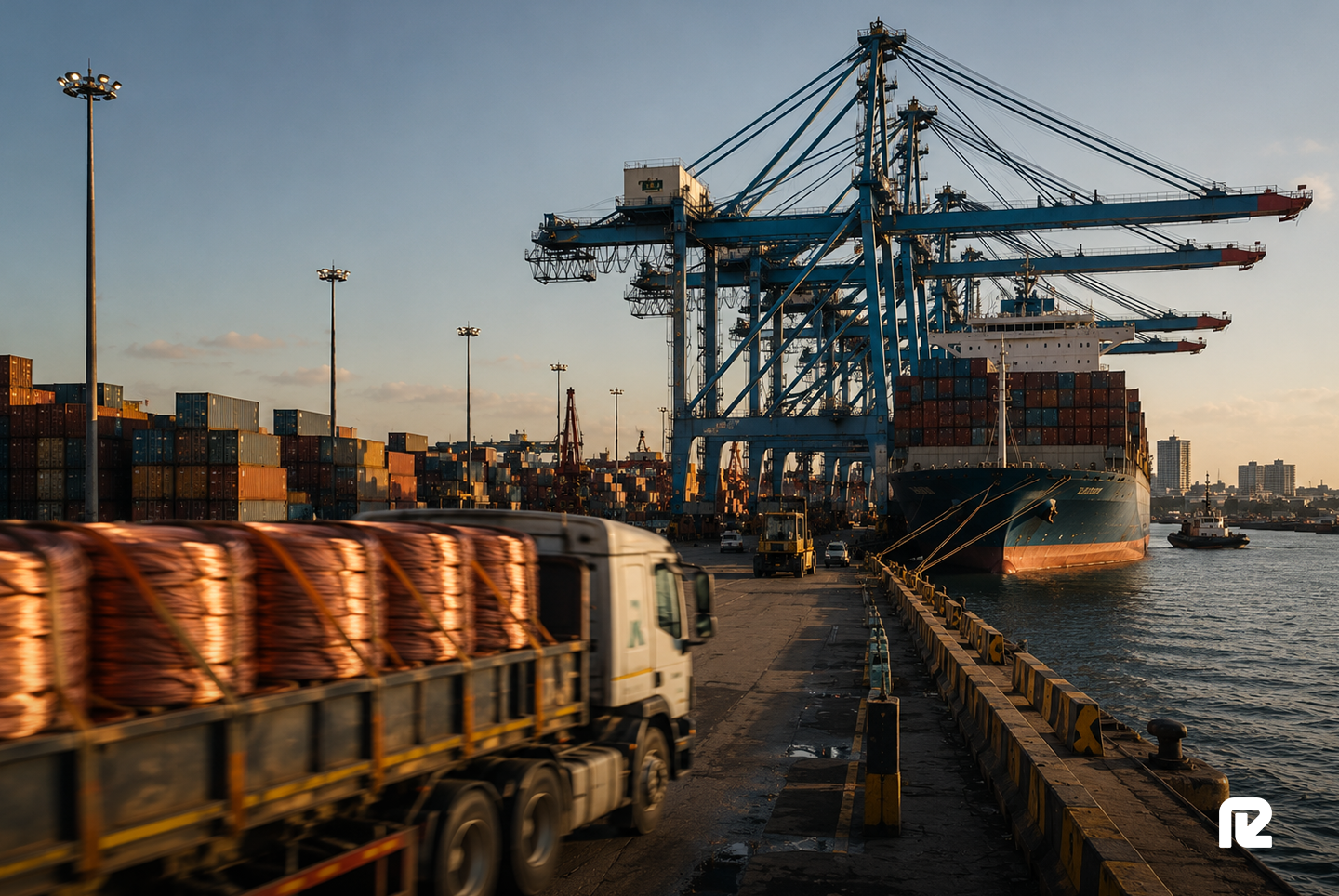
For example, if a Zambian copper trader sells a consignment to a buyer in Germany, the commercial invoice will record the quantity, agreed price, the HS code for copper, the terms of sale, and the reason for export. German customs can then use that document to calculate applicable duties and clear the shipment.
Without an accurate commercial invoice, that process stalls.
Customs authorities in most countries require a commercial invoice before they will release an incoming shipment. It is the document they use to establish what is being imported, what it is worth, and whether it should be admitted at all.
Two things happen when a commercial invoice reaches customs: the goods are valued and classified. Valuation sets the duties, while classification confirms the goods are what the paperwork says they are, and that nothing is being brought in that shouldn't be
Most jurisdictions base import duties on the transaction value, meaning the price the buyer actually paid. The commercial invoice is how customs know what the price was.
When a declared value looks unusually low, customs will push back. That might mean a request for supporting documents, a query to the importer, or customs applying their own valuation in place of the one declared. Getting the number right the first time is the simplest way to avoid that conversation.
Most customs delays that aren't caused by document errors trace back to the invoice. A missing field, an inconsistent value, a vague description of goods, or a mismatch between the invoice and the packing list are all common triggers for holds and queries.
The fix is straightforward in principle: complete every field, make sure the description of goods is specific enough for a customs officer who has never seen the product before, and check that all values and quantities are consistent across every document in the shipment file.
A proforma and a commercial invoice can look almost identical on paper. The difference is timing and intent.
A proforma comes first. It's a pre-sale document used for quoting, securing import licenses, or opening a letter of credit. It sets out what the deal looks like before it's confirmed. No legal obligation to pay, no customs function.
The commercial invoice comes once the sale is done and the goods are ready to move. At that point, it becomes a formal demand for payment, and the customs document will be used to process the shipment. Same fields, very different weight.
A proforma invoice is appropriate at the negotiation or pre-shipment stage. Once goods are confirmed, shipped, and payment is due, the commercial invoice is needed. Some buyers also request a proforma to satisfy internal procurement processes before a purchase order is raised.
In practice, both documents will often be part of the same transaction, with the proforma giving way to the commercial invoice once the deal is done.
Customs authorities need to know three things about any incoming shipment: what it is, what it's worth, and where it came from. The commercial invoice answers all three. Without it, customs have no reliable way to calculate duties, confirm the goods are compliant, or verify who is sending what to whom.
Show up at the border without one, and the shipment stops. In most countries, goods will sit until a valid invoice is produced. Do it repeatedly, and some jurisdictions will start issuing penalties to the importer.
The core fields are broadly consistent across markets, even though the specific rules vary by country. Most customs authorities expect the document to be in English or the language of the destination country, dated, and signed or stamped by the exporter.
US Customs and Border Protection wants a lot of detail. The invoice needs to cover the port of entry, date and place of purchase, full names and addresses of both seller and buyer, a detailed goods description, quantity, unit price, total value, currency, and country of origin.
For certain commodities or shipments covered by trade agreements, additional fields may apply.
Goods coming into the EU from outside the customs union need a commercial invoice that covers seller and buyer details, a description sufficient for customs classification, the HS code, quantities, values, currency, terms of sale, and country of origin.
Above certain value thresholds, the invoice itself needs to carry a statement of origin, as this is what supports preferential tariff treatment under EU trade agreements.
All three markets have their own customs rules, but the foundations are the same. Accurate goods descriptions, correct HS codes, declared values, and clear terms of sale will cover the core requirements in each.
Where it gets country-specific is around origin declarations and commodity-level rules, something worth checking before shipping anything regulated or controlled.
A commercial invoice typically runs to one or two pages and covers the following fields:
The full legal name and address of both the exporter and the importer. Some authorities also require the tax identification or VAT number of both parties.
This is the field that causes the most problems, as descriptions such as "General merchandise" or "machine parts" are not sufficient.
Think of it from the customs officer's perspective; they need to know exactly what they're looking at. A vague description creates doubt, and doubt creates delays.
The Harmonized System code is the internationally recognised numerical classification for traded goods. Every item on a commercial invoice should carry the correct HS code for the destination country, since the code determines the applicable duty rate. The declared value should reflect the actual transaction price, in the currency agreed between buyer and seller.
The declared value should be what the buyer is actually paying. Not what the seller would like it to be, not a round number that looks convenient. The real price, in the currency agreed between the two parties.
Terms of sale change the calculation. On CIF terms, the seller is covering cost, insurance, and freight, so those figures are built into the invoice value.
On FOB terms, the buyer takes on responsibility from the point of loading, so the declared value looks different. Customs in many countries adjust their duty calculation based on the terms of sale, which means getting this wrong doesn't just cause delays, but can also mean paying the wrong amount of duty.
Creating a commercial invoice doesn't need to be complicated, but it does need to be complete.
Start with your company details, the buyer's details, the invoice number, and the date. Add the shipment information: port of loading, port of discharge, and expected arrival date if you have it.
Then work through the goods. Each line needs a description, an HS code, a quantity, a unit price, and a line total. Once every item is covered, total everything up, add any freight or insurance charges that apply under your terms of sale, and state the total in the agreed currency.
Add the terms of sale, the reason for export, the country of origin for each item, and any declarations required for the destination market. Sign and date it.
Then do one final check: does every value and quantity on the invoice match the packing list? If anything is off, correct it before the shipment moves. A mismatch that gets picked up at the border is far more expensive than one caught at the desk.
Same shipment, different story. The commercial invoice covers the money: what was sold, for how much, and on what terms. The packing list covers the physical reality, the boxes, weights, dimensions, and what's inside each one.
Both travel with the shipment, and both will be looked at by customs. If the numbers don't line up between them, expect questions.
An air waybill or bill of lading is a contract between the shipper and the carrier. It confirms the carrier has taken possession of the goods and sets out how they'll be transported. That's all it does. It says nothing about what the goods are worth or who owns them commercially.
The two documents serve different purposes and are issued by different parties. Customs will want to see both, but confusing one for the other is a mistake that holds up shipments.
A waybill is a transport document that’s issued by the carrier confirming receipt of goods for shipment. A commercial invoice is a financial document issued by the seller recording the terms and value of the transaction. One moves with the cargo. The other records what the cargo is worth and why it's being shipped.
A standard invoice is a payment request. A commercial invoice does that job too, but it carries a lot more information because customs authorities need it. HS codes, country of origin, terms of sale, reason for export - none of that appears on a domestic invoice. In international trade, that additional detail is essential.
No, and mixing them up is a common mistake. A bill of lading is a contract between the shipper and the carrier that confirms the goods have been loaded and sets out the transport terms.
It has nothing to do with the transaction value or payment. A commercial invoice and a bill of lading will both be part of most international shipments, but they come from different parties and do completely different jobs.