Dar es Salaam Port Delays: What They Mean for Cargo Moving to Zambia and the DRC
August 28, 2026
Read the story
Please submit your details below and one of our logistics experts will reach out within one business day. Thank you.


Warehousing across Africa carries more responsibility than holding cargo between transport legs. On corridors where border crossings, port congestion, and multi-country compliance shape transit times, the warehouse is where much of that complexity gets managed. It is the point where cargo is cleared, consolidated, financed, and prepared for the next leg of its journey.
For businesses moving goods through Sub-Saharan Africa, the services a warehouse provides often matter more than the floor space it offers. This article explains what modern, value-adding warehousing covers, how bonded storage and collateral management work, and what to look for when choosing a warehousing partner across African trade corridors.
Value-added warehousing describes storage operations that also perform services which prepare cargo for sale, distribution, or onward transport. Alongside receiving and releasing goods, the facility handles tasks such as inventory management, consolidation, labeling, light assembly, and order fulfillment.
Basic storage warehousing does one job: it holds goods securely until they are needed. Value-added warehousing builds services on top of that base. The difference is apparent in what happens to cargo while it sits in the facility. In a storage model, goods wait. In a value-added model, goods are counted, sorted, repackaged, cleared through customs, and staged for distribution, so they leave the warehouse closer to their final saleable state.
A modern warehouse manages four things at once: receiving and put-away, storage and inventory control, order processing, and dispatch. Around that core sit the value-added services that vary by industry and cargo type. A well-run facility keeps accurate stock records, maintains cargo security and condition, and coordinates with transport so goods move on schedule.
Warehousing sits at the connection points of a supply chain: between sea or air freight and inland transport, between import clearance and domestic distribution, and between production and export. In African corridors, those connection points are where delay and cost tend to concentrate, which is why warehouse performance has an outsized effect on the reliability of the whole chain.
The services that add most value across warehousing cover four areas.
Inventory management keeps an accurate, current record of what is in the warehouse, where it sits, and what condition it is in. Stock visibility extends that record to the customer, so they can see availability and plan around it. For businesses running lean, accurate inventory data prevents both stockouts and the cost of holding more than they need.
Cross-docking moves cargo from inbound to outbound transport with little or no storage in between, which suits goods that need to keep moving. By combining shipments from several sources into fuller loads, consolidation lowers the cost per unit of onward transport. Both services reduce handling and improve the economics of moving cargo across long African distances.
Kitting groups separate items into a single ready-to-use unit. Labeling applies the barcodes, compliance marks, and destination information each market requires. Light assembly involves final steps such as fitting components or packaging products for retail. These services shift work closer to the point of distribution, which shortens the final delivery step.
Order fulfillment picks, packs, and dispatches goods against customer orders. Paired with distribution planning, it turns the warehouse into the engine of the delivery process. For companies selling across several African markets, fulfillment run from a well-placed warehouse shortens delivery times and simplifies coordination.
A bonded warehouse is a secure facility approved by customs authorities, which provides storage for imported goods before duties and taxes are paid. The cargo remains under customs control until it is cleared for the local market, re-exported, or moved onward as transit cargo. This example of an in-port bonded terminal at Walvis Bay shows how port-side bonded storage keeps clearance and onward transport tightly coordinated.
Duty deferral is the main financial benefit of bonded storage. Import duties and taxes become payable when goods leave the bonded facility for the local market, not when they arrive at the port. For importers, that timing frees working capital that would otherwise sit locked in duty payments on goods still waiting to be sold. Goods re-exported from bond can avoid local duty altogether.
Cross-border cargo in Africa passes through several customs systems, each with its own documentation, duty structures, and enforcement priorities. Bonded warehousing gives importers a controlled point to manage that compliance, clear cargo correctly, and hold it legally while paperwork is completed. On multi-country corridors, that controlled point reduces the risk of penalties and delays at the border.
Collateral management is a service where stored commodities are held and verified as security against financing. A collateral manager takes control of the goods, confirms quantity and quality, and issues documentation the lender relies on. The commodity owner gets access to finance against stock they are holding, and the lender gets independent assurance that the collateral exists and is properly managed.
A warehouse receipt is a document confirming that a specified quantity and grade of a commodity is held in store. It can be used to secure trade finance, because the receipt gives lenders a verifiable claim on the underlying goods. In agricultural and mineral supply chains, warehouse receipt systems let producers and traders raise finance against stock they are holding rather than selling immediately at a weak price.
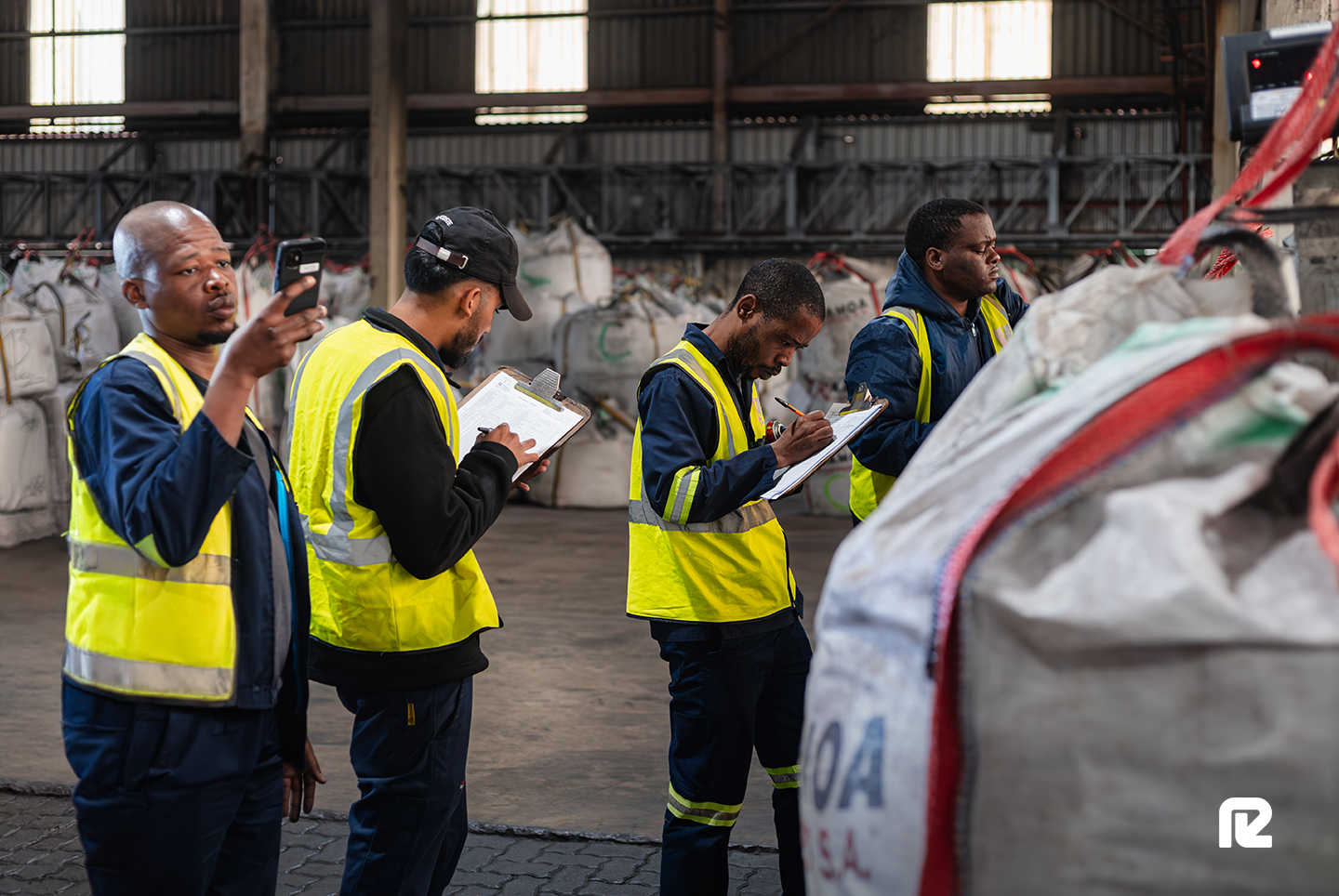
High-value commodities such as copper, cobalt, and other metals carry real risk in storage, including theft, substitution, and misreporting. Collateral management addresses that risk through controlled access, independent verification, and consistent record-keeping. For lenders financing metals and minerals, that control is what makes lending against stored stock viable.
A warehouse management system is the software that tracks stock, directs put-away and picking, and records every movement in and out of the facility. It replaces manual records with a live view of what the warehouse holds and where. Accurate system data underpins every value-added service, from inventory reporting to order fulfillment.
Real-time tracking gives customers current information on their stock without waiting for a manual count or report. Combined with cargo tracking as goods move between modes and across borders, it closes the visibility gaps that open up during transit. Better visibility means problems get spotted while there is still time to act on them.
Automation takes on the repetitive parts of warehouse work: scanning stock in and out, sorting cargo by destination, and in some facilities moving and picking pallets with automated equipment. Each of those actions records data. Over time, that record shows how quickly particular stock moves, how much of the racking is in use, and where a shift has too many or too few people, which gives managers something concrete to plan against.
Connectivity is the practical limit in much of Africa. A warehouse management system depends on a network, and network and power supply are not always reliable, so the facilities that keep working through an outage are the ones with manual procedures the team already knows and uses.
Mining supply chains need warehousing built for heavy, high-value, and often hazardous cargo. Bonded storage, collateral management, and specialized handling for bulk and break-bulk material all come into play. Facilities along export corridors allow mineral exporters to stage cargo close to the port and manage the vessel loading flow.
Fresh produce, grain, and other agricultural cargo lose value the longer they sit, and some of it spoils outright if the temperature drifts, so cold storage and quick turnaround matter more here than in most sectors. A cold store holding citrus for export has to keep a steady temperature from intake to dispatch and move the fruit through before its shelf life runs down.
Warehouse receipt systems help on the financing side. A farmer can store maize after harvest, hold a receipt confirming what is in store, and borrow against that stock instead of selling into the low prices that follow every harvest.
Automotive supply chains run on tight schedules and depend on parts arriving in the right sequence. In this sector, warehousing combines accurate inventory control, kitting, and coordinated dispatch so components reach assembly lines and dealerships on time. Bonded storage helps manage imported vehicles and parts before duty falls due.
Energy and infrastructure projects move oversized, heavy, and high-value equipment that standard warehousing cannot handle. Project cargo storage needs the space, equipment, and planning to receive, hold, and release large consignments in step with construction schedules. Getting that staging right keeps expensive equipment from sitting idle or arriving out of sequence.
The value of a warehouse depends heavily on where it sits. Facilities positioned on major trade corridors and close to ports and borders reduce handling and shorten transit. Port-side bonded storage keeps the chain tight at the point most exposed to delay.
A warehousing partner should hold the right customs bonding, security accreditation, and insurance for the cargo it handles. For high-value and regulated goods, verified security and independent oversight protect both the cargo and the finance secured against it. Ask what bonding a facility holds and how access and stock are controlled.
Supply chains change as they grow, so warehousing needs to scale and reach across markets. A partner with connected facilities across several countries can support cargo through its full journey, not only at a single point. Regional coverage under one operating standard reduces the coordination burden on the customer and keeps performance consistent from one market to the next.
Modern warehousing is where much of the cost, risk, and reliability in African supply chains is decided. The businesses that treat warehouse selection as a strategic decision tend to end up with supply chains that are more predictable and cheaper to run across the full corridor.