AfCFTA and Customs Reality: What Free Movement of Goods Requires at the Border
October 19, 2026
Read the story
Please submit your details below and one of our logistics experts will reach out within one business day. Thank you.
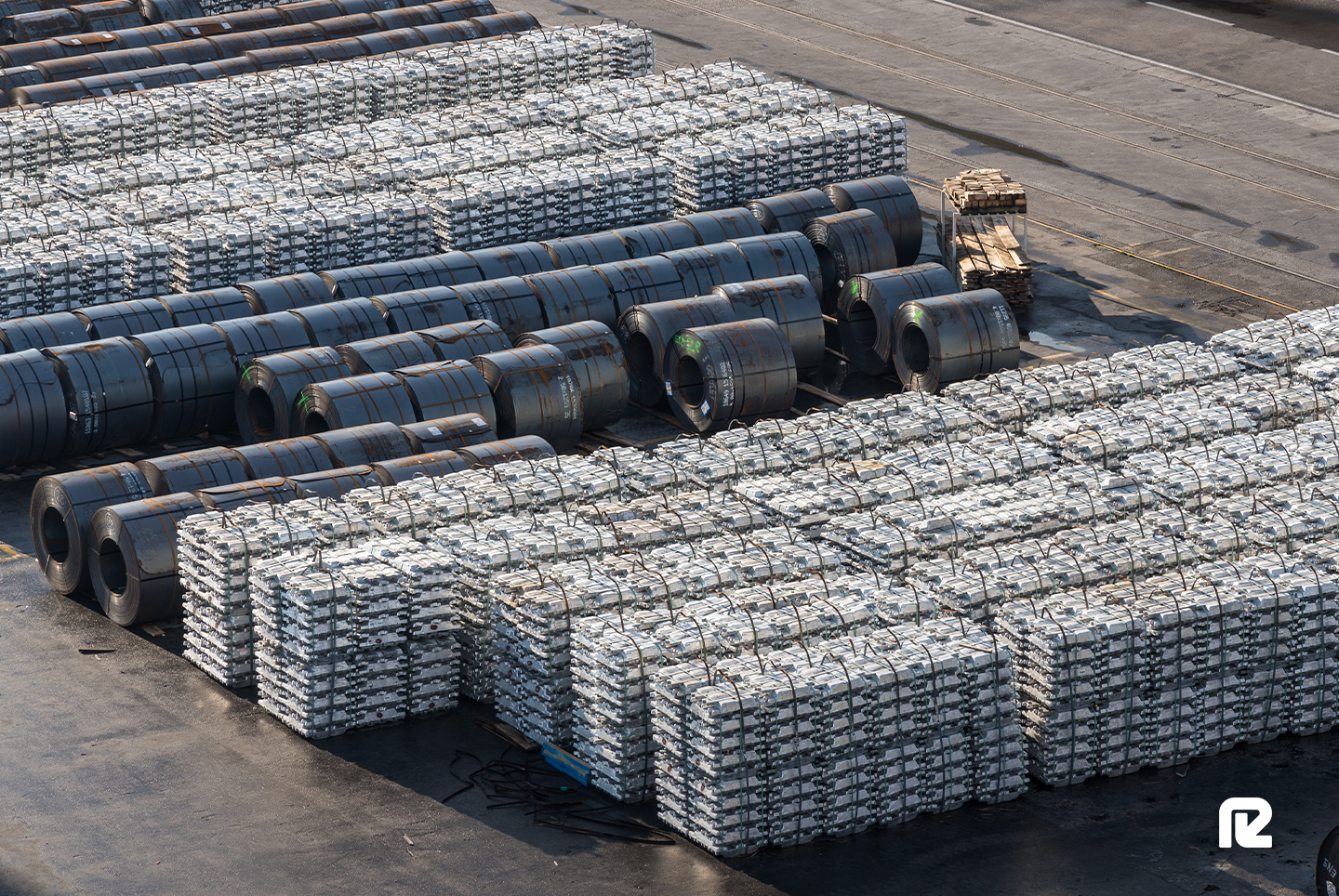

Steel and metal cargo present unique logistical challenges. It is heavy, often awkwardly shaped, vulnerable to corrosion, and in many cases valuable enough that a handling error can become expensive. Moving it safely and efficiently requires equipment, expertise, and infrastructure that general freight operators do not always have.
In South Africa, that challenge is unfolding against the backdrop of one of the most significant disruptions the domestic steel industry has faced in years.
Steel and metal logistics cover the movement of raw materials, semi-finished products, and finished metal goods from production through to end use. That spans iron ore and scrap metal moving to mills, billets and coils moving from mills to processors and fabricators, and finished structural steel, plate, and bar products moving to construction sites, manufacturers, and export markets.
What sets metals logistics apart from general freight is the combination of weight, value, and physical risk involved at every stage. A single steel coil can weigh several tonnes and represent a significant financial loss if damaged or lost. The handling, transport, and storage requirements reflect that.
The metals moving through Southern African supply chains cover several distinct categories, each with its own handling profile:
● Steel in the form of coils, plate, structural sections, bars, and wire, the highest-volume category by far.
● Aluminum, lighter than steel but requiring careful handling to avoid surface damage that affects value.
● Copper, typically moving as cathodes or concentrate from Southern African mines, is covered in our critical minerals logistics article.
● Specialty alloys, lower volume but often higher value, requiring more careful inventory and handling control
Demand for these metals across Southern Africa is shaped by construction activity, automotive manufacturing, infrastructure investment, and export markets for raw and semi-processed metals, particularly copper and steel products moving toward Asian and European buyers.
The steel trade does not move freely right now. Tariffs, quotas, and policy shifts are reshaping flows in ways that disrupt supply chains built over decades, and South Africa is living through a particularly sharp version of that disruption.
South Africa's Department of Trade, Industry, and Competition presented measures to Parliament in 2026 covering import duties of 10 to 30% and a green steel roadmap, both responses to the disruption following the ArcelorMittal Newcastle closure.
The catalyst is Chinese structural steel imports, which had surged 19-fold between 2023 and 2024, and the 74.98% tariff on Chinese structural steel was South Africa's direct answer to that surge.
The broader pattern is familiar across steel-producing nations: protect domestic capacity, adjust to a changing product mix. The South African steel market is shifting from long steel products toward flat steel, following global demand trends in automotive and appliance manufacturing.
General freight equipment and standard warehousing were never designed with steel and metal cargo in mind. Three things make a difference.
Weight and dimensions are the obvious ones. A coil of hot-rolled steel can weigh several tonnes, and lifting it safely takes equipment rated for that load and positioned correctly to avoid the cargo becoming unstable mid-transport.
Value concentration is less obvious but just as important. A scratched coil, a bent plate, or a corroded bar can lose substantial commercial value through handling damage alone, even when the underlying steel is structurally fine.
Then there is moisture. Steel left exposed to the elements for too long starts to rust, and that affects both appearance and structural integrity in ways that show directly in resale value.
Steel cargo frequently exceeds standard freight dimensions and weight limits. Long structural sections, wide plate, and large coils all require specialized vehicles and, in some cases, abnormal load permits and route planning that accounts for bridge weight limits, turning radius, and road surface conditions.
Steel moves either as bulk cargo, typically for scrap or certain raw material forms, or as breakbulk, the more common method for finished and semi-finished steel products, including coils, plate, and structural sections. Breakbulk handling requires individual lifting and securing of each unit, in contrast to the continuous loading process used for true bulk commodities.
Most steel corrodes with time and moisture. Coastal humidity, rain during transport, and condensation in poorly ventilated storage all speed up rust formation. Coated and stainless products hold up better, but they are not immune. A scratch or chip in a protective coating creates a localized weak point where corrosion can take hold, even on material that was treated specifically to resist it.
Steel packs a lot of weight into a small footprint, and that creates stability problems. A coil or plate that is not properly secured can shift mid-transport, and a cargo shift this dense affects vehicle handling immediately, not gradually.
Getting weight distribution right across the axles is a legal requirement, and one that steel transport operators have to take seriously, given how much weight is concentrated in each load.
Moving steel safely depends on equipment built specifically for the job:

Without the right equipment for the cargo in question, the risks include damage, instability, and, in the worst cases, safety incidents.
Different steel forms need different handling. Coils have to be lifted and moved in a way that keeps their shape intact and stops the steel from unwinding or shifting. Plate needs careful stacking, both to avoid surface damage and to keep weight evenly distributed. Bars and structural sections need bundling and securing tightly enough that individual pieces cannot move independently once the load is underway.
Load restraint for steel has to account for braking and cornering forces, not just static weight. Chains, straps, and dunnage each play a role, and which combination gets used depends on the product form, the weight involved, and the mode of transport.
Port equipment has to match the cargo. Cranes and forklifts rated for steel's weight and dimensions are non-negotiable, and attachments like coil grabs and plate clamps are what separate a clean lift from a damaged shipment.
Terminal layout matters just as much. Heavy, irregularly shaped cargo needs space built around it, not space designed with standard containers in mind.
Storing steel properly means a covered space to keep weather out, a floor loading capacity that can take the concentrated weight, and equipment on hand to move heavy cargo safely once it is inside. Coated and specialty products often need climate control on top of that, since temperature and humidity swings can undo the protection those coatings are meant to provide.
Most steel in South Africa moves by road, connecting mills, processors, and end users across routes that rail does not always cover well. The equipment required, flatbeds, lowboys, specialized trailers, costs a lot to acquire and maintain, which means steel haulage tends to sit with a smaller pool of specialist operators rather than spreading across the general freight market the way standard cargo does.
Rail offers significant cost advantages for steel moving in bulk over long distances, particularly raw materials moving to mills and finished products moving to export ports. The same rail performance challenges that affect mineral and agricultural bulk freight in South Africa apply equally to steel, and the shift of steel volumes onto road in recent years reflects that underlying constraint.
Steel exports move either as breakbulk cargo on dedicated vessels or, increasingly, in containers for products that suit containerized handling. The choice depends on product form, volume, and destination port capability.
Breakbulk vessels still make the most sense for very large volumes and oversized products. Containers have taken over for smaller, more frequent shipments heading to a wider spread of destinations.
ArcelorMittal South Africa closed its long steel production in September 2025, removing a major domestic producer from the market. The disruption was immediate, and the shift in logistics flows that followed is still working its way through the system.
The closure followed an earlier reprieve. According to IMARC, in March 2025, ArcelorMittal South Africa postponed the closure of two steel mills, the Newcastle and Vereeniging facilities, after securing a R1.683 billion loan from the Industrial Development Corporation, safeguarding 3,500 jobs at the time. That reprieve did not hold for the long steel business, which closed in September 2025 regardless.
Construction has been impacted, with plant closures affecting the supply of long steel products that construction and public works projects depend on, pushing costs up and affecting project timelines.
Steel that used to travel a short distance from a domestic mill to a building site now often arrives as an import, moving through a port and then by road. That is a longer supply chain than the one it replaced, with the added cost and complexity that comes with it.
Key steel production and export hubs in South Africa remain centered on the traditional industrial corridors of Gauteng, KwaZulu-Natal, and the Vaal Triangle, though the ArcelorMittal closure has reduced the production weight of some of these locations. Newer capacity is emerging elsewhere: CCE reports that Coega Steels is expanding operations and adding rolling mill capacity that could support nearly 1,000 jobs, representing one of the more significant new investments in the post-ArcelorMittal landscape.
As domestic capacity has fallen, imports have risen to fill the gap. Chinese structural steel imports grew 2.6 times year over year in early 2025 before the new tariff regime took effect, which is precisely the trend the DTIC's policy response now targets. The scale of the shift is significant: Trading Economics puts EU steel exports to South Africa at US$26.51 billion in 2025 alone, a figure that reflects how dependent the domestic market has become on imports for certain product categories.
That shift puts more weight on the ports handling steel cargo. Durban is the primary gateway for both imports and exports, with the container and breakbulk capacity to handle volume in both directions. Richards Bay takes bulk steel-related cargo alongside its mineral export role. Cape Town serves the Western Cape's import and distribution needs. As import volumes grow to cover the gap left by reduced domestic production, the steel handling capability at each of these ports matters more than it did when local mills supplied much of the market.
Steel and metal logistics costs are shaped by several factors. Weight and dimensions drive higher per-shipment transport costs than general freight, given the specialized equipment required. Distance has grown for much of the country's steel supply as imports replace domestic production, adding inland transport costs that did not previously exist for steel moving short distances from local mills.
The new duties on Chinese structural steel feed directly into the landed cost for importers. Domestic producers are not immune either, facing their own pressures from energy prices and the capital cost of modernizing ageing plants. And because so much of South Africa's steel now arrives from abroad rather than from local mills, currency movements have a more direct effect on price than they used to.
The disruption to South Africa's domestic steel production has increased the value of experienced third-party logistics providers in the metals supply chain. As import volumes grow and supply chains lengthen, the coordination challenge facing steel buyers, from port clearance through inland transport to warehousing and final delivery, has become more complex than when domestic mills supplied much of the market from nearby facilities.
A logistics provider with genuine expertise in heavy and oversized cargo, the right equipment relationships, and experience navigating South Africa's evolving trade policy environment is increasingly valuable to businesses that depend on a reliable supply of steel and metal products. The shift toward import dependency that the South African market is currently working through makes that expertise more relevant, not less.