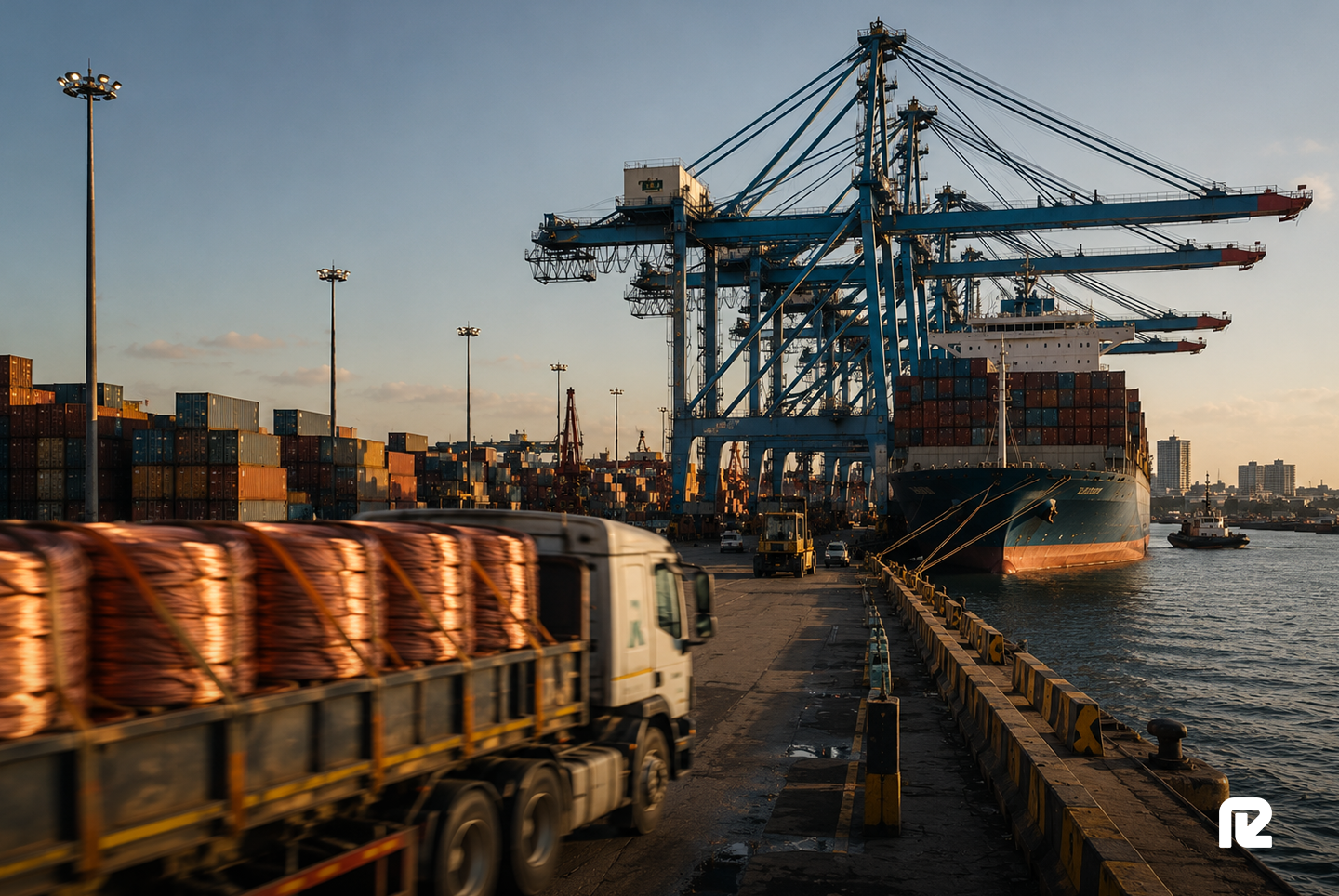
Beitbridge: Southern Africa's Busiest Border Post
September 1, 2026
Read the story
Please submit your details below and one of our logistics experts will reach out within one business day. Thank you.


Landed cost has a big role in international logistics. The supplier invoice is only the starting point. Once goods move across borders, the real cost often includes freight, customs duties, VAT or other import taxes, insurance, brokerage, handling charges, and inland delivery.
For procurement, logistics, and finance teams, landed cost affects sourcing, pricing, margins, market-entry decisions, and inventory planning. Businesses that calculate it properly usually make better decisions earlier. Businesses that ignore it often discover the real cost too late.
Landed costs in international logistics are the total costs incurred to bring goods from the seller to the buyer’s destination, ready for use, storage, production, or resale.
That means landed cost goes well beyond the purchase price of the goods. It usually includes transportation, customs duties, import taxes, insurance, handling, brokerage, and other import-related expenses.
In practical terms, landed cost is the number that tells a business what an imported product costs once it has crossed the border and can be used operationally.
This definition is important because invoice price alone can be misleading. A supplier may appear cheaper at first, but once transport mode, duty exposure, import VAT, and handling charges are added, the economics can change significantly.
A practical way to define landed cost is this: the full delivered cost of a product before the business can actually use or sell it.
For example, a company may buy goods from an overseas supplier for $10,000. That is the product cost. But once freight, insurance, customs clearance, import duty, VAT where applicable, and domestic delivery are added, the total landed cost may rise well beyond that initial figure. In commercial terms, the product was never really a $10,000 purchase.
This is the real landed costs meaning in business: it is the number that tells a company whether an international purchase is still commercially sound once the shipment reaches the market.
A simple unit example makes this clearer. If a business imports 1,000 units with an invoice value of $5,000, then adds freight, insurance, duties, and other charges, the real cost per unit may end up significantly above the supplier’s quoted unit price.
That difference can change resale pricing, margin expectations, and whether the sourcing decision remains viable.
Product cost is the amount paid to the supplier for the goods themselves. It is the base number in any landed cost model and often the largest single component. Even so, it should never be mistaken for total cost.
Transportation or freight includes the cost of moving goods from origin to destination. This may include ocean freight, air freight, road haulage, rail, origin drayage, and inland transport after customs clearance. Freight is often one of the most visible landed cost items, but it is not always the one that changes profitability the most.
Customs duties and related border charges are central to landed cost. In the United States, duty rates depend on tariff classification under the Harmonized Tariff Schedule. In the EU, imports from outside the Union are generally subject to VAT irrespective of value, and customs duties may apply above certain thresholds depending on the product.
Insurance protects the shipment against loss or damage during transit. It may represent a smaller share of total landed cost, but it still belongs in a serious model because it affects the real cost of getting goods delivered safely.
Handling and logistics costs include brokerage fees, customs clearance charges, terminal handling, loading and unloading, warehouse receiving, port fees, and other service charges tied to moving goods through the logistics chain. These costs are often underestimated in early-stage sourcing decisions.
Miscellaneous or overhead costs can include documentation fees, compliance checks, banking charges, inspections, storage, demurrage, detention, and internal administrative costs associated with managing the shipment. They may not appear in the first estimate, but they often affect the final landed figure.
At its simplest, landed cost can be understood through a basic formula:
Landed Cost = Product Cost + Shipping + Duties/Taxes + Insurance + Handling
This formula is useful because it shows that the real cost of imported goods is never limited to the supplier invoice alone. The exact total, however, varies from one market to another. Duties, VAT treatment, customs procedures, and tax timing can all change the final landed cost depending on where goods are imported or exported.
The examples below show how landed cost considerations differ across major trade markets.
For imports into the EU from outside the Union, VAT is generally payable regardless of the value of the goods. Customs duties may also apply above certain thresholds, depending on the product and customs treatment. Customs clearance fees may apply, and import VAT can be calculated on a taxable amount that includes customs value, duties, shipping, and insurance.
This means landed cost in the EU is not just about supplier price plus freight. VAT treatment, customs duty, and clearance structure can materially change the final import cost and the importer’s cash-flow requirements.
In the UK, importing goods into Great Britain may involve customs declarations, duty, and import VAT. Businesses can use postponed VAT accounting in eligible cases, allowing import VAT to be declared and recovered through the VAT Return instead of being paid immediately at the border.
That matters because landed cost has both a cost dimension and a cash-flow dimension. A business may eventually recover VAT, but it still needs to model when that VAT is accounted for and how duty and other import charges affect working capital.
For shipments exported from China, buyers often focus first on the supplier price, but the real landed cost is shaped by origin charges, freight structure, insurance, and the import treatment in the destination country. Export tax rebates can also be applied, and it's the refund of VAT and consumption taxes already paid on exported products during manufacturing, circulation, and sales.
For international buyers, the main lesson is straightforward: sourcing from China should never be evaluated on ex-factory price alone.
In India, landed cost analysis requires close attention to customs duties and official calculation tools. For businesses importing into India, this means the duty structure can materially affect the final cost of goods, making early landed cost modelling essential for pricing and sourcing decisions.
Purchase price is the amount paid to the supplier for the goods. Landed cost is the total cost of bringing those goods to the point where they can be used or sold.
This is one of the most important distinctions in international trade. A lower purchase price does not automatically mean a lower real cost. Once freight, duties, taxes, insurance, and handling are added, a product that looked cheaper on paper may become more expensive in practice.
Freight cost is only the transportation component of the shipment. Landed cost includes freight, but also includes product cost, duties, taxes, insurance, and other logistics-related charges.
That means freight negotiations matter, but they do not answer the full cost question. A business can win on freight rate and still lose on total import cost.
Shipping cost is often used more loosely than freight cost. Depending on the business, it may refer only to carrier charges or to a wider set of movement-related expenses. Landed cost is broader still. It includes shipping, but also the full import cost structure.
So, shipping cost may be one component of landed cost, but it is never a complete substitute for it.
Duty and tax are components of landed cost, not equivalents of landed cost.
Customs duty, VAT, GST, and other import taxes can materially affect the total figure, but they still sit alongside product cost, freight, insurance, handling, and delivery costs. Looking only at duties and taxes gives an incomplete picture of the real cost of importing goods.
Once the basic structure is clear, the next step is calculating landed cost in a way that supports actual business decisions.
A more practical working formula is:
Total Landed Cost = Product Cost + Freight/Shipping + Duties + Taxes + Insurance + Handling Charges + Other Import Costs
To calculate landed cost per unit, the formula becomes:
Unit Landed Cost = Total Landed Cost / Total Units Imported
For example, imagine a shipment with:
product cost: $20,000
freight: $2,500
insurance: $200
duties and taxes: $2,000
handling and clearance: $800
The total landed cost is $25,500. If the shipment contains 5,000 units, the landed cost per unit is $5.10.
This is where the calculation becomes commercially useful. A business that looks only at the supplier price might assume the unit cost is much lower. But once all import-related costs are included, the real cost base changes, and that affects pricing, margins, supplier comparisons, and sourcing decisions.
That is why businesses calculate landed costs. It allows them to price products more accurately, compare vendors more realistically, anticipate duty and tax exposure, and understand whether an international purchase still makes sense once the goods are actually in hand.
When raw material prices rise, supplier prices often rise as well. Since product cost is usually the base of the landed cost model, this can directly increase the total landed figure.
Fuel costs affect transportation rates, while manufacturing volatility affects supplier pricing. When both rise at the same time, landed cost pressure can increase quickly.
Transport mode has a direct effect on landed cost. Air freight may reduce lead time but increase cost sharply. Ocean freight may reduce transport spend per unit while increasing transit time and inventory exposure.
Duties and trade rules do not stay static. Classification treatment, tariff changes, customs requirements, and tax rules can all alter landed cost from one period to another. Official customs and tax authorities publish guidance for exactly this reason.
Exchange-rate movement can change the real cost of imported goods between ordering, payment, and arrival. This is one of the most underestimated landed cost drivers in international sourcing.
Port congestion, missed sailings, customs delays, inspections, geopolitical shocks, and warehouse bottlenecks can all add cost. Sometimes the added cost is direct. Sometimes it appears later through emergency freight, stockouts, or service failures.
Landed costs influence far more than finance reporting. They affect sourcing strategy, supplier choice, pricing, route selection, Incoterm decisions, inventory planning, and even market-entry decisions.
This is why landed cost should be treated as part of supply chain design, not just post-shipment accounting. If the landed figure is too high, the answer may not be a better freight quote. It may be a different origin country, a different product classification, a different transport mode, or a different commercial model altogether.
Businesses that understand landed cost well usually make better structural decisions, not just better purchasing decisions.
A strong landed cost model gives a business a more realistic view of total product cost. That improves pricing, supplier comparison, budgeting, and margin analysis.
It also supports better operational planning. When import charges, freight, and taxes are understood in advance, inventory and cash-flow planning become more reliable.
Finally, landed cost analysis helps businesses make stronger sourcing decisions. It allows them to compare suppliers and countries more accurately and to evaluate whether an import strategy is genuinely competitive.
The main disadvantage of landed costs is complexity. Landed cost calculation can become difficult when there are multiple suppliers, changing freight methods, shifting duty treatment, and different tax rules across markets.
It is also not static. Freight rates move, exchange rates move, and customs rules can change. A landed cost model needs to be maintained, not calculated once and forgotten.
There is also a systems challenge. Many businesses have the necessary data, but that data sits across procurement, finance, customs, and logistics systems. Without discipline, the calculation becomes incomplete or outdated.
Understanding landed cost at a high level is useful, but the real business value comes from applying it to sourcing, pricing, customs planning, and operational execution. This is where many companies run into trouble. The formula itself is straightforward. The challenge is making sure the numbers reflect real duties, real freight conditions, real tax treatment, and the actual movement of goods across borders.
For businesses managing international trade, that is rarely a one-time exercise. Costs move. Regulations change. Shipping methods shift. The companies that handle this well are usually the ones that connect finance, procurement, customs, and logistics rather than treating landed cost as a standalone spreadsheet.
That is where a practical logistics partner can add real value. Reload Logistics works with businesses that need their international logistics decisions to hold up in day-to-day operations, not just in theory. Whether the focus is better landed cost planning, stronger import visibility, more accurate duty and tax awareness, or a more resilient cross-border transport setup, have a chat with Reload Logistics to turn cost analysis into a logistics model that is more reliable, more commercially realistic, and easier to manage.