Kazungula Bridge: What It Means for Zambia-Bound Freight
September 15, 2026
Read the story
Please submit your details below and one of our logistics experts will reach out within one business day. Thank you.

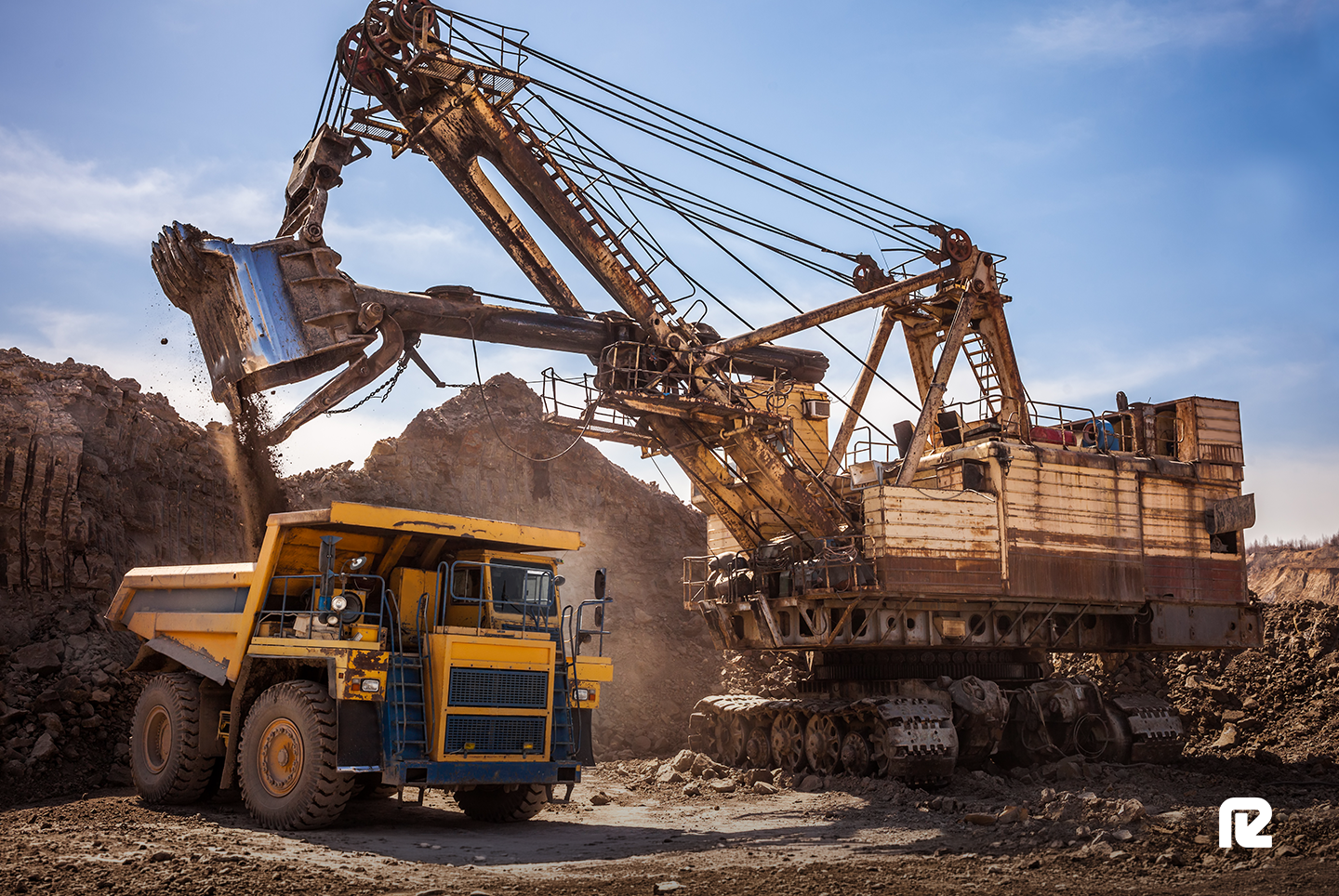
Mining equipment covers a wide range of sizes. At one end are crates of spare parts, drill bits, and consumables. At the other are crushers, mills, and haul trucks that arrive in sections and are assembled on site.
How that equipment ships, in a container or as break bulk, affects what it costs to move, how much handling it takes, how exposed it is to damage, and in some cases whether it can reach the site at all. Picking the wrong mode is expensive, and the cost usually lands late, at a port or a border where the cargo will not fit the plan made for it.
This article explains the difference between containerized and break bulk shipping, why the choice matters more for mining equipment than for ordinary freight, and how to decide which mode a given piece of equipment needs.
The three terms describe different ways cargo travels by sea, and they are easy to confuse.
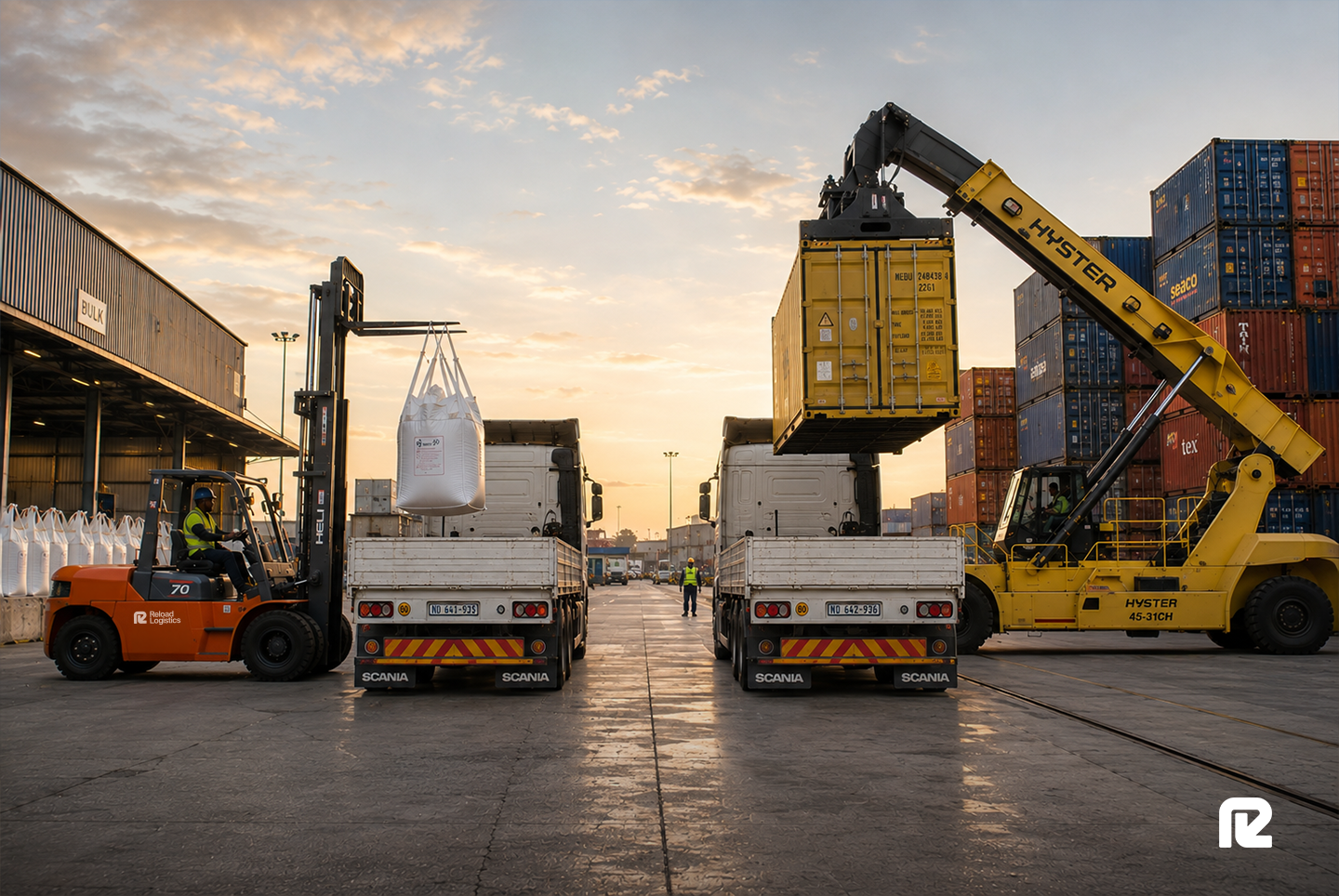
Containerized cargo travels inside a standard shipping container that moves interchangeably between ship, rail, and truck. It is the default for most manufactured goods because it is quick to handle, protects the contents, and moves through container ports on standard equipment.
For mining, containers suit parts, components, consumables, and any machinery that fits within a container's internal dimensions and weight limit.
Break bulk cargo is loaded onto the vessel as individual pieces rather than inside containers. A large steel structure, a length of pipe, or a machine on a skid gets lifted aboard and secured in the hold or on deck.
Break bulk is how cargo moved before containers existed, and it remains the answer for anything too large, too heavy, or too awkward to containerize. Much mining equipment falls into this category once it passes a certain size.
Bulk cargo is a separate category, meaning loose, unpackaged material poured or pumped into a hold or a tipper: ore, coal, grain, fuel. It is a mode for commodities, not equipment, and it governs the outbound movement of what a mine produces rather than the inbound movement of what it runs on.
Mining equipment is heavy, valuable, and often large.A standard shipping container is capped at a maximum gross weight of around 30,480 kg under the ISO 668 standard, and that figure includes the container's own weight, so the usable payload is roughly 28 tonnes.
A single piece of processing or earth-moving equipment can exceed that on weight alone, before its dimensions are considered. When either the weight or the size passes what a container allows, break bulk or specialized handling becomes the only route.
Value matters too. A damaged mill component can hold up commissioning of a whole plant, so it pays to ship high-value equipment in the mode that protects it best.
The wrong choice adds to costs in a few ways. Forcing awkward equipment into containers it barely fits wastes space and risks damage.
Shipping as break bulk what would have fit in a container means paying for specialized handling that was not needed. Discovering the mismatch late, when cargo reaches a port that cannot handle it or a truck that cannot legally carry it, adds delay and storage on top.
For the steady flow of parts, tools, consumables, and smaller components a mine gets through, containers are almost always right. They move on standard port equipment, protect the contents from weather and handling, secure easily against theft, and slot into scheduled container services with predictable transit and cost.
Anything that fits a container and stays within its weight limit generally belongs in one.
Containers stop being the answer at the point where equipment exceeds their internal dimensions or their weight limit. Some cargo that is too tall or too wide for a standard box can still travel on a flat rack or an open-top container, which handle a degree of out-of-gauge cargo while still moving through container terminals.
Past that, when a piece is too large or heavy for any container option, break bulk or heavy lift takes over.
Large mining machinery, crushers, mills, excavators, and the structural sections of processing plant, often ships break bulk because nothing else will hold it.
This cargo is lifted aboard as individual units and secured for the voyage, then discharged the same way at the destination port. From there it usually moves inland as an abnormal load, needing permits and route surveys, a planning process that starts well before the equipment arrives.
Heavy lift shipping is the specialized end of break bulk, for cargo whose weight demands particular cranes and vessels. A heavy lift piece may need a vessel with its own heavy-capacity cranes, because not every port can lift it ashore. It needs correct securing for the voyage, engineered lifting points, and handling equipment rated for the load at both ends.
This is the territory of project cargo, where the movement of a single item is planned and managed as its own operation rather than booked as a slot on a service.
The decision comes down to the equipment itself and a few practical questions around it:
● Does it fit a container, on size and weight? If yes, containerize it. This is the first and usually the deciding question.
● Can a flat rack or open top take it? Slightly out-of-gauge cargo may still move on container equipment before break bulk is needed.
● Can the destination port handle break bulk or heavy lift? Not every port has the cranes and the space, which can decide the mode or the routing.
● How does it move inland? A piece that clears the port as break bulk still has to reach the site, and the abnormal-load route may shape the whole plan.
● What is the total delivered cost and risk, not the freight rate alone? Handling, port charges, inland transport, and damage exposure all belong in the comparison.
A simple rule is to containerize whatever fits, and reserve break bulk and heavy lift for the equipment that requires it.
Mode choice does not end at the destination port, and for mining it often cannot, because the site is inland and remote.
A container that arrived by sea may continue by road or rail toward the site, and a break bulk piece begins its abnormal-load journey. The mode the equipment shipped in shapes how it moves next, which is why the whole route belongs in the decision from the start.
Remote sites add their own constraints. The roads may limit the size and weight that can reach the site regardless of what the port could handle. A combination of modes, sea then rail then road, is common, and each transfer between them is a handling point that needs planning.
Crossing a border on the way adds permits and clearance for the equipment. The equipment that reaches a remote mine on schedule is usually the equipment whose full journey, port to site, was planned as one movement rather than booked leg by leg. For oversized and heavy lift pieces in particular, that end-to-end planning is what project cargo handling exists to provide.
Choosing between break bulk and containerized shipping is, at heart, a question of fit: what the equipment is, where it has to go, and what the ports and roads between can handle.
Get it right at planning stage and the equipment moves at a predictable cost. Get it wrong and the correction happens at a quayside, which is the most expensive place to solve it.