Dar es Salaam Port Delays: What They Mean for Cargo Moving to Zambia and the DRC
August 28, 2026
Read the story
Please submit your details below and one of our logistics experts will reach out within one business day. Thank you.
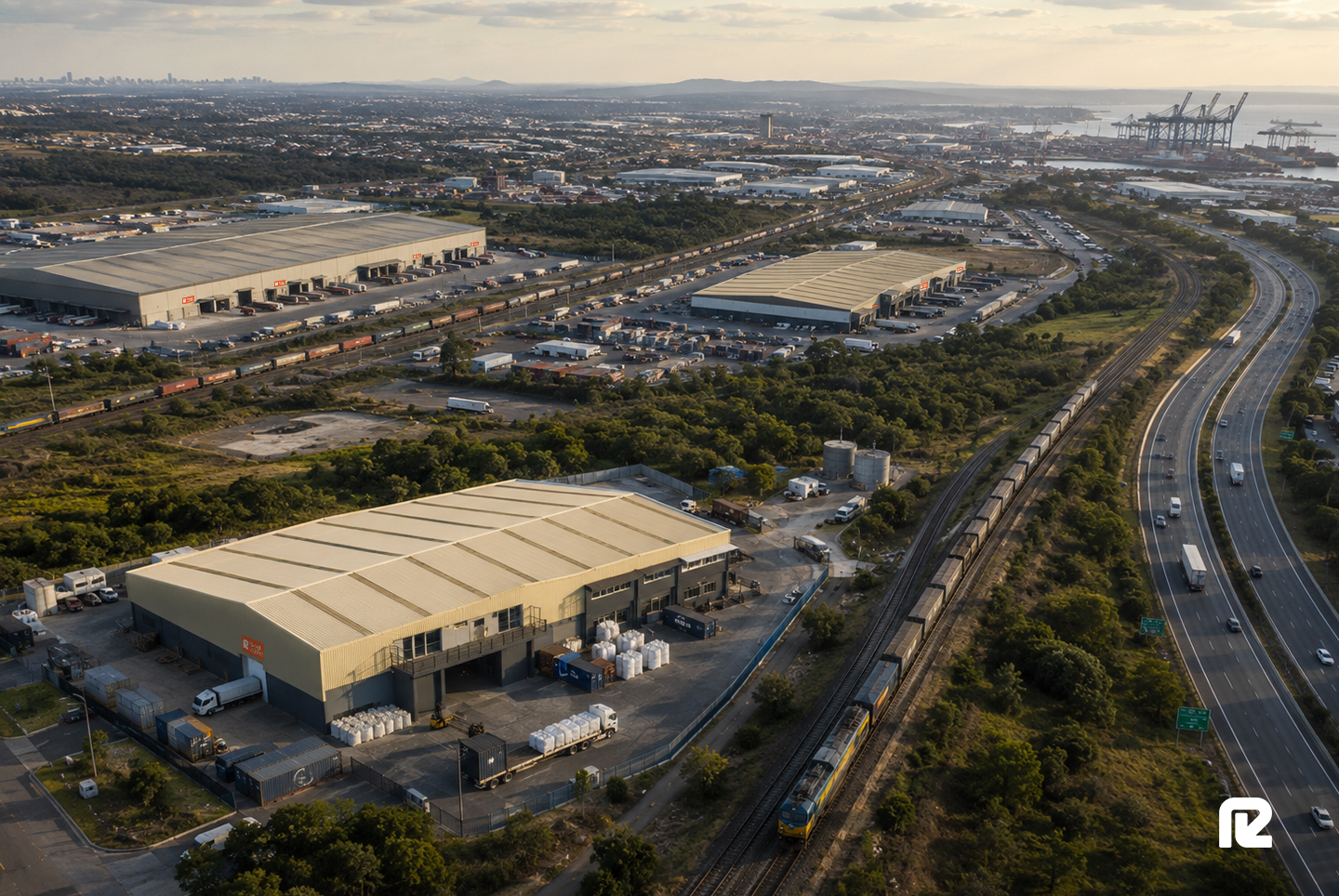

A warehouse in the wrong place costs money every day it operates. Trucks run longer distances to reach it. Cargo sits at the port because there is nowhere to put it nearby. Cargo doubles back because the site sits off the corridor it has to travel anyway. The rental rate covers floor space. Transport, delays, and the extra days are separate costs, and they usually add up to more than the rent you saved.
South Africa gives shippers a real choice here. The country has three main port gateways, a large inland market, and border crossings that feed the wider region. This article covers what makes a location work, how the main regions compare, and when port-side storage beats an inland site.
For what a warehouse should actually do once you have picked the site, see our guide to modern warehousing in Africa.
The first question is what the warehouse is for. Import cargo feeding at a factory belongs near the factory. Export cargo belongs near the port it leaves from, or on the corridor it will travel to reach it.
Cargo moving on to a neighboring country belongs near the border it will cross. The location that works is the one on the route the cargo already takes, at the point where it has to stop anyway to be cleared, staged, or held.
A site is only as good as the roads and rail reaching it. Proximity to the N1, N3, or N4 shapes how quickly trucks get in and out. Rail access matters for bulk cargo, and it matters more now that South Africa has opened its mainline network to private operators: Transnet's rail infrastructure manager concluded access agreements with eleven private train operating companies that had been allocated slots on the national network, with most expected to be running over the course of the year.
This is a reminder of what still holds rail back, with cable and signaling theft running at several incidents a day on the main corridors. Access to a border corridor counts if any of your cargo moves into the region. A site with one road in and one road out is a site with a single point of failure.
Land is cheaper away from the cities and the ports. So is the reason for it. Weigh the rental saving against the extra transport the location forces on you, the labor available locally, and the power supply, which in South Africa is a live operational question rather than a background assumption. A warehouse that cannot run its lights, its cold storage, or its systems through an outage is not saving anyone money.
Gauteng is where much of the country's manufacturing, industry, and consumer demand sits, which makes it the natural home for distribution warehousing. Cargo arrives from the coast by road or rail, gets held, and goes out to customers across the interior.
The trade-off is distance from the sea. Every imported container reaching a Gauteng warehouse has already traveled several hundred kilometers inland, and every export leaves the same way. For businesses selling into the South African market, that cost is worth paying to sit next to the customers.
Durban is the region's busiest container port, making warehousing around it valuable and also exposing it to the port's problems. Congestion has been persistent rather than seasonal, driven by years of underinvestment in equipment and by declining rail capacity that pushed volume onto the roads.
Change is underway. Transnet and terminal operator ICTSI signed a 25-year partnership for Durban Container Terminal Pier 2 in December 2025, with the arrangement taking effect on 1 January 2026. Transnet holds the majority stake in a new special purpose vehicle while ICTSI runs the terminal, a model that separates ownership from operations. Pier 2 is the country's busiest container terminal, so what happens there sets the tone for the whole gateway.
For anyone weighing a KZN site, the practical question is whether cargo can get through the port, and that is something you can check rather than guess. Transnet publishes a terminal berthing list covering its container and multi-purpose terminals, updated through the day. It is worth watching for a few weeks before committing to a location that depends on the port running well.
Cape Town serves its own regional market and handles a large share of the country's fruit exports, which brings temperature-controlled warehousing into the picture. The port has its own congestion, and wind regularly interrupts container operations, so weather is a scheduling factor here in a way it is not everywhere. Distance is the main constraint. The Western Cape is far from Gauteng, so a Cape Town warehouse serves the Western Cape and the export trade rather than the national market.
Sites near the border crossings serve cargo moving into the region rather than into South Africa. The Komatipoort area, near the Mozambican border and the corridor to the port of Maputo, is one to watch. The Nkomazi Special Economic Zone there has been named a priority cross-border logistics corridor under South Africa's economic cooperation agreement with Mozambique, anchored on road and rail links to the port.
A new inland terminal at Komatipoort is set to feed cargo to Maputo by rail. Sites like these suit transit cargo and businesses that want a staging point before the border rather than after it.
Port-side warehousing shortens the most fragile part of the journey. Cargo comes off the vessel and into storage without a long inland run first, which matters when the port is congested and free days are running down. It suits transit cargo heading onward to the region, export cargo staged for vessel loading, and anything that benefits from clearing customs at the coast.
Port-side bonded storage keeps clearance and onward transport tied together at the point most exposed to delay.
An inland site sits at the end of a journey the cargo has to make anyway. Import cargo feeding a mine or a plant in the interior travels inland whether it was held at the coast first or not, so storing it at the port means paying for the storage and then still paying for the run.
Inland sites also sit away from the congestion and the weather at the coast, and they let a business bring stock arriving through several ports together in one place. The trade-off is exposure to the corridor. Anything moving back out to the sea pays the leg again, and a site inland is only as reachable as the road and rail connecting it.
Bonded status changes the calculation, because it decouples storage from duty payment. Goods can sit in a bonded facility under customs control until they are cleared for the local market or re-exported, which frees working capital that would otherwise be locked in duty on unsold stock.
Bonded facilities exist both at the ports and inland, so the question is where you want customs clearance to happen. Transit and re-export cargo usually favors bond at the coast. Import cargo feeding a local market often favors bond closer to that market.
Cargo decides more about location than most other factors. A few patterns hold consistently:
● Bulk minerals and metals. These need rail and port access more than they need proximity to customers, so storage sits on the export corridor and near the loading point. Congestion at the South African ports has already made Maputo a preferred outlet for bulk minerals heading out of the country, which makes corridor flexibility part of the location decision.
● Perishables. Temperature-controlled space near the port or the growing region, with fast throughput, because the clock runs from the moment the cargo is packed.
● Automotive and parts. Near the assembly plant, with the inventory accuracy that sequenced delivery demands.
● Project cargo. Space, heavy handling equipment, and road access that can take an abnormal load. Proximity to the project matters more than proximity to anything else.
The listing tells you the floor area and the rent. It does not tell you whether the site works. Before signing:
● Drive the route at the wrong time of day. A site twenty minutes from the port at 10 am can be ninety minutes away when the trucks are queuing.
● Check the power situation. Ask what backup exists, how long it runs, and what happens to cold storage during an extended outage.
● Confirm the bonding and accreditation. If you need bonded status or specific security certification, verify it exists at that site rather than at the operator's other facility.
● Ask what happens when the port stalls. A location plan that only works when Durban flows is a risk you are carrying whether you have priced it or not.
● Look at the second route. Whether cargo can reach the site from another port or another corridor decides how exposed you are when the first one closes.
Warehouse location is a decision businesses live with for years, and it sets transport costs, delivery times, and how much disruption the supply chain can absorb.
South Africa's port and rail reforms are changing what the best answer looks like, so a location that made sense five years ago is worth revisiting rather than assuming.