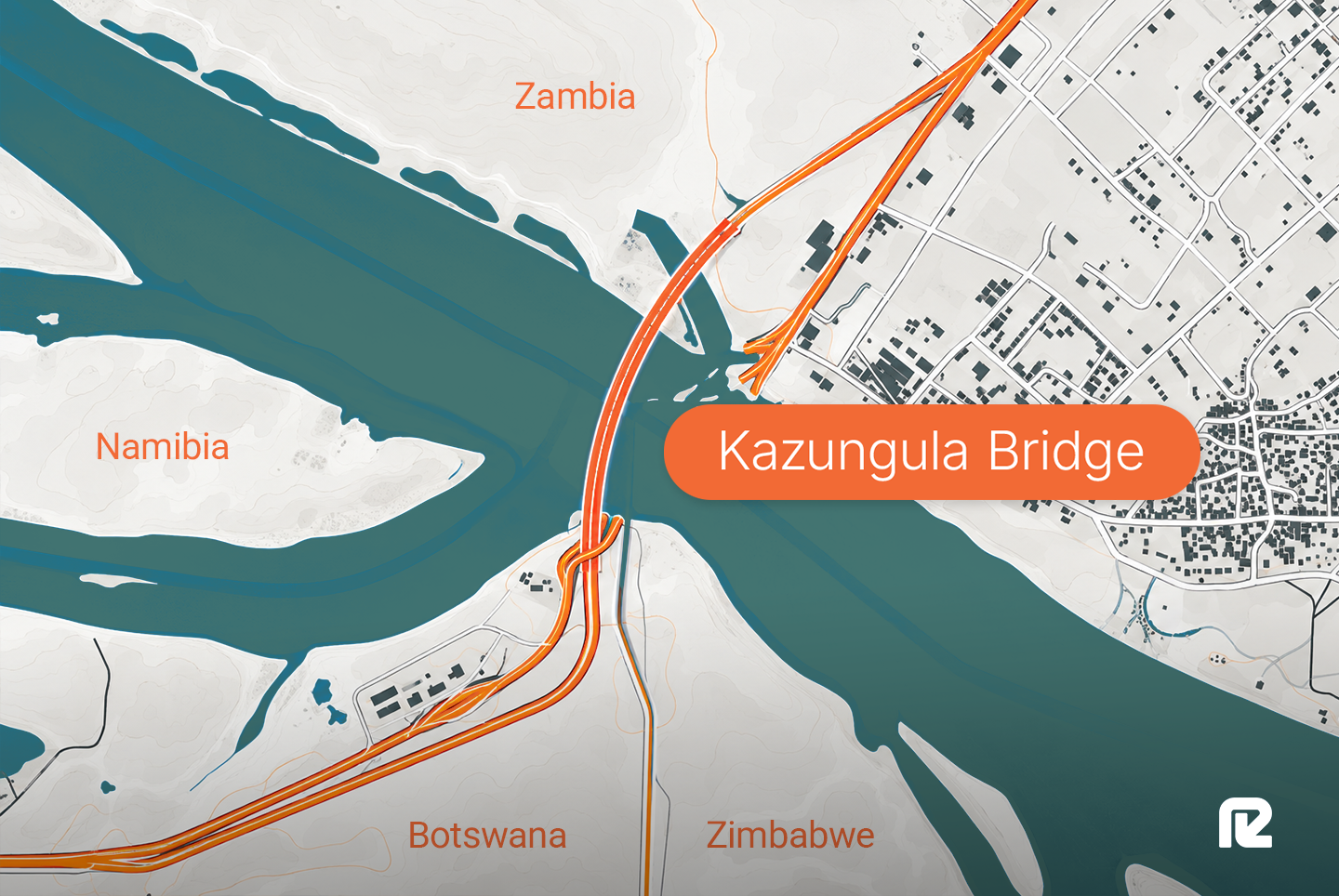
Kazungula Bridge: What It Means for Zambia-Bound Freight
September 15, 2026
Read the story
Please submit your details below and one of our logistics experts will reach out within one business day. Thank you.
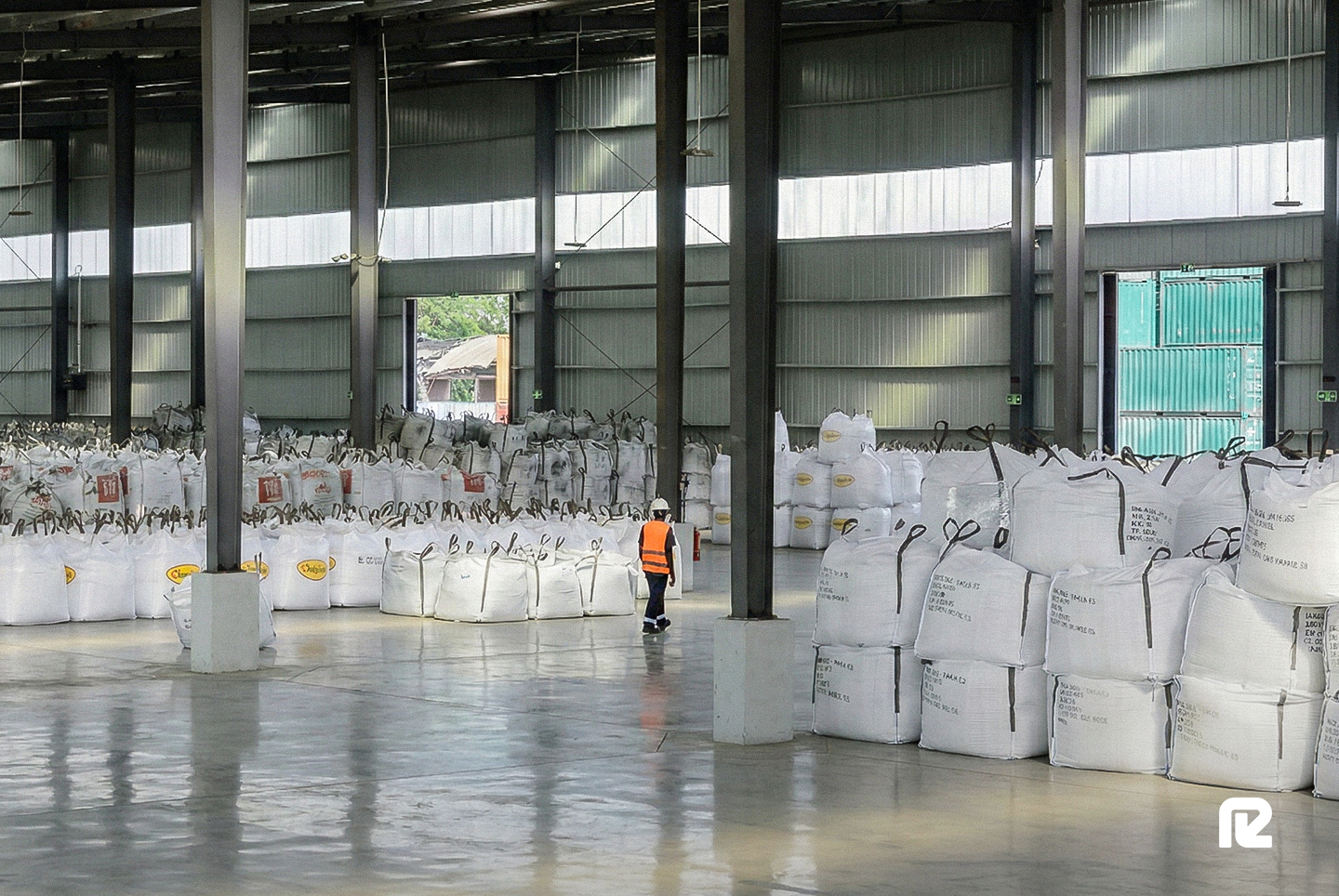

Most companies start looking for a 3PL warehouse when internal warehousing begins limiting growth, requiring more investments, or creating delivery bottlenecks.
A 3PL warehouse is a third-party facility that stores inventory, fulfils orders, and manages distribution on behalf of another company. Instead of operating their own warehouse, businesses outsource these functions to a specialized logistics provider.
This model, known as third-party warehousing and fulfillment, shifts responsibility for storage, picking, packing, shipping, and often returns processing to the 3PL operator. The client retains ownership of the goods, while the provider manages the physical handling and day-to-day execution.
For growing companies, this structure changes how logistics costs are managed. Fixed infrastructure expenses become service-based fees tied to usage. Warehouse labor, equipment maintenance, and technology systems are no longer internal overhead, but part of an external operational agreement.
In this guide, we will explain what a 3PL warehouse is, and when it creates measurable operational value looking beyond the definition to how it affects cost stability, scalability, and delivery performance.
3PL warehousing (or third-party logistics warehouse) means outsourcing warehouse operations, including storage, order fulfillment, inventory management, and distribution, to a specialized logistics partner.
Instead of managing a warehouse internally, a business closes a contract with a third-party logistics provider to:
· Receive inbound inventory
· Store goods
· Pick and pack customer orders
· Manage returns
· Ship products to retailers or end customers
The core idea behind 3PL warehouse solutions is delegation. The infrastructure, labor, warehouse management system (WMS), and operational processes are handled by the third party, while the client company retains ownership of the inventory.
Many companies assume 3PL is simply about renting pallet space. In reality, the shift is financial. Fixed operational costs are replaced with variable costs that scale with order volume.
The terms 3PL and 4PL are often used interchangeably, but they describe different levels of logistics responsibility.
A 3PL provider manages operational logistics functions. This typically includes:
· Warehousing
· Transportation
· Order fulfillment
· Inventory handling
The third-party logistics warehouse executes logistics activities directly.
A 4PL (or fourth-party logistics provider), by contrast, takes on a broader coordination role. Instead of primarily operating warehouses or trucks, a 4PL manages the overall supply chain strategy and integrates multiple service providers, which may include several 3PLs.
Put simply, a 3PL runs operations. A 4PL runs the network that connects those operations.
While a third-party logistics provider focuses on physical movement and storage, a fourth-party logistics provider focuses on orchestration, visibility, and end-to-end coordination.
A 4PL is a central point of control across the supply chain. In fact, rather than owning extensive warehousing infrastructure, a 4PL coordinates multiple logistics providers, transportation partners, and warehouse operators. The goal is to create an integrated logistics ecosystem rather than a single outsourced function.
If we look at it in a practical way, a 4PL may:
· Design network strategy
· Select and manage multiple 3PL providers
· Oversee transportation procurement
· Monitor performance metrics across regions
· Provide consolidated reporting and analytics
This model is often used by large enterprises with complex, multi-country supply chains where coordination gaps can create inefficiencies.
For many mid-sized businesses, however, 3PL warehousing provides sufficient operational support without the added complexity of full supply chain orchestration.
For many companies, the decision to outsource to a 3PL warehouse is driven by cost structure, operational scalability, and access to logistics expertise that would otherwise require significant internal investment.
That said, the advantages of 3PL are not theoretical and can be grouped as follows.
One of the most important advantages of 3PL warehouse solutions is cost.
Operating an in-house warehouse requires fixed expenses:
· Lease or property ownership
· Labor contracts
· Warehouse management systems
· Equipment maintenance
· Insurance and compliance costs
These expenses remain even when order volumes fluctuate.
With third-party warehousing and fulfillment, many of these costs become variable. Businesses pay for:
· Space used
· Orders processed
· Value-added services performed
During peak seasons, capacity can expand. During slower periods, costs contract.
However, the real savings are in operational efficiency. Established 3PLs optimize slotting, labor scheduling, and picking workflows across multiple clients. A warehouse that runs at 60% utilization in-house may operate at 85–90% utilization under a shared 3PL model.
Those differences directly affect cost per order, especially when inbound and outbound peaks overlap or when SKU counts expand faster than planned.
Demand rarely follows a straight line. It spikes. It stalls. It surprises you. Product launches, seasonal spikes, promotional campaigns, and market expansions can strain warehouse capacity quickly. Expanding an internal warehouse takes time and money.
A 3PL warehouse can often absorb fluctuations more easily because capacity is distributed across multiple clients.
In this context, flexibility may mean:
· Short-term overflow storage
· Cross-docking during peak inbound flows
· Temporary labor scaling during promotional periods
· Multi-location inventory positioning
This flexibility is particularly important for e-commerce businesses where daily order volumes can shift dramatically based on marketing performance.
Warehousing looks straightforward from the outside. In reality, small process inefficiencies compound quickly.
Misaligned SKU slotting increases travel time. Inaccurate inbound checks create downstream fulfillment errors. Poorly structured pick paths slow throughput.
Established 3PL providers operate at scale and often refine workflows continuously. They track metrics such as:
· Order cycle time
· Pick accuracy rate
· Dock-to-stock time
· Inventory turnover
· Return processing time
Because logistics is their core function, they invest in process improvement that many individual companies cannot justify internally.
Technology is one of the biggest differentiators between warehouse providers.
Modern 3PL warehouse solutions typically rely on:
· Advanced warehouse management systems (WMS)
· Barcode or RFID tracking
· Real-time inventory visibility
· API integrations with e-commerce platforms and ERP systems
· Automated picking or conveyor systems in high-volume facilities
Without strong technology integration, outsourcing warehousing can create visibility gaps. With proper integration, however, clients can access real-time stock data, inbound status updates, and fulfillment performance dashboards.
Operationally, this reduces inventory blind spots and minimizes discrepancies between physical stock and system records.
Managing a warehouse requires operational oversight that extends beyond logistics strategy and it involves:
· Labor supervision
· Safety compliance
· Equipment maintenance
· Inventory reconciliation
· Carrier scheduling
For many businesses, these responsibilities consume management bandwidth. By outsourcing to a 3PL warehouse, companies can redirect attention toward:
· Product development
· Sales expansion
· Marketing performance
· Supplier relationships
In competitive markets, reallocating leadership focus can sometimes deliver more long-term value than marginal warehouse efficiency improvements.
While 3PL warehousing offers clear advantages, outsourcing logistics also introduces trade-offs. Understanding potential limitations is just as important as evaluating benefits.
When warehousing is outsourced, direct control over daily operations decreases.
You are no longer managing:
· Warehouse staff
· Inventory placement decisions
· Daily picking priorities
· Dock scheduling
All these activities are governed by the 3PL’s operating procedures.
For businesses handling regulated, fragile, or high-value products, reduced operational control can become a real point of tension.
If service level agreements (SLAs) are not clearly defined, response times for urgent adjustments may be slower than expected.
Outsourcing adds an additional coordination layer. Forecast updates, inbound shipment changes, promotional launches, and SKU adjustments must be communicated accurately and on time.
If data synchronization between systems is weak, or if communication channels are unclear, small mismatches can escalate. A missing ASN (Advance Shipping Notice), for example, may delay inbound processing and affect order availability.
Strong 3PL relationships depend on structured communication protocols and performance reporting.
Not all 3PL pricing structures are transparent at first glance. Common cost components include:
· Storage fees (per pallet or cubic meter)
· Pick-and-pack charges (per order or per line item)
· Receiving fees
· Returns processing fees
· Labelling or kitting charges
Additional fees may apply for:
· Peak season surcharges
· Long-term storage
· Manual handling for oversized items
· Special compliance requirements
Without a detailed cost model, projected savings can erode quickly.
Selecting a 3PL warehouse is not simply a pricing exercise. The right partner influences order accuracy, delivery speed, inventory visibility, and long-term cost stability.
Below are the core evaluation criteria that separate basic storage providers from structured 3PL warehouse solutions.
Warehouse location directly impacts freight cost and delivery performance. A well-positioned 3PL warehouse should provide:
· Proximity to major ports or rail corridors
· Access to primary transport routes
· Reduced last-mile delivery distance
· Efficient cross-border connectivity where applicable
However, location alone is not sufficient. In busy trade corridors, congestion patterns and carrier availability can vary significantly by zone. A warehouse positioned near a port but poorly integrated with drayage networks may experience recurring delays.
Evaluating corridor familiarity, not just physical location, can be what distinguishes experienced 3PL operators from general storage providers.
Capacity is not just about square meters or pallet positions. A 3PL warehouse must be evaluated based on:
· Throughput capability (orders per day)
· Dock door availability
· Peak-season labor scaling
· SKU handling complexity
· Storage configuration flexibility
Some warehouses appear large on paper but operate near throughput limits during peak periods. When inbound surges overlap with outbound fulfilment waves, dock congestion can increase quickly.
A structured 3PL partner plans for these scenarios through workforce forecasting and shift management, not reactive overtime.
Technology integration is often where 3PL partnerships either succeed or struggle. Modern 3PL warehouse solutions should provide:
· A robust warehouse management system (WMS)
· Real-time inventory tracking
· API or EDI integration with ERP and e-commerce platforms
· Automated reporting dashboards
· Exception alerts for inventory discrepancies
Without clear system integration, outsourcing warehousing can create blind spots in stock visibility.
Not all inventory behaves the same. Handling electronics differs from managing consumer packaged goods. Automotive components require different controls than food and beverage products.
Industry experience influences:
· Handling procedures
· Regulatory compliance awareness
· Packaging requirements
· Returns processing standards
A 3PL warehouse used to work in high-SKU e-commerce operations may struggle with heavy industrial freight. On the opposite side, a bulk-focused warehouse may not be optimized for fast-moving direct-to-consumer fulfilment.
Choosing a 3PL with relevant sector exposure reduces adaptation time and operational friction.
Compliance is often underestimated until it becomes a problem. Depending on industry and geography, certifications may include:
· ISO standards
· Customs compliance registration
· Bonded warehouse authorization
· Food safety certifications
· Safety and occupational health compliance
Beyond certifications, audit readiness matters.
Structured 3PL operators maintain documented procedures for:
· Inventory reconciliation
· Access control
· Damage reporting
· Returns inspection
· Regulatory record-keeping
When compliance processes are clearly defined, disruptions are less likely during audits or regulatory inspections.
On paper, in-house warehousing looks less expensive. You control the building, the staff, and the processes. However, cost evaluation must go beyond monthly rent and payroll.
In-house operations require:
· Long-term lease commitments or property ownership
· Forklifts, racking systems, conveyors, and safety equipment
· Warehouse management software licensing
· IT infrastructure
· Insurance and compliance coverage
· Supervisory staff and labour management
In many regions, warehouse vacancy rates fluctuate significantly. During tight industrial property cycles, securing suitable space at predictable rates becomes difficult. Lease agreements often extend 5 to 10 years, limiting flexibility if demand shifts.
Labor is another major variable. Warehouse operations depend heavily on hourly labor, which is sensitive to:
· Wage inflation
· Turnover rates
· Overtime during peak seasons
· Training time for new hires
In contrast, a 3PL warehouse spreads infrastructure and labor costs across multiple clients. Instead of absorbing fixed expenses directly, businesses pay for storage and fulfillment services aligned with actual usage.
That said, 3PL pricing must be modeled carefully. Per-pallet storage fees and per-order fulfillment rates can add up if order profiles are not forecast accurately.
The key comparison is not just cost per month, but cost per unit handled under varying demand conditions.
Automation is becoming increasingly important in modern 3PL warehouse operations.
However, automation investments require significant capital expenditure. Installing automated picking systems, conveyors, robotics, or advanced sortation equipment means:
· Hardware investment
· Software integration
· Maintenance contracts
· Operational retraining
For individual companies, the return on automation may be difficult to justify unless order volumes are consistently high.
Established 3PL providers, by contrast, can amortize automation investments across multiple clients and larger throughput volumes.
In practice, automation may include:
· Conveyor-assisted picking lines
· Barcode scanning systems
· Real-time inventory synchronization
· Automated packing stations
· Robotics-assisted pallet movement in high-volume facilities
Automation does not eliminate labor. In well-run 3PL environments, automation supports accuracy and speed while reducing repetitive manual handling.
For businesses evaluating 3PL warehouse solutions, understanding the provider’s automation maturity level is essential. Not all warehouses operate at the same technological depth.
Cost efficiency is often considered a simple cost reduction. In reality, cost efficiency means maintaining stable cost per order while absorbing volume fluctuations and service expectations.
A 3PL warehouse improves cost efficiency when:
· Labor scaling is handled without emergency hiring
· Space utilization remains optimized across clients
· Inbound scheduling prevents dock congestion
· Inventory visibility reduces shrinkage and write-offs
· Order accuracy minimizes costly returns
In-house warehouses frequently struggle during growth phases. What begins as a manageable operation can become strained once SKU counts increase or order volumes double.
Expanding capacity internally may require:
· Additional square footage
· Expanded racking systems
· Increased forklift fleet
· Additional supervisors
· System upgrades
On top of this, each expansion step introduces new fixed costs.
Partnering with a 3PL shifts much of that scalability risk to the provider.
However, cost efficiency depends on alignment. A poorly matched 3PL partner can increase complexity rather than reduce it. Service level agreements, pricing transparency, and performance metrics must be clearly defined.
When the partnership is structured correctly, 3PL warehousing reduces operational volatility. When it is not, it simply shifts complexity from internal teams to an external partner.
At Reload Logistics, we work with businesses across Southern Africa to design 3PL models that align warehouse capacity, cross-border transport, and regional distribution into one coordinated system. Speak with our team to assess whether a 3PL approach aligns with your cost structure and growth plans.
3PL stands for third-party logistics. In warehousing, it refers to outsourcing storage, inventory management, and order fulfillment operations to an external provider.
A 3PL warehouse receives inventory, stores it, processes orders, manages returns, and coordinates outbound shipping on behalf of a client company. The business retains ownership of the goods, while the 3PL manages the physical handling and distribution. The service can range from basic storage to fully integrated third-party warehousing and fulfillment solutions with technology integration and performance reporting.
Amazon provides fulfillment services (such as Fulfillment by Amazon, FBA) that function similarly to 3PL warehouse solutions. Through FBA, Amazon stores products, processes orders, and manages shipping on behalf of sellers.
However, Amazon’s logistics model is tightly integrated into its marketplace ecosystem. Traditional 3PL providers typically offer broader flexibility across multiple sales channels, including direct-to-consumer, wholesale, and cross-border distribution.
The distinction lies in network openness and customization.
A 3PL warehouse provider operates physical logistics functions such as storage, fulfillment, and transportation.
A 4PL provider, by contrast, oversees the entire supply chain network. Instead of operating warehouses directly, a 4PL coordinates multiple logistics providers, integrates data systems, and manages strategic planning across regions.
In short:
· 3PL = executes warehousing and logistics operations
· 4PL = manages and optimizes the broader supply chain structure
The appropriate model depends on supply chain complexity and scale.
Examples of 3PL services include:
· E-commerce fulfillment centers handling direct-to-consumer orders
· Regional distribution warehouses serving retail networks
· Multi-client logistics hubs supporting cross-border trade
· Specialized facilities handling temperature-controlled or regulated goods
A typical 3PL warehouse solution may include inbound receiving, pallet storage, order picking, packaging, returns management, and transportation coordination.
Globally, some of the largest 3PL providers include DHL Supply Chain, Kuehne+Nagel, DB Schenker, and CEVA Logistics.
Choosing a 3PL based on size alone is one of the most common procurement mistakes. The most appropriate 3PL warehouse partner depends on geographic coverage, industry specialization, technology integration, and service flexibility.
Operational alignment is often more important than global scale.